
New hybrid Jeep Cherokee goes into production in Mexico and reinforces the brand’s strategy for Brazil

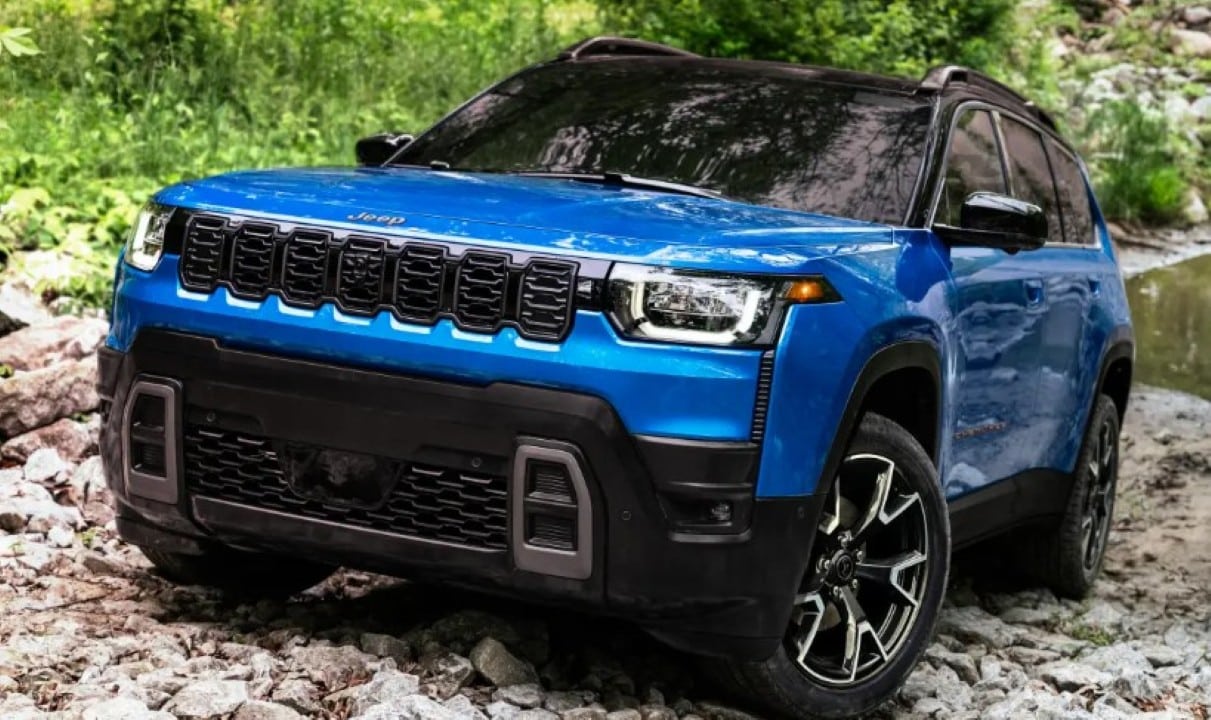
Stellantis officially began manufacturing activities for its latest sports utility vehicle at the Toluca plant, in México. The manufacturing unit, recognized for its export capacity for the Américas, is now the birthplace of a new generation of electrified vehicles that promise to update the brand’s portfolio in several markets. The industrial movement initially aims to meet North American demand, but has direct implications for the South American scenario, given the trade policy in force between countries in the region.
The project marks a significant advance in the automaker’s engineering, using the modern STLA Large platform. Esta architecture was developed to offer flexibility and support different types of propulsion, being fundamental to the company’s decarbonization strategy. The choice of México as a production hub is not random, as it allows the vehicle to reach partner markets with easier tax conditions, increasing its competitiveness against Asian and European rivals.

Automotive sector experts point out that the arrival of this model is expected to fill a gap in the automaker’s current lineup. With the growing demand for energy efficiency without the need for mandatory external charging, the conventional hybrid configuration (HEV) emerges as a practical solution for consumers who do not yet have a home charging infrastructure. The expectation is that the first units will arrive in Brazilian territory later this year, taking advantage of the commercial agreement that exempts import taxes.
Engine details and performance
The new SUV’s mechanical package was designed to balance power and fuel consumption, an increasing requirement from regulatory bodies and customers. The system combines a 1.6 turbo combustion engine with two electric motors, creating a synergy that optimizes operation in urban and highway traffic situations. Diferente of the plug-in models, which require sockets, this system recharges its batteries through regenerative braking and the combustion engine itself.
Preliminary data indicates that the vehicle delivers a combined power of 213 horsepower. The biggest highlight, however, is energy efficiency. Testes of standard cycle suggest that the model can achieve consumption averages close to 18 km/l. Essa extended autonomy is one of the main selling points, especially in a scenario where fuel prices fluctuate frequently.
The STLA Large platform also allowed batteries to be installed in a way that does not compromise interior space or trunk volume. Engineering focused on maintaining livability, ensuring that passenger comfort and cargo capacity remain superior to previous generations. All-wheel drive, a characteristic inherent to the brand’s DNA, was preserved and improved by the electronic management of the hybrid system.
Strategic positioning in the national market
At Brasil, the landing of this utility has a clear market positioning mission. Ele must be placed above medium models manufactured in Goiana, Pernambuco, and below large imported luxury utility vehicles. Essa market range, often called “medium-large”, is contested by premium and generalist brands that offer electrified options.
Import via México is the operation’s greatest commercial asset. Sem the incidence of the 35% import tax common to vehicles coming from Europa or Ásia, the automaker is able to price the product aggressively. Market estimates suggest values that make it a viable alternative both for those looking for an upgrade in the mid-range segment and for those who want to enter the world of hybrids with a robust vehicle.
In addition to price, the strategy includes the offer of embedded technology. The equipment package should include advanced driving assistants, full smartphone connectivity and premium trim. The intention is to attract an audience that values the brand’s off-road tradition, but that does not compromise on sophistication and fuel economy in daily use.
Renewed technology and design
Visually, the model adopts an evolutionary aesthetic, maintaining the robust identity with the seven-slot front grille, but incorporating futuristic elements. The tapered LED optical assembly and more fluid body lines contribute to better aerodynamics, which also helps to reduce consumption. The interior received special attention, with soft-touch materials and high-resolution digital screens for the instrument panel and entertainment system.
Security is another fundamental pillar of this new generation. The chassis was reinforced to obtain the best grades in impact tests, and the electronics act preventively to avoid accidents. Sensores and cameras monitor the vehicle’s surroundings in 360 degrees, offering features such as autonomous emergency braking, adaptive cruise control and lane keeping assistant as standard items in the most complete versions.
Wireless connectivity allows drivers and passengers to integrate their mobile devices into the car’s system without the need for cables. Atualizações remote (over-the-air) systems ensure that the vehicle’s software remains updated over time, adding new features or optimizing existing systems without the need for visits to the dealership. Essa technological approach aims to extend the useful life of the product and maintain its resale value.
Final keywords: Jeep Cherokee 2026, México automotive production, Stellantis hybrid SUV, Large STLA platform.
Long-tail keyword: new release Jeep Cherokee hybrid Brasil 2026.
Sources researched: Stellantis North America Press, Automotive News Mexico, Motor1 Brazil.



