
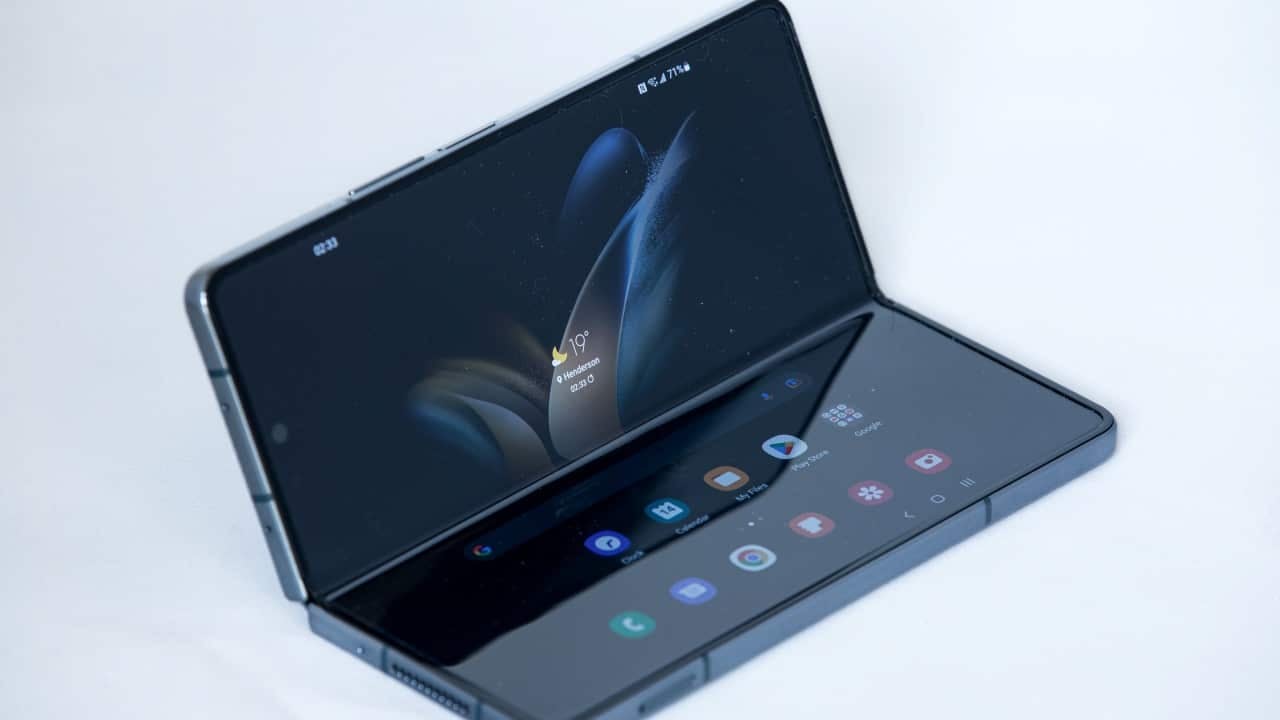
Recent evidence located in the programming of the South Korean manufacturer’s new interface points to the creation of an unprecedented device, internally identified as Galaxy Wide Fold. Analysis of the firmware files suggests a significant change in the device’s ergonomics, which should adopt a more pronounced horizontal opening format than the current models in the Z Fold line. Essa structural change aims to meet long-standing consumer demand for more functional and less narrow external screens.
The project, which carries the codename H8 and direct references to the term “WideFoldModel”, indicates that the hardware is being designed to prioritize usability in landscape mode. Especialistas from the mobile technology sector assess that this strategy puts the company in direct competition with other brands that are already exploring similar formats, offering greater comfort for typing and consuming content without the need to open the device.

The new model is expected to reach the global market in 2026, possibly following the launch cycle of the brand’s traditional foldables. The device should debut with the operating system based on Android 17, bringing native optimizations to take advantage of the expanded display.
Structural changes and design
The discovery of a specific category in the code, distinct from traditional classifications such as TYPE_FOLD, reinforces the thesis that this is not just an incremental update, but a new product concept. The focus on the “Wide” format suggests an external screen ratio close to 16:10, which would make it easier to perform everyday tasks with the same practicality as a conventional smartphone.
In addition to the external dimensions, the internal screen must also undergo adjustments, presenting a more square appearance when unfolded. Essa configuration aims to improve the multitasking experience, allowing applications to run side by side with better use of space and without visual distortions common in very vertical panels.
Market and distribution planning
Samsung’s commercial strategy appears to involve a robust launch, with initial production estimates hovering around one million units. Diferente from special limited editions of the past, this device should be made available in multiple important markets, including América of Norte, Europa and Ásia, seeking to massify the new format.
– The model must be positioned as a direct alternative to foldables from competitors that already use wide screens.
– The company plans to launch the device alongside the updated Z line, offering more options to the consumer.
– Espera reduced dependence on the internal screen for quick actions, such as replying to messages and checking maps.
– Hardware must include the latest processing technologies to support the new graphical interface.
Software and interface optimizations
The One UI 9 interface is being developed with specific features to take advantage of the extra width of the new Galaxy Wide Fold, including adapted transition animations and better support for application continuity between screens. The system must integrate artificial intelligence tools from the Galaxy AI package, which will gain new productivity features benefiting from the expanded screen space, transforming the device into a compact workstation when necessary.
Preliminary technical specifications
Although the complete technical sheet remains confidential, the information extracted from the firmware indicates that the device will maintain the brand’s premium standard. The set of cameras must follow the high resolution specifications present in current top-of-the-line models, guaranteeing competitive photographic quality even with the change in form factor.
Power management is also a focal point, with batteries optimized to support the consumption of two high-quality displays. The presence of cutting-edge processors ensures that performance in games and heavy applications is not compromised, maintaining the fluidity characteristic of the Galaxy family.