Verstappen detonates new 2026 car after testing in Bahrain and compares performance to Formula E


The Sakhir circuit, at Bahrein, was the stage for a technical evaluation that could define the direction of the main category of world motorsport for the next decade. Durante test sessions with a car adapted to simulate the 2026 rules, the current world champion expressed deep dissatisfaction with the behavior of the equipment. The riding experience was described as frustrating, raising serious concerns about the competition’s loss of identity in favor of new engineering and sustainability guidelines.
The simulations carried out by Red Bull Racing used a modified chassis, known internally as a “mule car”, designed to replicate the dimensions and power delivery foreseen in the future regulations. Immediate feedback pointed to a drastic drop in final speed and an excessive complexity in energy management, factors that, according to the Dutch driver, transform the race into a mathematical exercise rather than a contest of skill and courage.
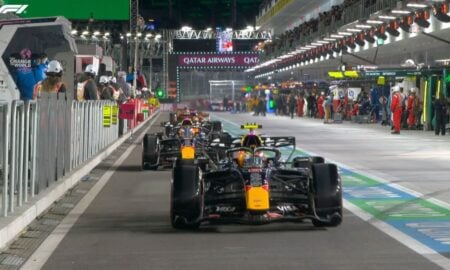
今日は誰が順調に進んでいますか? 👀
バーレーンでの木曜日のドライバーラインナップ 👇#F1 #F1テスト pic.twitter.com/6AIvlV2Udw
— フォーミュラ 1 (@F1)2026 年 2 月 12 日
Technical challenges and the drastic reduction in speed on the straights
The main criticism revolves around the new power unit, which provides for an equal division of 50% between the internal combustion engine and the electrical system. Embora this change aims to attract large automakers with a focus on electrification, practice on the track revealed unwanted side effects for those in the cockpit. The system requires the driver to downshift on a straight line to regenerate energy, a counter-intuitive maneuver that breaks the natural flow of high-performance riding.
This peculiar characteristic of the new engine creates a scenario where cars abruptly lose power before even reaching the braking point. The feeling of lack of thrust in high-speed sections was the central point of the pejorative comparison made with the Fórmula E, a fully electric category that operates at significantly lower speeds and on more closed street circuits.
To mitigate the loss of aerodynamic performance and compensate for the weight of larger batteries, the 2026 regulations will also introduce active aerodynamics. However, preliminary data suggests that, even with moving wings, lap times could be considerably higher than current ones, bringing the performance of the Fórmula 1 dangerously closer to that of access categories such as the Fórmula 2.
The conflict between pilots and the new sustainability guidelines
The dissatisfaction is not just about speed, but about the philosophy of the sport. Critics’ central argument is that the category is sacrificing the spectacle and essence of competition to satisfy corporate demands for technological relevance. Automakers, such as Audi and Ford, see electrification as an essential pillar to justify their billion-dollar investments, while pilots prioritize the purity of the race and the ability to push machines to the physical limit.
- Excessive dependence on the battery forces the pilot to focus more on recharging management than on competing for the ideal position or route.
- The increase in the total weight of cars, due to larger power cells, makes the vehicles less agile in low-speed curves.
- The need to downshift on straights to load the system creates artificial and dangerous driving dynamics in wheel-to-wheel disputes.
- The risk of disparity between engines could create a championship decided by electrical efficiency and not by aerodynamics or driver talent.
Reactions in the paddock and Mercedes’s response to criticism
The blunt statements coming from the Red Bull garage did not go unnoticed by rivals. Toto Wolff, head of the Mercedes team, suggested that public criticism may be a smokescreen to hide delays in the development of the Red Bull Powertrains engine itself. Segundo the manager, it is common for teams that feel technically threatened to try to influence public opinion to force changes to the rules before they come into force.
Mercedes, which has a history of dominance in the hybrid era, argues that innovation is painful but necessary. Para the German team, motorsport needs to remain relevant to the global automotive industry, and a return to naturally aspirated V8 or V10 engines, although desired by purists, would be commercial suicide in the long term. The political clash intensifies as the deadline for finalizing technical specifications approaches.
Impact on the show and the future of the maximum category
The fear that Fórmula 1 will become a contest of energy efficiency rather than pure speed is real among fans and experts. If the cars of 2026 are visually slow or if overtaking depends solely on who has the most battery left at the end of the straight, the entertainment product could suffer. Category management now faces the challenge of balancing manufacturers’ sustainability demands with the need to maintain its status as the fastest sport on the planet.
As engineers work in simulators to find solutions that make cars faster without violating new fuel restrictions, drivers’ voices gain weight. Resistance to radical changes suggests that adjustments to the regulations may still occur, aiming to ensure that technology serves the sport, and not the other way around.