
Anime and music sector boosts Sony’s results while console sales decline in Japan

The latest financial report from Grupo Sony reveals a significant transformation in the Japanese giant’s revenue dynamics, marking an inflection point in the corporate strategy that has been designed for a decade. As the hardware segment, historically the company’s flagship product through the PlayStation brand, faces a natural slowdown in the Japanese domestic market, the creative entertainment sectors — specifically anime and music — have emerged as the new growth engines. The data indicates that the focus on portfolio diversification, initiated to reduce dependence on the cyclical sale of electronics, has reached a stage of maturity capable of sustaining profitability even in the face of headwinds in console retail.
Analysis of the numbers points to a clear retraction in sales of PlayStation 5 units in the Japão, a movement that analysts attribute both to the saturation of the console’s life cycle and to the expectations generated by new hardware from the competition. However, what could be interpreted as an isolated warning sign turned into a validation of the company’s “Creative Entertainment Vision” strategy. Revenue generated by subsidiaries like Aniplex and Sony’s music division not only offset the drop in hardware, but also demonstrated more resilient and predictable profit margins than the traditional box sales model.
This paradigm shift reflects a global trend where intellectual property (IP) and recurring services gain prominence over device manufacturing. Sony, which for years was synonymous with hardware engineering, is now consolidating itself as a transmedia powerhouse. The overwhelming success of anime productions, distributed globally through Crunchyroll and produced by Aniplex, has created an ecosystem where consumer engagement remains high, even if they are not purchasing a new console in that specific quarter.
Company executives reinforced that the transition to a business model focused on IPs is irreversible. The ability to monetize a franchise through games, soundtracks, films and animated series allows the company to capture value across multiple customer touchpoints. The report highlights that, unlike the sale of a console, which occurs once every five to seven years per customer, the consumption of music and anime offers a continuous and expanding revenue stream, especially with the popularization of streaming services.
Impact of competition and the hardware cycle
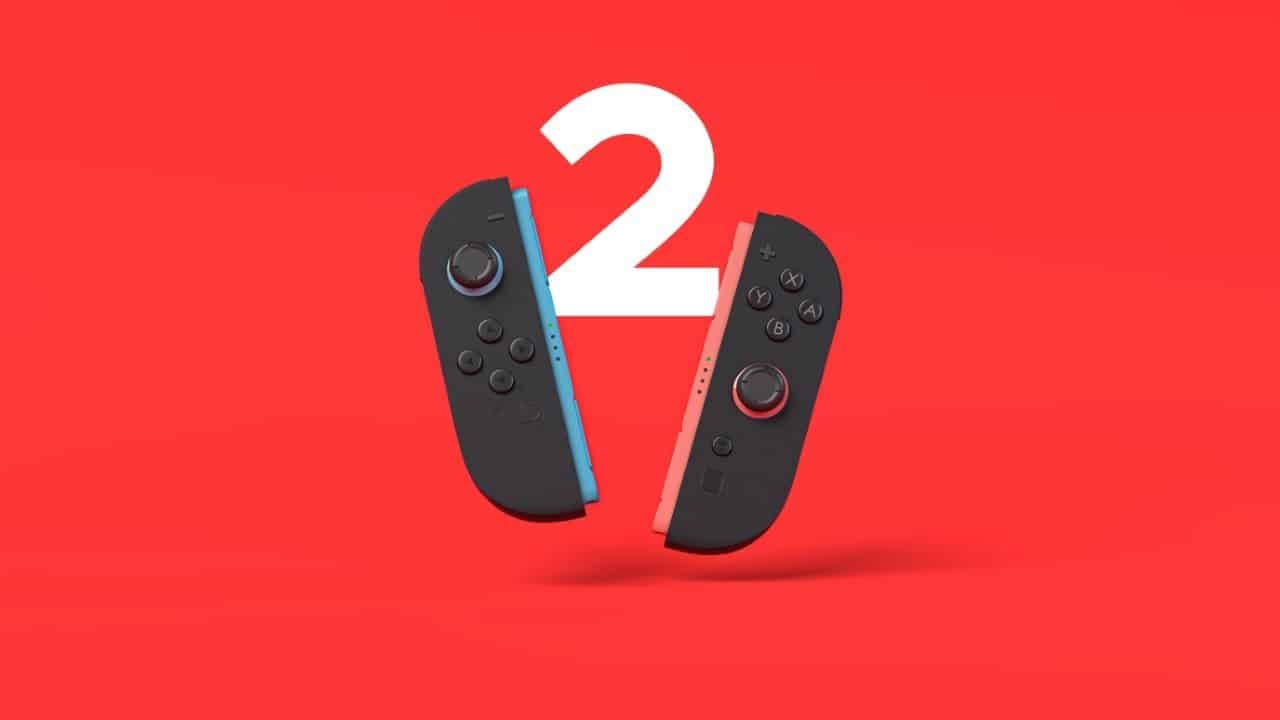
The competitive scenario in Japão presents specific challenges that explain part of the PlayStation 5’s slowdown. The market awaits with great anticipation the launch of the successor to Nintendo Switch, provisionally called Nintendo Switch 2, which historically causes a pause in consumption of other platforms. Consumidores tend to retain spending during console generation transitions, creating a temporary vacuum in existing hardware sales. Sony, aware of this cyclical behavior, adjusted its forecasts and strategies to focus less on the absolute volume of units sold and more on profitability per active user.
Sony’s response to this competitive environment has not been a price war, but rather the strengthening of the service ecosystem. The company understands that the installed base of consoles is already robust, surpassing the mark of tens of millions of global units. The focus now lies on maximizing screen time and recurring spend for these users. The strategy involves keeping gamers engaged through PlayStation Network by offering exclusive titles and subscription benefits that transcend the need to purchase a new device immediately.
In addition, the company made price adjustments on digital hardware and disc editions, seeking to protect profit margins in a global economic scenario of rising costs. Essa pragmatic approach signals to investors that the company prioritizes long-term financial health over an aggressive fight for market share based on hardware subsidies. Maintaining a high monthly active user (MAU) base is now the golden metric, surpassing simply counting consoles shipped.
The rise of Aniplex and entertainment dominance
The anime arm of Sony, led by Aniplex, has become a jewel in the conglomerate’s crown. The production and distribution of global hits such as “Demon Slayer: Vertical integration, ranging from animation production to streaming distribution and the sale of licensed merchandise, allows Sony to capture the majority of the value generated by these franchises. The financial report highlights that the anime segment is no longer a niche business, but a central pillar of financial support.
The synergy between the anime and music divisions is another strong point highlighted in the results. Artistas of Sony Music often perform the opening and ending songs of anime produced by Aniplex, creating a virtuous cycle of cross-promotion. When an anime explodes in popularity, associated music tracks dominate the streaming charts, generating additional revenue for the music division. Essa internal collaboration is something that few entertainment companies in the world can replicate with the same scale and efficiency.
The acquisition and consolidation of Crunchyroll also proved to be a master move, granting Sony control of the largest anime distribution platform in the West. Isso offers the company valuable data on consumer preferences outside of Japão, allowing for more assertive production decisions. The international success of anime films released in theaters, another aspect explored by the company, reinforces the thesis that Japanese content has a universal appeal that continues to grow, regardless of fluctuations in the electronic games market.



Future perspectives and media convergence
Looking ahead, Sony’s strategy points to even greater convergence between its gaming, film and music divisions. The company plans to use its most famous gaming IPs to create new audiovisual productions, following the critical and commercial success of recent adaptations. The goal is to transform gaming franchises into ubiquitous entertainment brands that exist simultaneously on consoles, movie screens and music streaming platforms.
For the PlayStation segment, this means that the brand’s value will not only be linked to the technical performance of the current console, but to the strength of its stories and characters. The company continues to invest heavily in development studios to ensure a steady stream of high-quality single-player games that serve as the foundation for these transmedia expansions. The narrative is seen as the most valuable asset, capable of retaining public loyalty for decades.
In summary, while Japanese retail hardware sales figures show a pullback, the overall health of Sony’s business appears more robust due to diversification. The company went from being an electronics manufacturer that also sold content to becoming an entertainment giant that uses hardware as just one means of delivering its experiences. As the fiscal year progresses, the expectation is that this dependence on hardware will continue to decrease proportionally, while digital and licensing revenues will take on a definitive role in the company’s balance sheet.
SEO Keywords: Sony, PlayStation 5, Aniplex, Mercado of Games, Nintendo Switch 2.
Search links used:
https://www.sony.com/ja/SonyInfo/IR/library/presen/er/1q_24.pdf
https://g1.globo.com/tecnologia/games/
https://www.uol.com.br/start/ultimas-noticias/
Veja Tambem em News (EN)

Research reveals that parents are unaware of how their children use artificial intelligence

Samsung releases new system update with new features for Galaxy Watch 4 users

Digital retail reduces the value of the Galaxy S25 5G smartphone with bank bonuses and device exchange

Amazon’s wireless CarPlay adapter has a 50% discount and high approval ratings from drivers

Zach Cregger’s new Resident Evil ignores games and focuses on an unprecedented story with new characters

Rumor suggests that Nintendo is preparing a special edition of the Switch 2 with a remake of Ocarina of Time

Apple accelerates production of the iPhone 17e and develops new Air model with dual camera system

Epic Games platform releases twelve high-budget games at no permanent cost for PC users

PlayStation 5 Pro price drop accelerates digital retail sales and eliminates global stocks

New Galaxy Watch 9 firmware appears on server and confirms progress in software development

Apple’s commemorative project tests cell phone with 1.1 millimeter edge and curved screen for 2027
