
Capcom optimizes Monster Hunter Wilds for Switch successor with focus on performance and visual stability


Capcom advances in the development of its main titles for the next generation of portable consoles, with special attention focused on the adaptation of Monster Hunter Wilds. Informações Recent technicals indicate that the Japanese developer is implementing robust engineering solutions to ensure the game runs smoothly on the Nintendo Switch successor. The team’s central goal is to ensure that the hunting experience maintains gameplay parity with the desktop and desktop console versions by utilizing advanced features of its proprietary architecture.
Processing and loading strategies
To enable a dense and complex open world on hybrid hardware, engineers at Capcom are using a tool called FastLoadMode. Esta functionality was specifically designed to minimize waiting time between areas and during mission startup. The technology works by aggressively managing memory, allowing essential textures and models to be loaded as a priority, ensuring that the player gets into the action without long interruptions, a vital feature for portability.
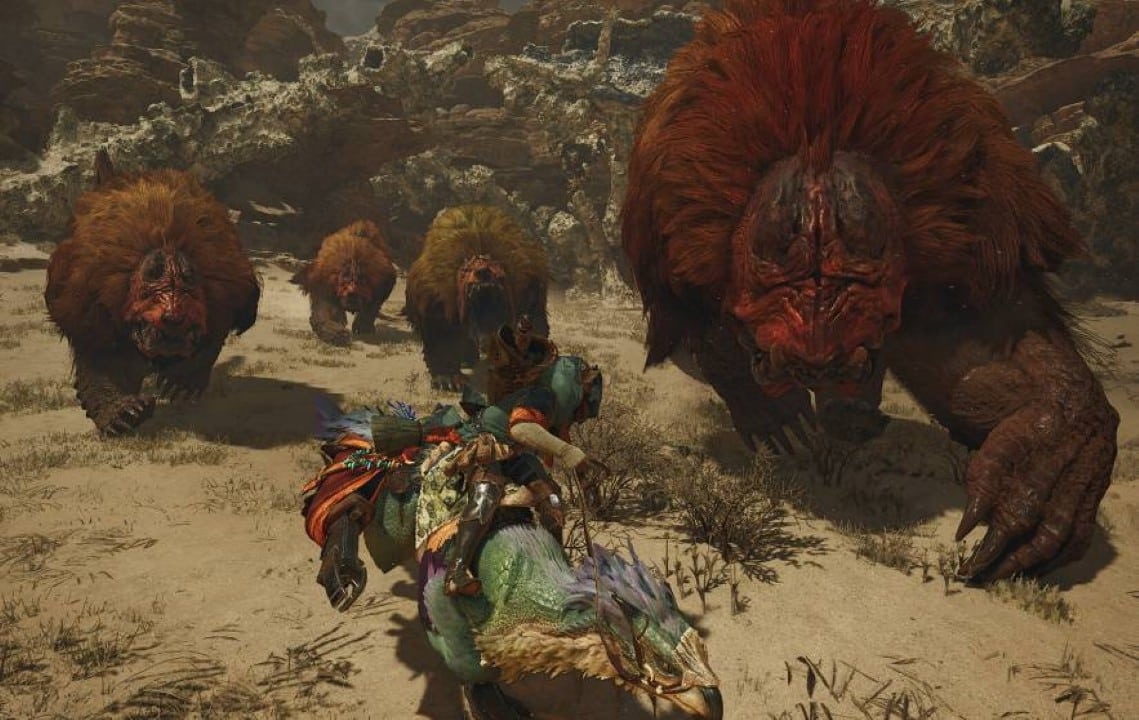
Another fundamental pillar in title optimization is the intensive use of occlusion techniques. The system, technically known as occlusion culling, works to not render objects, scenes or monsters that are outside the player’s camera field of view or blocked by other elements, such as mountains and structures. By failing to process what is not visible, the hardware saves valuable computational resources, which are redirected to maintaining a stable frame rate per second, even in moments of intense combat with multiple effects on the screen.
Visual parity and performance goals
The goal set by the development team is to achieve visual quality comparable to the medium and low settings of the PC version. Embora may seem like a reduction when compared to ultra-performance consoles, this equivalence represents a significant technological leap for a portable device. The intent is to preserve artistic integrity and visual clarity, ensuring that armor details, monster animations, and dynamic weather effects are faithfully reproduced.
Frame rate stability is treated as top priority over raw native resolution. Capcom understands that, in fast-action games like Monster Hunter, fluid movement is crucial to combat precision. Portanto, the RE
RE Scalability
The success of this adaptation lies in the versatility of RE Engine, the Capcom’s internal graphics engine. After its debut, the engine demonstrated an elastic ability to adapt, running everything from linear horror titles to complex open-world games. The engine’s architecture allows developers to tweak deep lighting and physics parameters, facilitating the transition from the more powerful platform code base to the Nintendo hardware without the need to rebuild the game from scratch.
This flexibility also suggests a promising future for the company’s other titles on the new console. The experience gained in optimizing Monster Hunter Wilds will serve as a basis for porting other games in the franchise and new intellectual properties. The ability to keep the game logic intact, changing only the graphical presentation, is what will allow cross-play and cross-progression, integrating the Nintendo console player base with the rest of the global community.
Impact on the notebook market
Technical confirmation of these optimization efforts reinforces the position of Nintendo’s upcoming console as a viable platform for modern AAA games. Running a title of the magnitude of Monster Hunter Wilds, with its complex living ecosystem systems and advanced artificial intelligence, serves as a definitive stress test for new hardware. The positive outcome of this development signals to other publishers that it is possible to bring new generation experiences to the hybrid format without compromising the creators’ original vision.
With the release expected to align with the company’s fiscal and strategic calendar, the version for the Switch successor will not just be a simplified port, but a native version built with the specifics of the hardware in mind. Isso demonstrates Capcom’s continued commitment to supporting Nintendo’s platforms, continuing the tradition of bringing the hunting franchise wherever audiences are, whether in their living room or on the go.



