
Defect in battery protection forces BYD to recall 89,000 Qin Plus units


Automotive giant BYD has begun a broad vehicle recall process in its domestic market, covering tens of thousands of units of one of its most popular hybrid models. The security measure was officially communicated to the regulatory authorities of China and aims to correct a flaw in the manufacturing process that could compromise the integrity of the automobile’s energy system. The preventative action reflects the increased rigor in quality standards required for new energy vehicles, especially in critical components such as high-voltage batteries.
Technical details of the production failure
The problem identified by the automaker’s engineers lies specifically in the assembly of the battery pack tray. Investigações pointed out that the polishing of the metal surface was insufficient in certain units, creating edges or irregularities that could come into direct contact with the electrical system wire harness. With the natural vibration of the vehicle in motion, this constant friction has the potential to wear down the insulation on the cables.
If the protective layer of the wires is broken, there is an imminent risk of a short circuit in the vehicle’s high voltage system. Essa electrical failure can quickly evolve into a thermal event, technically known as “thermal runaway”, where the battery overheats uncontrollably, creating a risk of fire and endangering the safety of occupants and third parties.
The failure does not affect the chemistry of the lithium cells themselves, but rather the mechanical integration of the peripheral components that guarantee the safe functioning of the set. Early detection of the defect allowed the company to structure an action plan before serious incidents became systemic in the circulating fleet.
Scope and timeline of the recall
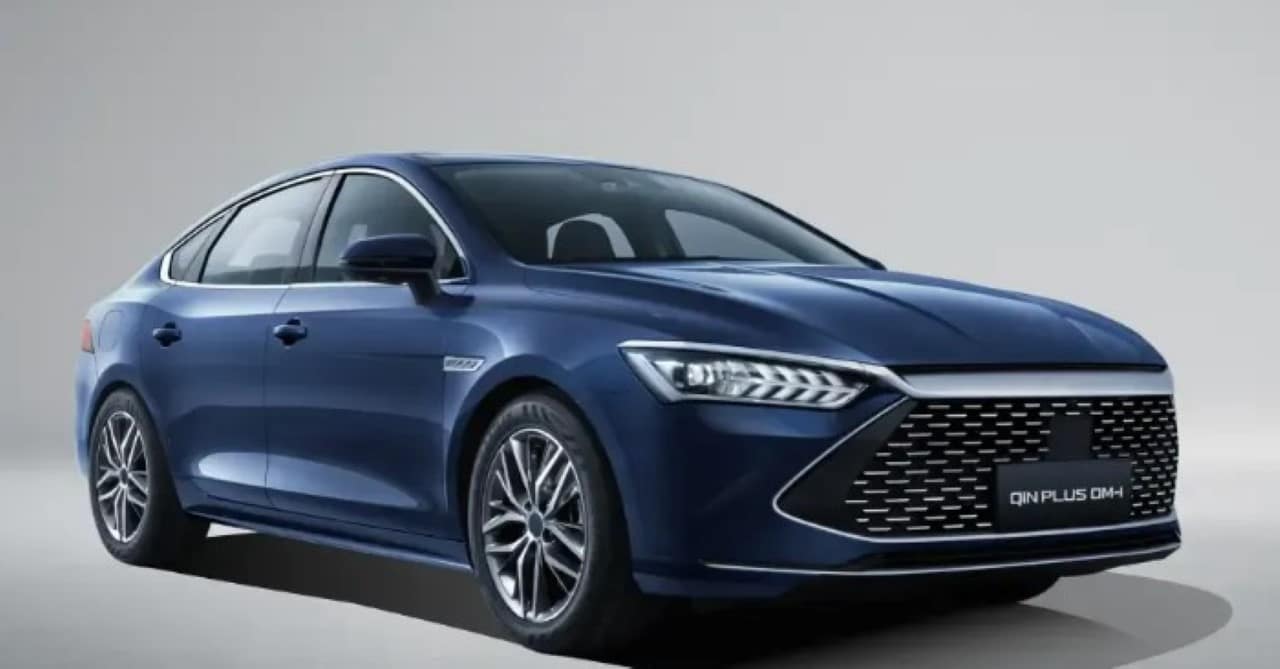
The call involves an exact total of 88,981 units of the Qin Plus DM-i sedan model. The affected vehicles were manufactured in a specific production window between January 15, 2021 and September 14, 2023.
Administração Estatal of Regulação of Transparency in the process is seen as essential to maintain consumer confidence in an extremely competitive market focused on electrification.
Remote repair and update procedures
To resolve the defect, BYD implemented a hybrid strategy that combines physical interventions and software updates. The network of authorized dealers will carry out detailed inspections of recalled vehicles to check the condition of the electrical harnesses and battery tray. Caso If damage or scratches are detected, the parts will be replaced or given additional protections at no cost to customers.
Simultaneously, the company will use “over-the-air” (OTA) update technology to send new parameters to the cars’ battery management system (BMS). The improved software will be able to detect anomalies in the electrical current with greater precision and in advance, alerting the driver of any irregularity in the insulation of the cables before a critical failure occurs.
This approach demonstrates how the connectivity of modern vehicles allows for more agile responses to hardware problems, creating additional layers of safety that did not exist in traditional combustion automobiles. Remote updating serves as constant surveillance, complementing the physical repair carried out in the workshops.
Market context and sales volume
Although the number of almost 90 thousand vehicles seems significant, it represents a controlled portion of the automaker’s total sales volume, which is experiencing a period of aggressive expansion. The Qin Plus DM-i model is one of the brand’s sales pillars, contributing significantly to the monthly registration records that the company has consistently recorded over the last year.
Recently, the manufacturer surpassed the barrier of 300 thousand vehicles sold in a single month, consolidating its global leadership in the electrified vehicle segment. The recall, therefore, is treated as a reputation maintenance and quality assurance procedure, rather than an operational crisis that threatens the company’s financial viability.
This episode adds to other recall actions carried out previously, involving models such as the Dolphin and the Yuan Plus, indicating that the exponential growth in production has required constant reviews in quality controls to ensure that safety keeps up with the pace of mass manufacturing.
Keywords: BYD, recall, Qin Plus DM-i, automotive safety.
Long-tail keywords: fire risk in electric car batteries.



