
Mercedes leads tests in Bahrain as rivals face problems with new Formula 1 rules

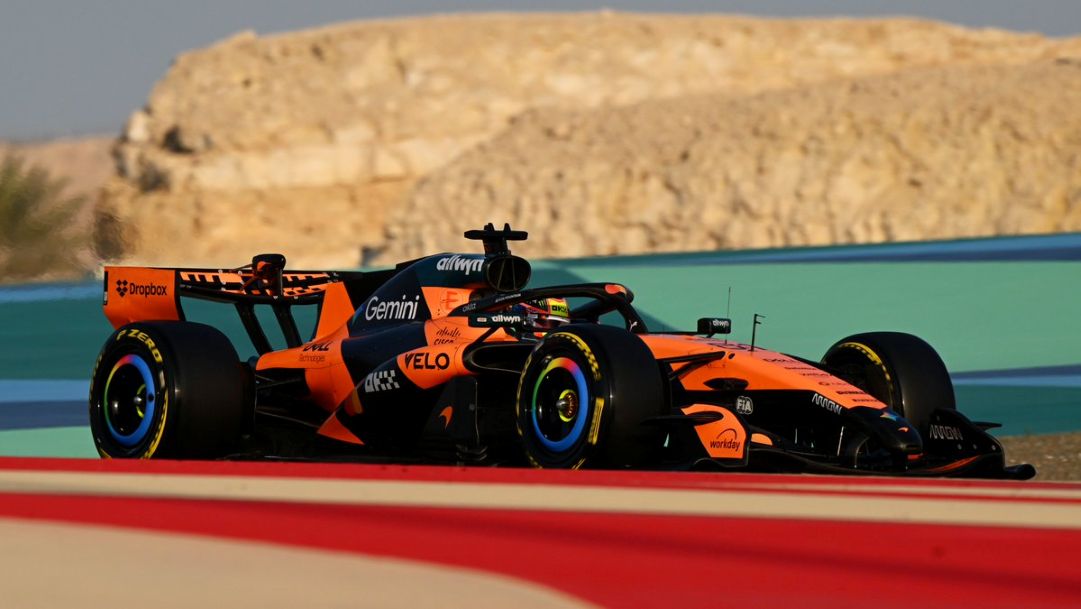
The first week of track activities at the Sakhir circuit revealed an unexpected scenario for the beginning of the new era of the top category of motorsport. George Russell and Kimi Antonelli dictated the rhythm of the sessions, placing Mercedes in a position of apparent superiority compared to its direct competitors. The German team demonstrated a robust interpretation of the new technical guidelines, while historical opponents grappled with the complexity of new power unit systems.
Teams such as Red Bull, Ferrari and McLaren faced significant difficulties during race simulations, especially in power management. The new regulations, which require an equal division between internal combustion and electric power, brought unprecedented engineering challenges to all teams, but the Brackley team appears to have found a more efficient initial balance.
😬
彼は最初ではないし、最後でもない! 👀#F1 #F1テスト pic.twitter.com/5Lk5Ctc9tY
— フォーミュラ 1 (@F1)2026 年 2 月 13 日
Technical challenges and adaptation to the new regulation
The concept of the new cars introduced variables that drastically altered the driving dynamics and team strategy. The implementation of active aerodynamics and the increase in electrical dependence have created a gulf in performance between those who got the initial design right and those who are still looking for fundamental corrections. The group made up of the four main teams seeks urgent solutions to mitigate tire degradation and rear instability caused by the immediate torque of the electric motors.
- The Mercedes dominated the timesheets with consistency in both fast laps and race pace with the Russell and Antonelli.
- Red Bull and Ferrari showed excessive tire wear and difficulties in recovering energy during long stints.
- The “Manual Override” system, which offers extra power for overtaking, has caused braking instability in several cars.
- Drivers have reported that battery management will be the deciding factor in winning races, outweighing the importance of pure top speed.
Surprise from Audi and disappointment from Aston Martin
The Audi, in its official debut after the acquisition of the Sauber, completed a test program focused entirely on reliability and surprised the paddock. Gabriel Bortoleto and Nico Hülkenberg managed to accumulate valuable mileage, allowing the team to collect crucial data for the project’s long-term development. The serenity in the German automaker’s pits contrasted with the atmosphere of tension in neighboring garages, indicating a solid birth for the new operation.
On the opposite side of the expectations table, Aston Martin failed to translate heavy investment into immediate performance. Mesmo with the technical consultancy of Adrian Newey and the experience of Fernando Alonso, the green car presented conceptual flaws that limited track time. The British team admitted that it will need time to unlock the potential of the new chassis, frustrating predictions that it would fight for victories in the early stages of the championship.
Safety and drivability concerns
Criticisms about the handling of the new models were unanimous among the drivers, who described the cars as complex and, at times, unpredictable. The need to ease off the accelerator on straights to recharge batteries has created dangerous speed differences between cars on the track, raising questions about safety in heavy traffic situations. The FIA is monitoring the situation to assess whether adjustments to the sporting regulations will be necessary before the first race in Melbourne.
Engineers work around the clock to refine power control software, trying to smooth out power delivery and make cars less skittish on corner exits. The technological “beast” created for 2026 requires cerebral piloting, where excessive aggression can drain the battery in a few laps, leaving the pilot vulnerable to attacks. The scenario for Grande Prêmio from Austrália remains uncertain, with Mercedes emerging as the favorite, but with a long development season ahead.





