
February’s lunar calendar starts with full phase and impacts tides along the entire Brazilian coast

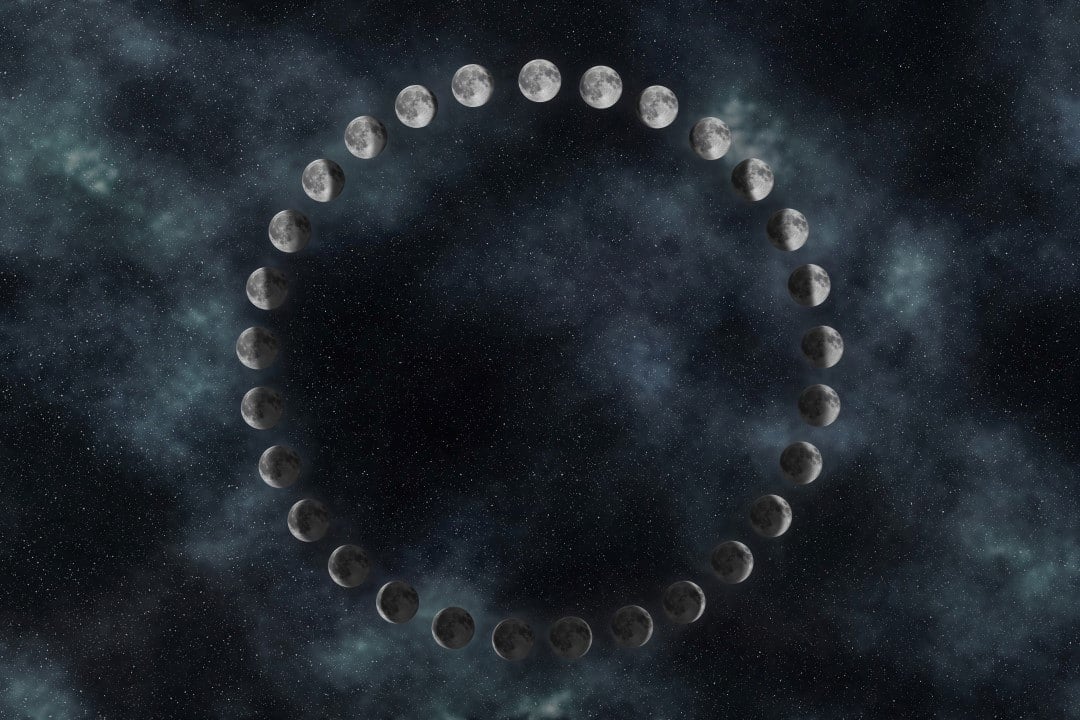
The second month of the year presents a particular astronomical configuration, marked by the immediate presence of maximum luminosity in the night sky. The cycle of the natural satellite of Terra, technically called a synodic month, completes its regular rotation of approximately 29 and a half days within the February calendar itself. Este phenomenon directly influences the behavior of the oceans and visibility conditions for observers in all regions of the country, demanding attention from both sailors and astronomy enthusiasts.
Experts point out that the orbital dynamics of this period favor different types of activities, depending on the alignment of the stars. Enquanto the first nights guarantee natural clarity, the passing of the weeks will bring the darkness necessary for viewing less bright celestial bodies. The precision of the times calculated for each phase transition strictly follows the official time zone of Brasília, serving as an essential guide for planning night and maritime activities.

Detailed transition schedule
The astronomical calendar establishes specific moments for the satellite’s visual changes, allowing observers to follow the evolution of reflected light. The cycle begins with maximum intensity and progresses to a gradual reduction, culminating in the temporary invisibility of the lunar disk before restarting the illumination process.
According to official data for the period, the main phases occur on the following dates and times:
– Lua Cheia: February 1st, at 7:10 pm, peak lighting moment;
– Quarto Minguante: February 9th, at 9:44 am, beginning to reduce visibility;
– Lua Nova: February 17th, at 9:03 am, characterized by the absence of reflected light;
– Quarto Crescente: February 24th, at 9:28 am, marking the progressive return of brightness.
Gravitational influence and tides
The movement of Lua in relation to Terra and Sol generates observable physical consequences in the oceans, a phenomenon closely monitored by meteorological institutes and the navy. Durante the beginning of the month, the gravitational alignment caused by Lua Cheia intensifies the amplitude of the waters, resulting in so-called spring tides. Este period requires increased caution in coastal regions, as sea levels tend to rise more than usual, affecting fishing activities and vessel moorings.
On the other hand, the following weeks bring a scenario of greater stability. Durante the phases of Quarto Minguante and Quarto Crescente, the stars form an angle of ninety degrees in relation to Terra. Esta geometric configuration partially nullifies gravitational forces, generating neap tides. At Nesses intervals, the variation between high and low tide is significantly smaller, providing more predictable and safer conditions for swimmers and small boats on the seafront.
Observation conditions in the national territory
The visibility of celestial phenomena is intrinsically linked to the meteorological conditions of each location. Para this month, forecasts indicate favorable scenarios especially in the Norte and Nordeste regions, where the incidence of cold fronts tends to be lower at this time of year. The inaugural Lua Cheia provides an excellent opportunity to use simple optical equipment, such as binoculars, which allow detailed viewing of lunar craters and “seas” due to the high contrast generated by direct sunlight on the satellite’s surface.
For amateur and professional astronomers looking to observe deep space, the second half of the month presents ideal conditions. The Lua Nova phase, scheduled for the 17th, eliminates natural light interference, making the night sky darker. Este environment is conducive to the identification of low-magnitude stars, nebulae and other celestial bodies that are generally obscured by the intense brightness of the satellite in other phases.
Residents of large urban centers, such as São Paulo and Rio of Janeiro, face additional challenges due to artificial light pollution. Para a complete observation experience, it is recommended to travel to rural, mountainous or coastal areas away from city lights. Nestes locations, the cleaner horizon and less atmospheric interference facilitate the propagation of starlight, allowing a clearer appreciation of the phenomena described in the astronomical calendar.
Relevance of continuous monitoring
The systematic monitoring of lunar phases transcends visual curiosity and plays a fundamental role in various sectors of the economy and science. In agriculture, cycles influence planting and harvest planning, while in navigation, prior knowledge of tides is vital for safety. National Observatórios use this data to calibrate climate forecasts and better understand global atmospheric dynamics, maintaining historical records that support research into the interaction between Terra and its natural satellite.




