Innovative design merges three rival consoles into a compact cabinet with shared cooling
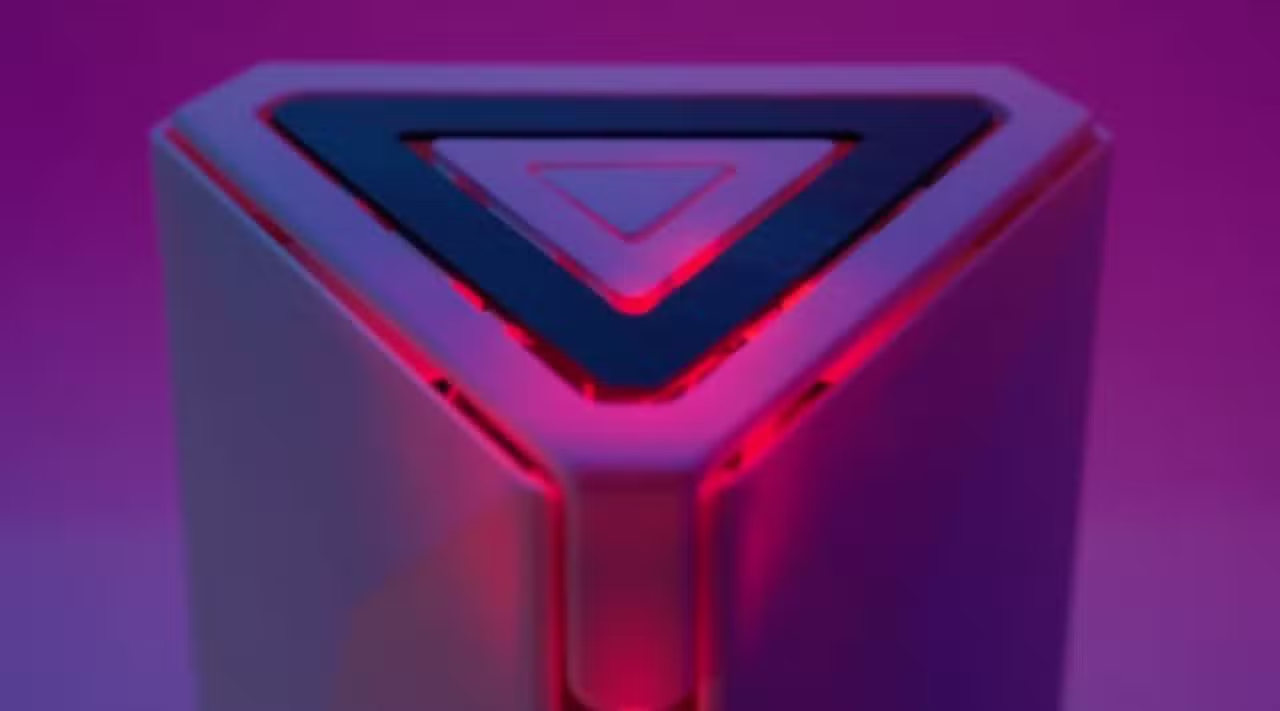
A hardware enthusiast known in the tech community as XNZ recently revealed an engineering feat that unifies today’s top gaming platforms into a single device. The project, provisionally named Ningtendo PXBOX 5, integrates the internal components of the PlayStation 5, Xbox Series
The central objective of the initiative was to eliminate the need to physically switch between multiple devices and reduce shelf space, ensuring immediate access to all game libraries. Para To enable the construction, the creator developed a triangular internal architecture system, where the motherboards of the three consoles were positioned equidistant, sharing a centralized thermal solution that manages airflow efficiently for all components simultaneously.
Advanced engineering and in-house customization
Carrying out the project required profound modifications to the original hardware, starting with the complete disassembly of commercial consoles to isolate only the vital parts. The modder had to design custom interconnects to allow a single power supply and cooling system to meet the varying power demands of each platform while maintaining operational stability without compromising the integrity of the electronic circuits.
For thermal management, a 120 millimeter fan was implemented at the base of the structure, which pulls cold air from the environment and pushes it vertically through the chassis, expelling heat through the top. Esta configuration mimics the aerodynamic efficiency seen in the Microsoft console and Apple computer, ensuring that even under heavy load the system maintains safe operating temperatures.
Manufacturing techniques and structural challenges
The construction of the external chassis used traditional methods combined with modern technology. The creator opted for the lost wax casting technique to create the complex metal parts, a choice motivated by the high cost that CNC machining of such intricate parts would have. The process involved the creation of 3D printed molds, which served as the basis for metal casting, resulting in a robust and professional finish.
Final assembly presented significant challenges, requiring millimeter precision to fit the modified boards and internal cabling. The use of an Arduino microcontroller was necessary to manage switching between systems through physical buttons on the top of the device, allowing the user to select which console they want to operate, accompanied by LED indicators that signal the machine’s status.


Hybrid and power system integration
The inclusion of Nintendo Switch 2 brought additional complexities due to its hybrid nature. Diferente than traditional desktop consoles, the Nintendo hardware required specific adaptations to maintain dock functionality, using USB-C extensions to ensure internal connectivity. The design preserved the system’s ability to recognize the original Joy-Con controls, maintaining the platform’s characteristic versatility.
In terms of energy, tests revealed that the standby consumption of the combined consoles is around 5 watts. Para To meet the maximum demand, which can reach 225 watts when high-performance systems are active, a 250-watt gallium nitride (GaN)-based power supply was installed. Esta technology made it possible to reduce the physical size of the source without sacrificing the power needed to power the hybrid array.
Performance and viability results
Practical testing demonstrated that the unified thermal solution is capable of handling the heat dissipation required by modern processors. Durante running demanding titles such as Ghost of Yorei on the PS5 hardware, the maximum temperature recorded in the internal components stabilized at 60 degrees
While the Ningtendo PXBOX 5 is an impressive working prototype, it remains a unique technical demonstration piece. The complexity of the modification, which involves risks of permanent damage to the original consoles and loss of warranties, makes mass production or commercialization of the kit unfeasible. The project serves, however, as an example of the modding community’s potential to overcome design limitations imposed by official manufacturers.
Veja Tambem em News (EN)

Research reveals that parents are unaware of how their children use artificial intelligence

Samsung releases new system update with new features for Galaxy Watch 4 users

Digital retail reduces the value of the Galaxy S25 5G smartphone with bank bonuses and device exchange

Amazon’s wireless CarPlay adapter has a 50% discount and high approval ratings from drivers

Zach Cregger’s new Resident Evil ignores games and focuses on an unprecedented story with new characters

Rumor suggests that Nintendo is preparing a special edition of the Switch 2 with a remake of Ocarina of Time

Apple accelerates production of the iPhone 17e and develops new Air model with dual camera system

Epic Games platform releases twelve high-budget games at no permanent cost for PC users

PlayStation 5 Pro price drop accelerates digital retail sales and eliminates global stocks

New Galaxy Watch 9 firmware appears on server and confirms progress in software development

Apple’s commemorative project tests cell phone with 1.1 millimeter edge and curved screen for 2027