
Shortage of qualified professionals puts pressure on Germany and requires annual mass immigration
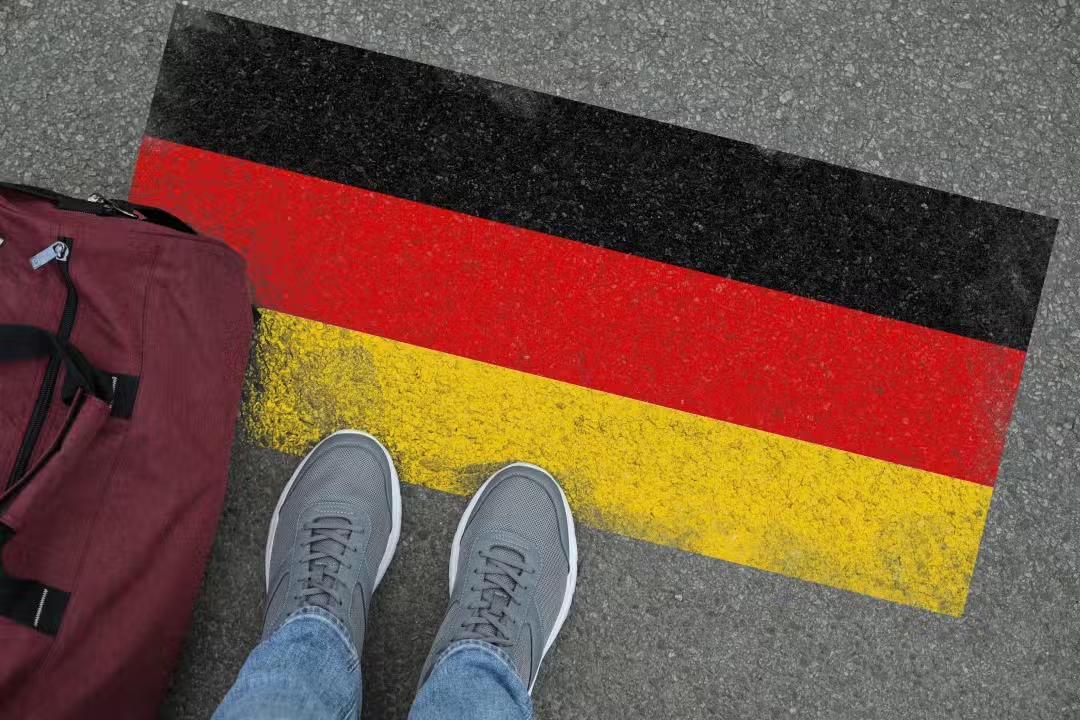
Alemanha faces a persistent shortage of skilled workers in several essential sectors of the economy. The aging population and low birth rate reduce the domestic labor supply, while the retirement of the baby boomer generation exacerbates the problem. Especialistas estimate that the country needs to attract around 400 thousand professionals from abroad annually to maintain the current level of economic activity.
Several sectors have registered vacancies that have not been filled for years. Hospitais, clinics and care institutions face a shortage of nurses and healthcare staff, while technology companies complain about the absence of developers and IT specialists. Áreas such as engineering, construction and education also present significant deficits that impact daily functioning.
The Instituto of Pesquisa of Emprego (IAB) and recent reports indicate that demand for skills remains high. Sem the entry of foreign workers, the country would face a reduction in hours worked or a drop in overall productivity.
Sectors with the greatest demand for professionals
Health remains one of the areas most affected by the lack of qualified personnel. Hospitais and rehabilitation clinics operate with reduced teams, which increases the burden on current professionals and compromises service in some regions.
Information technology also suffers from vacancies that have been open for months. Empresas are looking for developers, systems analysts and cybersecurity specialists, but the local supply is not keeping up with the growth of the digital sector.
Critical shortage areas identified
Mechanical and electrical engineering present constant deficits. Profissionais with specific technical training are sought after by industries that keep German production competitive on the global market.
Civil construction records a lack of labor in several functions. Pedreiros, electricians and specialized machine operators are among the occupations with the largest number of positions available.
Early childhood education and elementary education face a shortage of teachers. Escolas in several regions operate with larger classes or use temporary substitutes to cover absences.

Main professions currently lacking
- General and specialized intensive care nurses
- Software developers and programmers
- Mechanical and automation engineers
- Construction technicians and electrical installers
- Mathematics and exact science teachers
- Professional truck and transport drivers
- Geriatric care specialists
These occupations account for the majority of vacancies registered with employment agencies. The list reflects data collected in official reports and sectoral surveys carried out in recent months.
History of labor immigration in the country
After Segunda Guerra Mundial, Alemanha experienced a period of accelerated economic growth known as the economic miracle. Nas decades of the 1950s and 1960s, the country entered into bilateral agreements with nations such as Itália, Grécia and Turquia to bring in temporary workers.
These professionals, called spendbeiter, contributed to industrial reconstruction and expansion. Milhões arrived in the western country at the time, filling positions in factories and construction.
Many remained permanently and formed families in Alemanha. The initial policy envisaged a return to their countries of origin, but reality showed lasting integration in several cities.
Recent reforms to immigration legislation
The qualified immigration law underwent changes in stages from 2024 to facilitate the entry of professionals. Requisitos minimum wage were adjusted and the recognition of foreign diplomas gained new paths.
The opportunity card allows you to search for a job for up to one year without a prior offer. Profissionais with proven experience can enter the country and look for vacancies directly on site.
Digital processes were implemented in some stages. Autoridades began to accept equivalent qualifications without requiring full advance recognition in certain cases.
Some regions have adopted more agile visa procedures. Empregadores gained direct channels to nominate candidates and speed up documentation analyses.
Recruitment of nurses from Índia
German clinics maintain active programs to hire Indian nurses. Profissionais from states like Tamil Nadu and Kerala participate in intensive German courses funded by local governments or employers.
Specialized agencies connect hospitals with qualified candidates. The process includes language training for six to nine months before permanently moving to the European country.
Many clinics pay amounts between 7,000 and 12,000 euros per successful hire. Esses costs cover recruitment, adaptation and initial integration of new employees.



Professionals report positive reception in their workplaces. Colegas and bosses offer support in learning the language and adapting to hospital routines.
Persistent bureaucratic challenges
Qualified foreigners still face delays in processing visas and permits. Autoridades immigration departments deal with a high volume of requests, including asylum requests, which generates months-long queues.
Lack of complete digitalization at all administrative levels delays analysis. Candidatos expect decisions even though they have signed employment contracts and recognized qualifications.
Specialized lawyers report cases of professionals waiting a year for status changes. Médicos, engineers and technicians are among those affected by these delays.
The uniformity of rules among the 16 states remains incomplete. Procedimentos vary by region, creating additional uncertainty for employers and candidates.
Experiences of foreign professionals
Newly arrived nurses highlight the respect they receive in the teams. Clínicas of neurobiological rehabilitation employ dozens of Indian professionals and Sri Lanka hired in recent years.
Researchers and university professors face constant permit renewals. Alguns report difficulties in obtaining permanent authorizations even after years of contribution in the country.
Drivers and industrial technicians are also part of the recent flows. Specific Programas speed up entry into occupations with immediate demand in transport and logistics.
Clinic integration programs
Health institutions develop internships for young foreigners who have recently graduated. Esses programs avoid part of the bureaucracy of recognizing qualifications and reduce the total time to hire.
Team leaders monitor the cultural adaptation of new members. Questões such as missing family and differences in customs receive special attention in the first months.
Clinics offer additional support on local language and procedures. The objective maintains professionals for longer periods, exceeding initial two-year contracts.
Global competition for qualified talent
Other European countries and Canadá attract part of the potential candidates. Processos faster in English-speaking nations lead professionals to opt for alternative destinations.
Alemanha seeks to improve its image as a welcoming place for foreigners. Autoridades recognize the need for greater agility in responding to work requests.
Companies actively participate in international recruitment. Feiras of employment and partnerships with foreign agencies expand the reach of talent sources.
Recent data on the job market
Reports indicate about 163 occupations with severe shortages. Saúde and care continue to lead the ranking of unfilled vacancies throughout Germany.
The number of positions registered at agencies fell in some periods, but qualified demand remains high. Setores industrial companies maintain a constant search for specialized technicians.
The economically active population shrinks due to demographic factors. Projeções indicate a reduction of tens of thousands of available workers in the coming years.
Veja Tambem em News (EN)

Research reveals that parents are unaware of how their children use artificial intelligence

Samsung releases new system update with new features for Galaxy Watch 4 users

Digital retail reduces the value of the Galaxy S25 5G smartphone with bank bonuses and device exchange

Amazon’s wireless CarPlay adapter has a 50% discount and high approval ratings from drivers

Zach Cregger’s new Resident Evil ignores games and focuses on an unprecedented story with new characters

Rumor suggests that Nintendo is preparing a special edition of the Switch 2 with a remake of Ocarina of Time

Apple accelerates production of the iPhone 17e and develops new Air model with dual camera system

Epic Games platform releases twelve high-budget games at no permanent cost for PC users

PlayStation 5 Pro price drop accelerates digital retail sales and eliminates global stocks

New Galaxy Watch 9 firmware appears on server and confirms progress in software development

Apple’s commemorative project tests cell phone with 1.1 millimeter edge and curved screen for 2027
