
Sixth generation Toyota RAV4 eliminates pure combustion engine and adopts Prius-inspired look


The Toyota officially announced the arrival of the sixth generation of the RAV4, consolidating a profound strategic change for one of the best-selling vehicles in the world. The sports utility vehicle is undergoing a complete transformation in its engine philosophy, definitively abandoning versions powered exclusively by internal combustion. The Japanese automaker confirmed that the new line will be entirely electrified, marking an inflection point in the model’s trajectory and aligning with the brand’s global decarbonization goals.
This significant update is not just restricted to the mechanical set, but reflects the manufacturer’s effort to maintain leadership in an increasingly competitive and demanding segment. The launch schedule foresees the Japanese market debut in December 2025, serving as the initial stage for the new optimized platform. Para international markets, including strategic regions such as Brasil and Estados Unidos, the model is expected to arrive at dealerships during the first half of 2026.
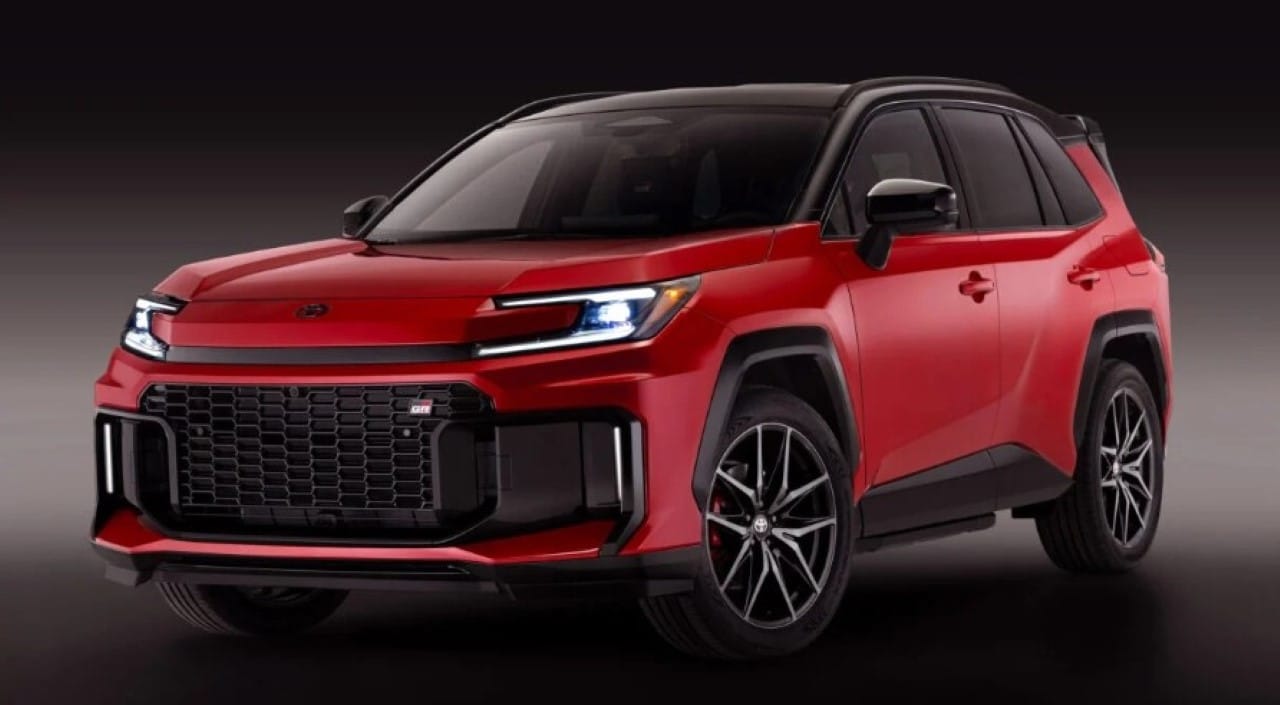
The global scaling strategy will allow Toyota to adjust production lines and distribution logistics, ensuring that anticipated high demand is met efficiently. The move to remove pure gasoline options and focus on hybrid and plug-in hybrid (PHEV) variants demonstrates the brand’s confidence in the market’s maturity for the energy transition, without giving up the historical reliability that the RAV4 name carries.
Visual identity Hammerhead and aerodynamics
The design of the new generation breaks with the conservatism of previous versions and adopts the visual language known as “Hammerhead”, or hammerhead shark head. The Esta aesthetic is already present in the automaker’s most recent launches, such as the new Prius and the Crown line, giving the SUV a much more technological and aggressive appearance. The front of the vehicle displays a sharper and more aerodynamic profile, with narrow LED headlights that harmoniously integrate with a renewed front grille.
Aesthetic changes play a crucial functional role, contributing to the model’s energy efficiency. The new design was designed to reduce aerodynamic drag, which directly impacts fuel economy at high speeds and reduces wind noise. Nas sides and rear, the utility preserves the robustness characteristic of the category, but with cleaner and more sophisticated lines. The taillights have been redesigned to run the entire width of the car, creating a unique and modern lighting signature.
Toyota confirmed that the model will be available in versions with different finishes to suit different consumer profiles. The Adventure configuration will maintain the focus on a more off-road and robust look, while the Z version will be oriented towards a more urban and luxurious finish. The overall dimensions of the vehicle were optimized thanks to the updated TNGA platform (Toyota New Global Architecture), which received structural reinforcements to accommodate new propulsion technologies and raise safety standards.
Evolution of the hybrid package and intelligent traction
The big mechanical novelty lies in the exclusion of pure gasoline engines in favor of an improved hybrid system. The new RAV4 will be powered by a 2.5-liter internal combustion engine working in conjunction with powerful electric motors. The system’s combined power reaches 226 horsepower, providing a more agile and vigorous response than the previous generation. Preliminary Dados indicate that acceleration from 0 to 100 km/h was reduced by approximately 0.5 seconds, proving that the search for efficiency did not compromise dynamic performance.
The E-Four all-wheel drive system appears as another relevant technical highlight. Diferente of traditional mechanical systems, the E-Four uses an electric motor dedicated exclusively to the rear axle. Essa configuration allows for more precise and instantaneous torque distribution between the wheels, resulting in greater cornering stability and better traction capacity on slippery or uneven surfaces.
In addition to the conventional hybrid version (HEV), the automaker will maintain the plug-in hybrid variant (PHEV) in its portfolio. Esta option promises a range in pure electric mode of over 100 kilometers, an ideal feature for daily urban use, allowing many drivers to carry out their routine journeys without consuming gasoline.
Technological interior and refined ergonomics
The SUV’s cabin has been completely redesigned to raise the level of comfort and connectivity. The dashboard is now dominated by a new multimedia center with a 14-inch screen, which offers higher resolution and faster data processing for the navigation and entertainment systems. The instrument panel has also become fully digital, allowing the driver to personalize the information displayed according to the needs of the moment, prioritizing consumption data or route instructions.
Despite massive digitalization, the brand chose to maintain physical controls for essential functions, such as the air conditioning system and audio volume. Essa ergonomic decision aims to facilitate operation while driving, preventing the driver from having to divert attention to navigate through menus on touch screens. Acoustic insulation was reinforced and the use of soft-touch materials on the dashboard and doors was increased, conveying a feeling of greater refinement and construction quality.
Advanced security and market positioning
The Toyota Safety Sense security suite has been updated to its latest version, expanding hazard detection capabilities. The pre-collision system can now identify pedestrians and cyclists with greater accuracy, even in low light conditions. Adaptive cruise control (ACC) has also received improvements, offering more fluid and natural semi-autonomous driving on roads, in addition to helping with lane keeping with more subtle steering wheel corrections.
In the competitive scenario, the new RAV4 will face strong rivals such as the Honda CR-V and the Volkswagen Tiguan. Nos Estados Unidos, the estimated starting price is around $31,900. With the start of global production and distribution scheduled for 2026, the model is expected to continue to be the brand’s sales pillar, attracting consumers who seek the Japanese company’s historical reliability combined with the latest innovations in electrification and automotive design.



