
Asteroid monitored by NASA could reach the lunar surface in 2032 and poses no risk to the planet

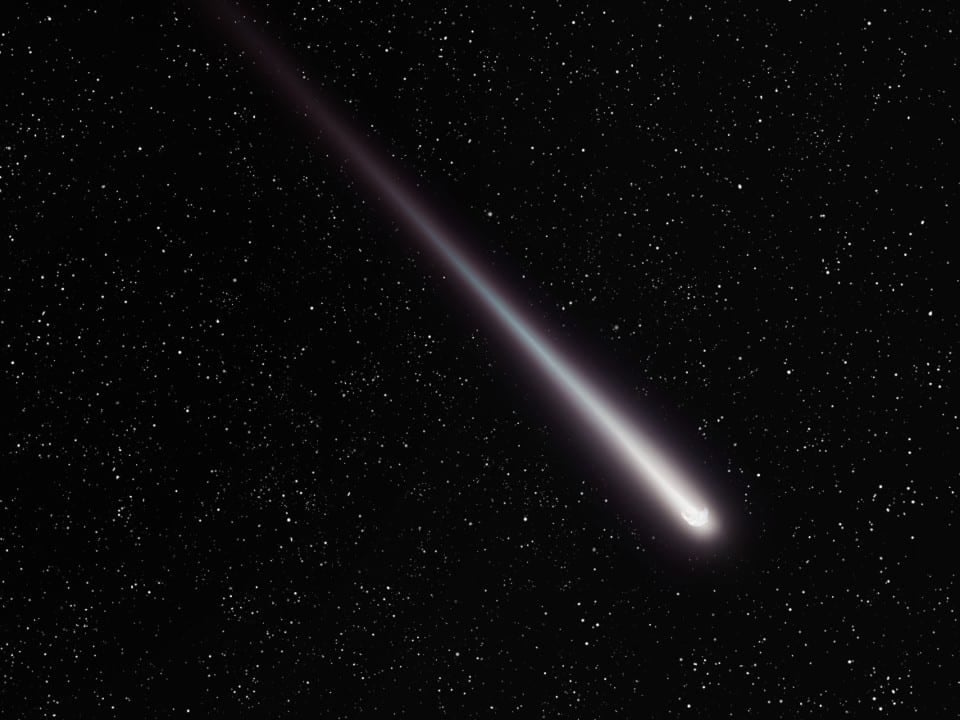
Space agencies around the world have intensified monitoring of asteroid 2024 YR4, a celestial body that entered astronomers’ radar at the end of 2024. The most recent projections, validated by institutions such as Nasa and Agência Espacial Europeia (ESA), indicate a 4% probability of the object colliding with Lua on December 22, 2032. Especialistas are categorical in stating that there is no risk of impact with the Terra, guaranteeing the safety of our planet in the face of the object’s passage.
The asteroid’s trajectory has been mapped with increasing precision thanks to the use of advanced computer models that simulate thousands of possible orbital scenarios for the coming years. Embora the chance of a collision with the natural satellite is considered low in absolute terms, it is statistically relevant for the scientific community, which sees the event as a rare opportunity for study. Most simulations, however, point to a safe passage of the object, without physical contact with the lunar surface.

The focus of observations at this time lies on refining the orbital data, as the exact position of the asteroid may undergo small changes due to gravitational influences over time. The astronomical community takes advantage of specific visibility windows to collect new information, progressively discarding risk scenarios and adjusting the error margins of current predictions.
Trajectory monitoring and ground safety
Confirmation that 2024 YR4 does not pose a threat to Terra brought relief, but did not diminish scientific interest in its path through the solar system. The object periodically crosses the orbits of Terra and Lua, creating points of intersection that require constant monitoring by planetary defense systems. The absence of danger to humanity allows efforts to focus purely on the dynamic analysis of the celestial body and the possible consequences of an impact on the lunar soil.
If Caso collides with Lua, the effects would be restricted to the satellite’s environment, without the ability to generate gravitational or seismic changes that affect Terra. Mesmo the ejection of lunar debris, resulting from an impact of this magnitude, would not have enough force to reach the Earth’s atmosphere in a dangerous way, with the majority of the material being dispersed in space itself or maintained in lunar orbit.
Details about the composition and dimensions of the celestial body
The asteroid has dimensions that place it in the category of potentially dangerous objects, although its size is modest when compared to large extinguishers of the past. With a structure comparable to a building of approximately 20 floors, 2024 YR4 presents characteristics typical of asteroids that orbit close to Terra. The analysis of their composition and physical behavior is essential to understand how bodies of this size interact with the gravity of planets and satellites.
- Estimated diameter between 53 and 67 meters.
- Official classification as a group Apollo asteroid.
- Relative speed considered high during approaches.
- Uninterrupted monitoring by international telescope networks.
An impact of an object with these specifications on Lua would result in the formation of a significant crater, visible through astronomical instruments. The energy released would be equivalent to the detonation of millions of tons of TNT, creating a brief visual spectacle for observers equipped on the Terra, but without practical consequences for life on the planet.
Predicted scenarios for a possible lunar impact
The possibility of a collision, kept at 4%, suggests that the event could release a massive amount of kinetic energy onto the surface of Lua. Cientistas estimate that the shock would excavate a crater up to a kilometer in diameter, raising a plume of dust and rocks that could be analyzed spectroscopically to reveal the composition of the lunar subsurface. Esse type of natural event works as an open-air laboratory to test impact models.
The flash resulting from the impact would be captured by ground-based and orbital telescopes, providing real-time data on the physics of high-speed collisions. The dispersion of material, estimated at up to 100 million kilograms of lunar regolith, would occur in a low-gravity environment, which differs substantially from impact models on Terra. Estudos indicate that larger fragments would lose speed quickly, eliminating risks for artificial satellites in operation.
The validation of these models is crucial for future planetary defense missions, serving as a comparison for asteroid deflection tests, such as those carried out by the DART mission. Observing a natural impact would offer “real proof” of theories developed in the laboratory, strengthening human ability to predict and react to cosmic events.
Schedule of observations and advancement of planetary defense
The astronomical calendar for 2024 YR4 predicts decisive moments of observation, especially during approach windows that occur before the critical date in 2032. Essas observations are essential to definitively confirm or rule out the probability of impact.
Global coordination between space agencies ensures that the object remains under priority surveillance, with constant data sharing between nations. Advances in sensing technology allow humanity to monitor the sky far in advance that would have been impossible decades ago, transforming uncertainty into strategic planning. The case of this asteroid exemplifies the maturity of planetary defense programs, which today are able to separate real risks from purely scientific events.
As new sensor technologies come into operation in the coming years, the margin of error in predictions is likely to decrease dramatically. Continued investment in observational astronomy not only protects Terra from surprise threats, but also expands knowledge about the dynamics of our solar system, preparing civilization for future challenges in space.




