
First annular solar eclipse of the year occurs this Tuesday and experts rule out the risk of a blackout

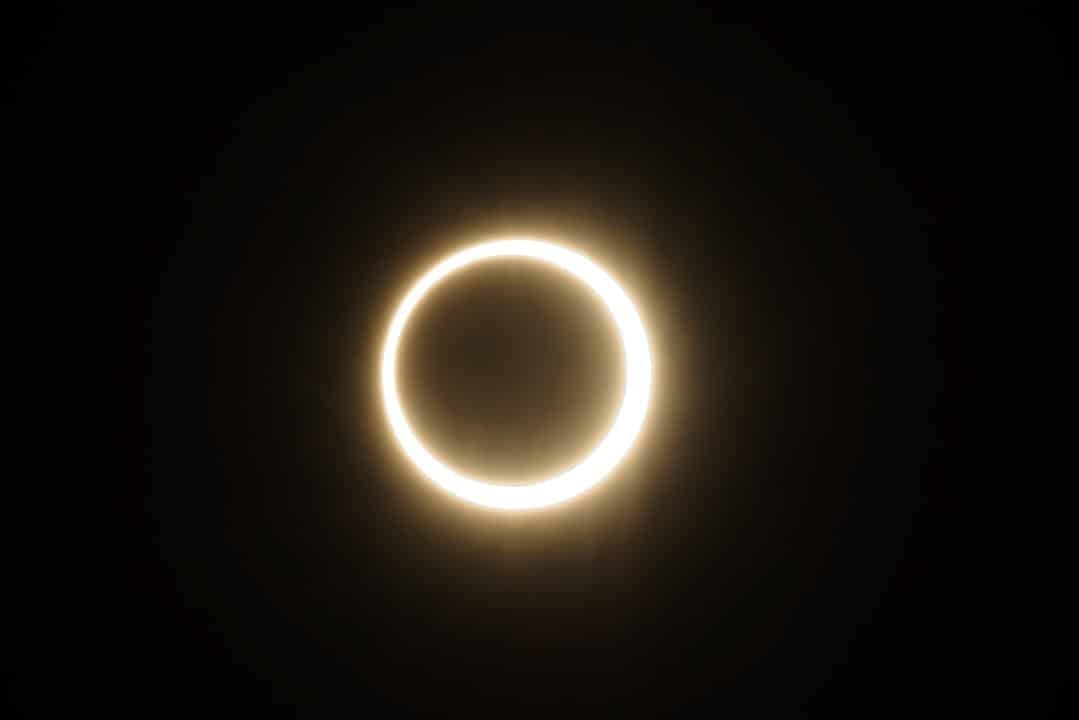
This Tuesday, February 17th, the sky will be the stage for an astronomical alignment that arouses curiosity and debates on social media. The Lua will be positioned between the Terra and the Sol, creating the phenomenon known technically as an annular solar eclipse. Apesar Despite alarmist speculation about a supposed global energy collapse, scientific institutions guarantee that the event is purely visual and safe.
Celestial alignment occurs when the natural satellite, being at its furthest point in Earth’s orbit, cannot completely cover the solar disk. Isso generates a characteristic luminous edge around the lunar silhouette, popularly called the ring of fire.
Astronomers and physicists monitor the event precisely, ruling out any possibility of interference with electrical networks or telecommunications systems. The spread of rumors about a blackout lacks scientific basis and only serves to generate unnecessary anxiety among the population.
For astronomy enthusiasts, the day marks an opportunity to better understand celestial mechanics. The movement of the stars follows rigorous physical laws, allowing scientists to predict eclipses years in advance, without surprises or risks to modern infrastructure.
Restricted visibility and frustration at Brasil
Observation of the phenomenon, unfortunately, will not be possible from Brazilian territory on this occasion. Observatório Nacional confirmed that the shadow cast by Lua will not reach the country, frustrating the expectations of many local observers who were awaiting the spectacle.
The annularity band, where the visual effect is complete, crosses regions that are difficult to geographically access. Apenas observers located in specific parts of Antártida and in limited areas in the south of África and América of Sul will be able to witness the event in its entirety.
Even in areas where the eclipse will be visible, weather conditions play a crucial role. Nuvens or atmospheric instability can block the view of Sol, requiring planning and luck on the part of eclipse chasers who have traveled to these remote locations.
Essential care and eye safety
Regardless of geographic location, the golden rule for solar observation remains unchanged and strict. Olhar directly into the star without adequate protection can result in irreversible damage to vision, including retinal burns that lead to permanent blindness.
Experts reiterate that conventional sunglasses, x-ray plates or photographic films do not offer any safety. Ultraviolet and infrared radiation from Sol require certified filters to be blocked efficiently during astronomical observation.
Check out the main safety recommendations for solar events:
- Only use special eclipse glasses with international safety certification.
- Avoid using binoculars or telescopes without solar filters attached to the front opening.
- Opt for indirect projection methods, such as using a dark box or projecting light through holes in paper.
- Supervise children constantly to prevent them from looking at the Sol without protection.
The mechanics behind the ring of light
The occurrence of this specific type of eclipse is due to the elliptical orbit of Lua around our planet. Quando alignment occurs during lunar apogee, the satellite appears to be smaller than Sol in the sky, making the total coverage that characterizes total eclipses impossible.
This orbital distance is directly responsible for the formation of the luminous ring. The spatial geometry involved demonstrates the complexity and beauty of natural cycles, transforming the sky into a physics laboratory on a monumental scale.
Future Perspectives for Observers
Although this Tuesday’s event does not include Brasil, the astronomical calendar reserves new opportunities for the coming years. Brazilians’ patience will soon be rewarded, with predictions of new alignments that can be seen from the national territory.
The next annular solar eclipse visible at Brasil is scheduled for February 6, 2027.



