
João Fonseca and Marcelo Melo beat Argentine and Italian pairs in Rio Open debut

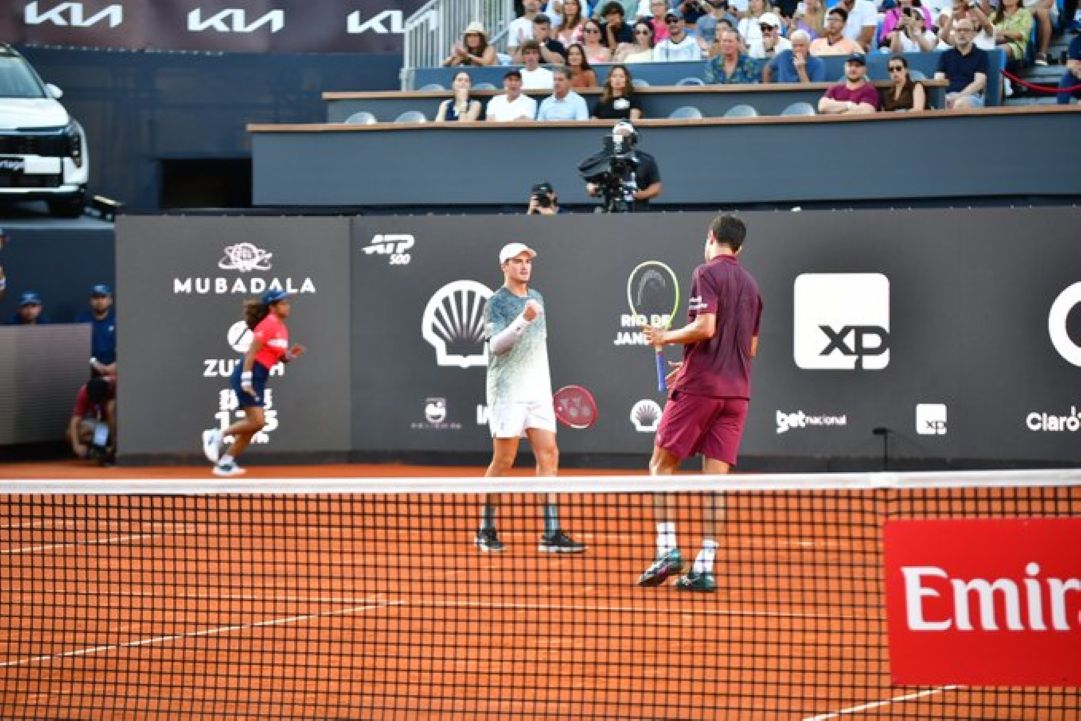
The Brazilian duo formed by the young João Fonseca and the experienced Marcelo Melo began their journey in the Rio Open with a consistent victory on the night of this Monday, February 16, 2026. 6/4 and 6/4, in a match valid for the first round of the doubles bracket.
The confrontation marked a quick adaptation for the Brazilians, who had their opponents changed a few hours before the start of the match due to the withdrawal of Frenchman Alexandre Müller. With the departure of Müller and his original partner, the Bosnian Damir Dzumhur, the tournament organization integrated the partnership between Burruchaga and Pellegrino, who were unable to contain the volume of play imposed by the Minas Gerais-Rioca partnership.
The classification guarantees Fonseca and Melo their presence in the quarterfinals of the biggest tennis tournament in the América of the The bracket indicates that the Brazilians will face the winners of the duel between the Argentines Máximo González and Andrés Molteni against the duo formed by the Colombian Gonzalo Escobar and the Mexican Miguel Ángel Varela.
🇧🇷 Marcelo Melo/João Fonseca 🇧🇷 is a winning duo! 👏
— Rio Open (@RioOpenOficial)February 16, 2026
They score 6/4 6/4 on Burruchaga/Pellegrino and advance through the bracket 🎾#RioOpen pic.twitter.com/iqUVImbSdz
Technical performance and dominance in the first set
From the beginning of the match, the Brazilian duo’s strategy was based on the aggressiveness of their serves and the quick occupation of the net, a hallmark of the Marcelo Melo game. João Fonseca, in turn, demonstrated solidity at the back of the court, using his powerful forehand to unbalance ball exchanges and pressure his opponents’ service in crucial moments of the opening set.
Despite territorial dominance, the Brazilians encountered resistance in games decided at the golden point (no-ad), when the score reached 40/40. Burruchaga and
At the decisive point of the first set, a firm return from Melo generated a short ball that allowed João Fonseca to finish with precision, sealing the partial at 6/4. The harmony between the 42-year-old veteran and the 19-year-old was celebrated by the fans present on the central court, highlighting the good rapport of the duo that unites different generations of national tennis.
Reaction and turnaround in the second half of the confrontation
The second set presented a scenario of greater instability for the Brazilians in the first games, especially with fluctuations in the Marcelo Melo service. The tennis player from Minas Gerais faced difficulties using his first serve and made mistakes when approaching the net, which allowed his opponents to achieve the first service break of the game and open a 3-1 lead.
The Brazilian recovery began with maintaining the intensity of João Fonseca, who continued serving with speed and precision to prevent his rivals’ advantage from increasing. In the sixth game, the Brazilians took advantage of Burruchaga’s service failures and, after another aggressive forehand from
- Maintaining focus on pressure points after the break suffered.
- Use of strategic lobs to keep opponents away from the net.
- Efficiency in short volleys executed by Marcelo Melo from the back of the court.
- Variation of effects in João Fonseca services during final games.
The definition of the match occurred again in the tenth game, when Brazilian pressure forced unforced errors from Burruchaga on his own serve. With two match points available, Marcelo Melo executed a precise winner to end the match in just over an hour and twenty minutes of play, confirming the home duo’s favoritism among the Rio public.
Impact of withdrawals and main draw changes
Alexandre Müller’s withdrawal not only affected the doubles competition, but also generated significant repercussions in the singles bracket, where the Frenchman was defending important points for having been a finalist in the previous edition. Alegando physical issues, the tennis player used his social networks to express his frustration at not being able to compete in the Rio of Janeiro and confirmed that he will be off the circuit for the next few weeks to recover.
With a place open in the singles bracket, the Italian Francesco Passaro entered the competition as a lucky loser, after being defeated in the final stage of qualifying. The draw determined that Passaro will have Croatian Dino Prižmić as his debut opponent, changing the dynamics of one of the most disputed quadrants of the tournament, which features big names in the clay court world.
The Rio Open organization reinforced that the last-minute changes follow ATP protocols for withdrawals after the final scoresheet has been signed. Para the public, the victory of Fonseca and
Technical preparation for the tournament sequence at Rio
After the victory in their debut, João Fonseca and Marcelo Melo must carry out specific training sessions to adjust their defensive positioning and the use of second serves. The technical committee notes that, although the victory was in straight sets, the fluctuation that occurred at the beginning of the second set is a point of attention for clashes against specialist pairs, such as those appearing in the next stage.
Melo highlighted in brief statements that playing alongside Fonseca requires constant adaptation, given the power of the young carioca’s strikes, which often opens up quick paths for the final volley. The strategy for the quarterfinals must maintain this basis, focusing on maintaining constant pressure on the returners and minimizing unforced errors in service games.
The Rio fans promise to turn out in force for the duo’s next commitments, which became one of the main attractions of the event after confirmation that both would prioritize teaming up with a view to major competitions. The Rio Open continues with its official schedule, distributing record prizes and crucial points in the ATP rankings to athletes who advance to the decisive stages.
Upcoming challenges and analysis of possible opponents
The quarter-final clash will test the Brazilians’ defensive capacity against partnerships that have a long history of interaction on the world clay circuit. If they face González and Molteni, Fonseca and
If the challenge is against Escobar and Varela, the game tends to be more based on speed and quick ball changes, which can favor João Fonseca’s aggressive style. Independentemente of the opponent, the victory in the debut served to remove the initial pressure and consolidate the partnership as one of the candidates for the category title in the 2026 tournament.
The training sessions scheduled for this Tuesday will take place on the complex’s secondary courts, focusing on tie-break situations and returns of serve under pressure. The expectation is that the organization will confirm the time of the quarter-final match for the night, aiming to guarantee greater thermal comfort for the athletes and maximize the presence of the public on the main court of the Jockey Club.



