
Kain and Raziel’s new 2D adventure expands the Nosgoth universe with combat and traversal mechanics

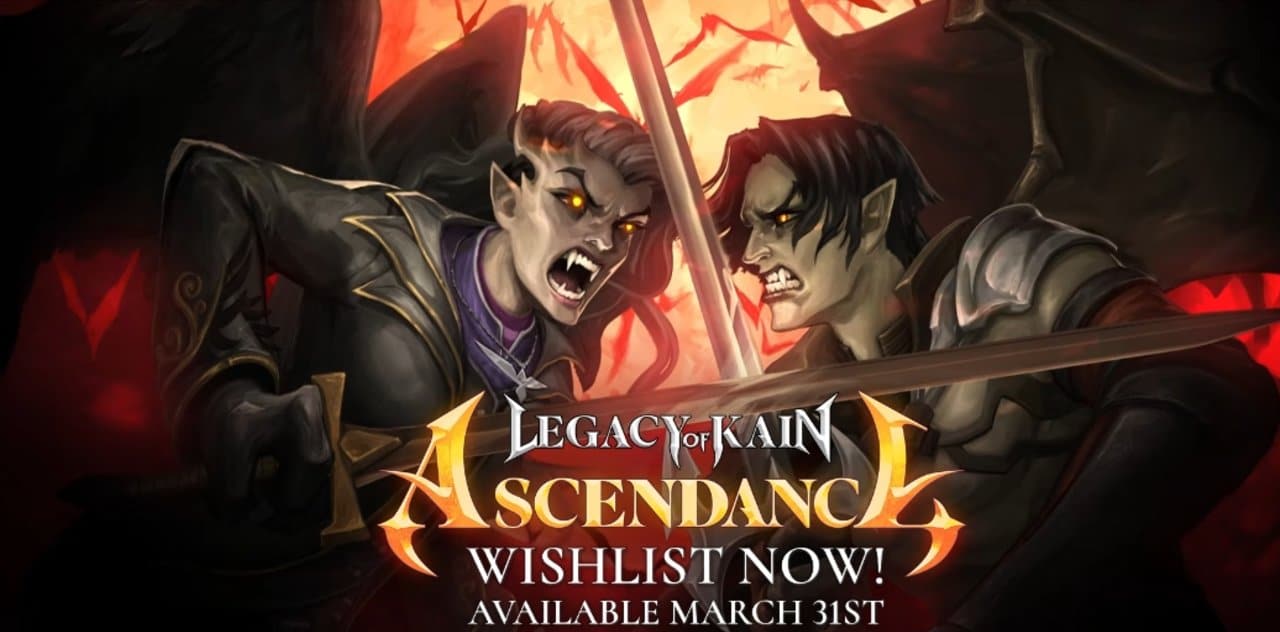
Crystal Dynamics made the return of one of the most revered franchises in the dark fantasy genre official with the announcement of Legacy of Kain: Ascendance. The new title, developed in partnership with Bit Bot Media and FreakZone Games, adopts a retro aesthetic in a 2D action platform format. The release date has been set for March 31, arriving simultaneously on several current and future generation platforms, marking a new chapter in the expansion of the gothic universe of Nosgoth.
Posicionado chronologically as a direct prequel to the Soul Reaver subseries, the game promises to maintain the narrative density that established the saga, but with a renewed gameplay approach. Crystal Dynamics’s direct supervision aims to ensure that the essence of the series is preserved, even with the drastic change in perspective for side-scrolling. The proposal is to combine the nostalgia of veteran fans with accessible mechanics for new players.
The title will be available for PlayStation 5, Xbox Series X|S, PC (via Steam and Epic Games Store) and for the Nintendo family of consoles, including the of cutting-edge hardware.
The narrative explores multiple eras and connects crucial events in the series’ mythology. The plot is character-driven and features the return of iconic voices such as Simon Templeman and Michael Bell, ensuring the continuity and authenticity of the interpretations that have defined the personalities of Kain and Raziel over the decades.
Game dynamics and resource management
Ascendance’s gameplay was built around a fluid system that prioritizes constant movement, integrating combat directly into the traversal of scenarios. Characters not only fight, but perform jumps, flights and transformations that keep the pace fast, demanding quick reflexes from players as they navigate the decaying and dangerous environments of Nosgoth.
A central element of this new mechanic is the stamina system, which connects all available actions, from offensive strikes to fast-moving abilities. Inadequate management of this resource can leave the protagonist vulnerable to enemy attacks or result in fatal falls during more complex platform sections, inserting a strategic layer into each action sequence.
Combat flows organically into platform challenges, creating a reactive cycle where the player must alternate between aggression and defensive movement. Opções like timed dodges are key and reward close observation of opponents’ patterns, discouraging mechanical button repetition and favoring a more tactical and deliberate approach.
Protagonists and tactical diversity
Ascendance stands out by offering multiple protagonists, each with unique approaches to combat and movement through vertical scenarios. Kain returns with his classic vampiric abilities, using Soul Reaver’s brute strength and manipulation to overpower enemies and overcome physical obstacles that block progress.
Raziel, in turn, presents a distinct gameplay, alternating between its forms and using aerial traversal and glide tools. The introduction of the new character, Elaleth, further expands the tactical options, bringing specific mechanics that allow unprecedented interactions with the environment and open new routes of exploration.
Constant adaptation is required of the player, as each character style demands different management of shared stamina resources. Decisions made during encounters must balance the need to eliminate threats with conserving energy for safe navigation through rugged terrain.
Playstyles can be summarized into the following main specializations:
– Kain: Foco total offensive power and use of heavy weapons.
– Raziel: Ênfase in spectral mobility and access to alternative areas.
– Elaleth: Habilidades of environmental manipulation to solve puzzles.
Visual aesthetics and atmospheric fidelity
Ascendance’s art direction combines high-quality 2D pixel art with sequences that pay homage to the era of the first PlayStation, creating a visual bridge between past and present. The cut scenes (cinematics) adopt an anime-inspired aesthetic for key narrative moments, a choice that seeks to revitalize the presentation of the story without losing the franchise’s signature dark tone.
The environments depicted maintain the oppressive and gothic atmosphere of Nosgoth, with detailed ruins that serve both as a background and as a playground for the verticality mechanics. The level design favors vertical exploration, encouraging the use of climbing and transformations, such as the form of fog or swarm of bats, to achieve secrets and tactical advantages.
Launch and market integration
The game’s arrival on March 31 coincides with a larger brand revitalization strategy, which also includes remasters of previous titles. The availability on the Nintendo Switch 2 points to a technical optimization that aims to take advantage of next-generation portable hardware, ensuring fluid performance even at higher resolutions or more demanding frame rates.
On PC, distribution via Steam and Epic Games Store ensures global reach, while native integration with the Xbox ecosystem reinforces the commitment to accessibility via the cloud. The complete package aims to not only satisfy the loyal fan base that has been waiting for years, but also introduce the rich universe of Legacy of Kain to a new generation of players through modern mechanics and current platforms.



