
Leak points to Capcom’s instant charging technology for Nintendo Switch successor


Recently analyzed technical documents have brought to light crucial information about the development of Capcom’s major franchises aimed at the next generation of portable consoles. The files, which have not yet been made official by the Japanese developer, indicate a concentrated effort by the engineering team to adapt the company’s proprietary graphics engine in order to extract maximum performance from new hardware that has not yet been announced. The discovery suggests that game architecture is being modified to overcome the usual limitations of mobile devices, ensuring fluidity and stability in large-scale titles.
The central point of this revelation revolves around a specific technology designed to almost completely eliminate waiting times during gameplay. Especialistas in the industry interpret this move as a clear sign that the next device from Nintendo will have the capacity to run continuous and uninterrupted experiences, something that was previously restricted to high-powered desktop consoles and advanced computers. The implementation seeks to maintain player immersion, avoiding loading screens that tend to break the rhythm of action in open-world adventures.
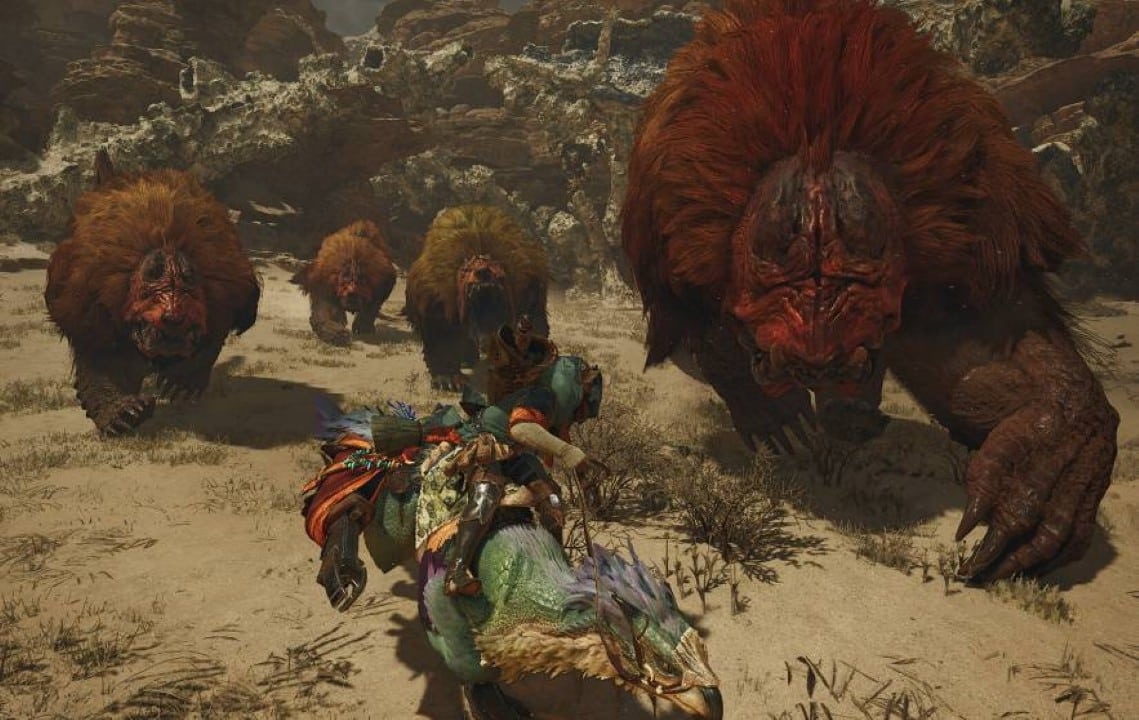
Capcom’s strategy appears to focus on optimizing resources to ensure that visually complex titles, such as those in the monster hunting series, run efficiently. Analysis of the leaked data points to intelligent use of memory and storage, suggesting that future hardware will have specifications robust enough to handle the intense data flow required by modern RE Engine. Isso places the successor to the Nintendo hybrid on a competitive technical level, capable of receiving “AAA” versions of games without the severe compromises that marked the current generation.
Market analysts note that this early preparation is an indication that large publishers already have final development kits or very close to the commercial version. The existence of features dedicated to a new portable system reinforces rumors that the launch of the device is close and that it will have a strong catalog in its initial window. The ability to deliver vast worlds without noticeable pauses could be one of the main marketing differentiators for the new platform.
Agile charging mode operation
Among the features discovered, a feature internally called “FastLoadMode” stands out. Essa tool was designed to work behind the scenes, managing the transition between different areas of the map or the start of complex missions. The technology operates by predicting player actions and pre-loading essential data before it is needed, creating an illusion of absolute continuity. The goal is to remove the technical barriers that traditionally separate exploration from combat, allowing for a unified experience.
To enable this process, the technical documentation describes an advanced RAM memory and flash storage management system. The game engine prioritizes critical assets, streaming textures and models directly from storage to the graphics processor at high speed. Esse method requires considerable bandwidth, which indirectly confirms that the new console will use a much faster type of storage than the conventional cards and flash memories used in the current model.
Practical application of this technology would be vital for games like Monster Hunter Wilds. The franchise, known for its dense and detailed ecosystems, would benefit immensely from the absence of loading screens, allowing hunters to pursue their prey across vast territories without interruption. The fluidity provided by instant loading is not just an aesthetic improvement, but a fundamental change in game design, enabling more dynamic and faster chase and exploration mechanics.
Dynamic detail and performance adjustments
Another technical aspect revealed in the leak concerns the Nível of Detalhe system, known by the acronym LOD. The new implementation of Capcom uses algorithms to adjust the geometric complexity of objects based on their distance from the player’s camera. Although this is a common technique in the industry, the improved version for the new hardware promises a much smoother transition, avoiding the “pop-in” visual effect, where elements of the scene suddenly appear on the screen.
The system constantly calculates the processing load required to render the scene and adjusts the quality of distant models in real time. Isso frees up system resources to focus on what is close to the player, ensuring that the frame rate per second remains stable even in moments of intense chaos, with multiple monsters and particle effects on the screen. Stability is crucial for action games that require precision commands and quick reflexes.
The documentation suggests that this optimization is aggressive and tailored to the new laptop’s architecture. Isso indicates that, despite the jump in power, energy and thermal efficiency remains a priority. By reducing unnecessary load on the GPU, the system not only improves performance but also helps preserve battery life during extended gaming sessions, a key factor in portability.
The role of RE Engine in the new generation
RE Engine has established itself as one of the most versatile tools of the last decade, powering everything from linear horror games to large open worlds. The adaptation of this engine to the successor of the Switch demonstrates the flexibility of the Capcom technology. The graphics engine, which has already proven to be highly scalable on PCs and desktop consoles, now looks set to set the visual standard for the next generation of handhelds, bringing advanced lighting and realistic physics to a smaller screen.
Historically, the Monster Hunter franchise has been a mainstay for the Nintendo consoles. The success of previous titles on the current platform has created a gigantic user base eager for new features. Garantir that the next big chapter in the series runs flawlessly on the new hardware is a strategic priority for both Capcom and the console manufacturer. The close technical collaboration between the two companies suggests that the game could serve as a technological showcase for the device.
In addition to raw performance, the new version of the engine includes improvements in artificial intelligence and the physics of interaction with the environment. Monstros will be able to react more organically to changes in terrain and player actions, creating unpredictable emergent situations. Tudo this demands CPU processing power, something that leaks indicate has been significantly improved over 2017 hardware.
Perspectives for the market and launch
The indirect confirmation that cutting-edge titles are being developed with a focus on the next Nintendo platform changes market expectations for next year. The ability to run games with the same fidelity of mechanics and systems as the desktop versions, albeit with resolution adjustments, positions the future device as an attractive option for the “hardcore” audience. The barrier between the portable and the home console promises to become even thinner.
In the Japão, where portability is the dominant factor in choosing gaming platforms, the arrival of a technologically advanced Monster Hunter in a hybrid device has the potential to drive record sales. The culture of playing in local cooperative mode, facilitated by the nature of the console, aligns perfectly with the series’ proposal. Fast charging technology only reinforces this dynamic, allowing quick starts to be started instantly on commutes or breaks.
While the official hardware announcement remains pending, the technical evidence provided by these software documents offers the most concrete look yet at what to expect. The generational leap will not just be graphical, but structural, changing the way games are loaded, played and experienced on the go.



