
Nissan reveals Gravite as a bet to dominate the seven-seater family minivan segment in India


The Nissan offensive in the Asian market gains a new and robust chapter with the official launch of its latest family model. The Japanese automaker confirmed the launch of the Gravite, a minivan designed to accommodate seven passengers, which arrives to reinforce the brand’s presence in one of the most competitive territories in the world. The vehicle appears as a fundamental piece in the company’s growth strategy, positioning itself alongside the Magnite SUV to diversify the portfolio and meet the growing demand for versatile and spacious vehicles.
Developed on the CMF-A+ architecture, the same used by alliance partner Renault in the Triber model, Nissan’s new bet seeks to balance cost-benefit with its own visual identity. Shared engineering allowed development costs to be optimized, but the manufacturer ensures that the final product carries Japanese DNA, both in design and comfort solutions. Sales are expected to begin in the first half of 2026, marking a period of renewal for the brand in the region.
The compact family vehicle segment has proven to be vital for the operations of large automakers in emerging markets. With the Gravite, the Nissan not only fills a gap in its product line, but also offers a direct alternative to consumers looking for the practicality of a seven-seater car without the exaggerated dimensions of traditional vans. The proposal is to deliver an urban vehicle, agile and capable of adapting to the different daily needs of modern families.
The official presentation of the model highlighted the importance of industrial collaboration between the alliance’s brands. Production will take place in the Chennai industrial complex, a strategic hub that will serve as a base for the distribution of the model. The expectation is that Gravite will replicate the success of its “sister” platform, but attracting a customer profile that values the aesthetics and specific attributes of the Nissan brand, consolidating the company’s recovery on the local scene.
Visual identity and exclusive design
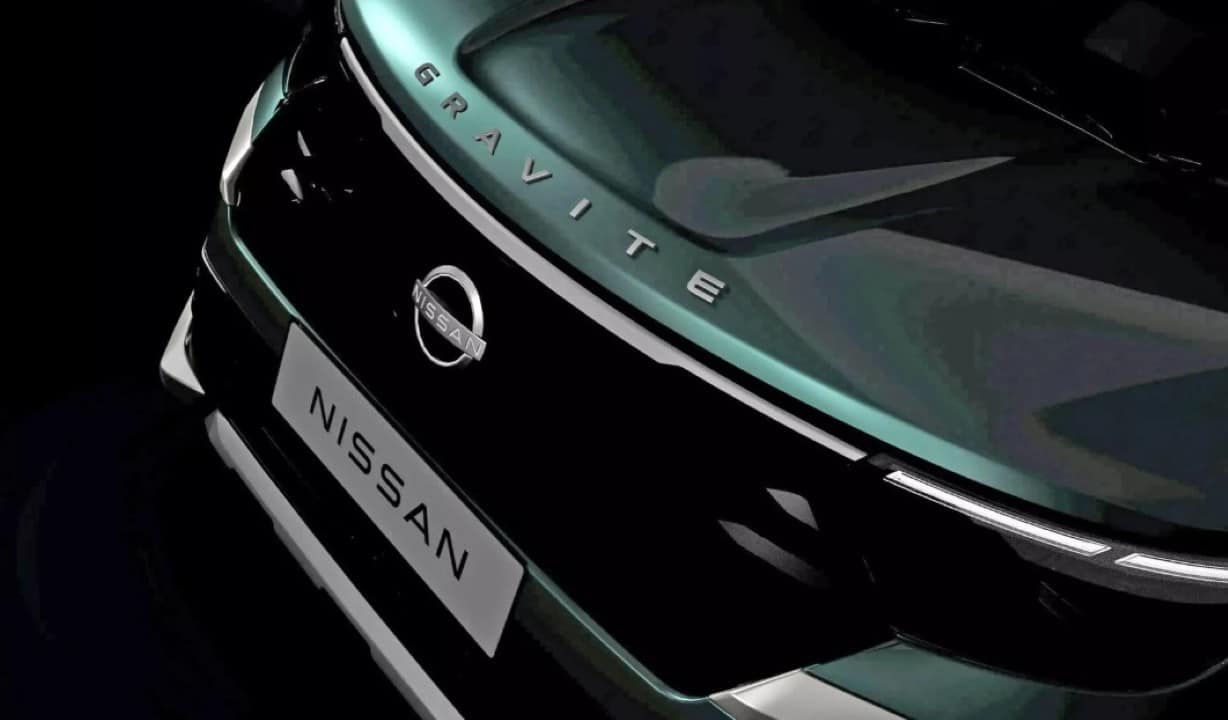
To distance Gravite from Renault Triber and avoid the perception of just a change of logos, the Nissan design team invested heavily in aesthetic differentiation. The front of the vehicle displays the V-Motion grille, the brand’s classic signature, now reinterpreted with glossy black finishes and the company’s new central logo. The optical assembly was redesigned to incorporate boomerang-shaped LED daytime running lights (DRL), giving the model a more aggressive and technological appearance.
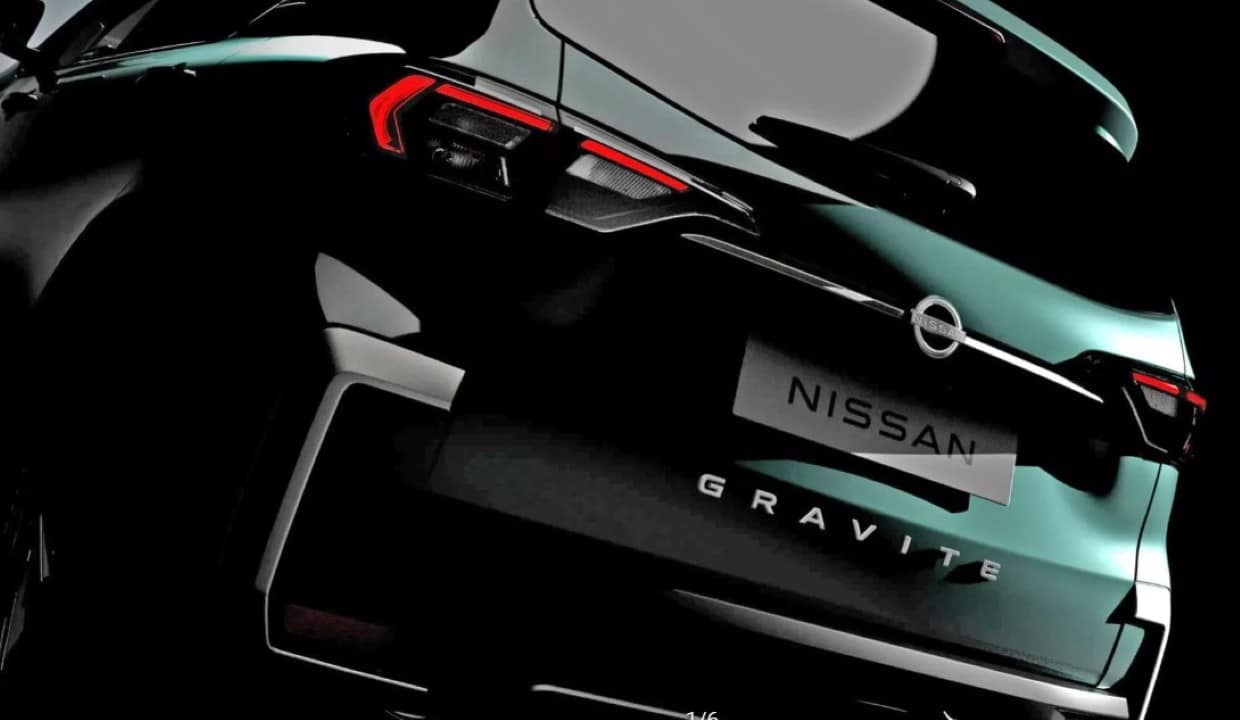
At the rear, the changes are also significant to ensure the car is immediately recognized as an Nissan. The headlights have an exclusive design, with LED elements that form a distinct visual pattern, connected by a chrome bar that crosses the trunk lid. The light alloy wheels received a specific diamond design for the top version, reinforcing the proposal to offer a product with superior value perception within its price category.
Internal versatility and modular system
The Gravite’s greatest asset lies in its cabin and the intelligent management of internal space. The model incorporates the “Ultra-Modular” seating system, which allows for more than 100 different seat configurations. The third row of seats is fully removable, a feature that transforms the vehicle from a seven-person transporter into a station wagon with a generous 625-litre boot in five-seat configuration. Essa flexibility is essential for families who alternate between transporting passengers and carrying bulky luggage or the month’s shopping.
Thermal comfort, a priority in regions with hot climates, was addressed with the inclusion of dedicated air conditioning outlets for the second and third rows, with independent ventilation controls. The instrument panel and door finishes follow a functional line, but with textures and materials that seek to enhance the feeling of quality on board. Connectivity is also present, with infotainment systems compatible with the main smartphone platforms, ensuring that technology is accessible to all occupants.
Motorization and energy efficiency
Under the hood, the Nissan opted for rationality and proven efficiency. The Gravite will be equipped with a 1.0 three-cylinder, naturally aspirated, gasoline engine. Este propellant is capable of generating 72 horsepower and 96 Nm torque. Although the numbers seem modest for a seven-seater vehicle, the engine calibration was adjusted to prioritize torque at low revs, making it easier to drive in heavy urban traffic, which is the natural habitat of this type of vehicle.
For transmission, consumers will have two options. The entry-level version will feature a five-speed manual transmission, focused on fuel economy and total driver control. Já the intermediate and top-of-the-line versions will offer the option of automated transmission (AMT), which provides the comfort of not having to change gears manually, maintaining a lower maintenance and acquisition cost than conventional automatic transmissions or CVT. Essa strategy aims to keep the vehicle’s price competitive compared to rivals.
Market positioning and future
The launch of the Gravite is the first step in a new phase of the Nissan business plan, which foresees the introduction of multiple models by 2027. The minivan acts as a volume pillar, designed to generate flow at dealerships and increase the brand’s market share. By sharing components with the Renault, the Nissan is able to offer a technically mature product with immediate availability of spare parts, crucial factors for purchasing decisions in this segment.
Automotive sector analysts point out that the arrival of the Gravite should intensify the competition between compact minivans. The combination of Japanese design, internal versatility and reliable mechanics positions the model as a strong alternative. Nissan is betting that, by offering a distinct visual identity and focusing on the customer experience through its dealership network, it will be able to capture both the brand’s loyal customers and new buyers looking for their first seven-seater family vehicle.



