
Proton flux reaches historic level and severe solar storm threatens satellites in orbit
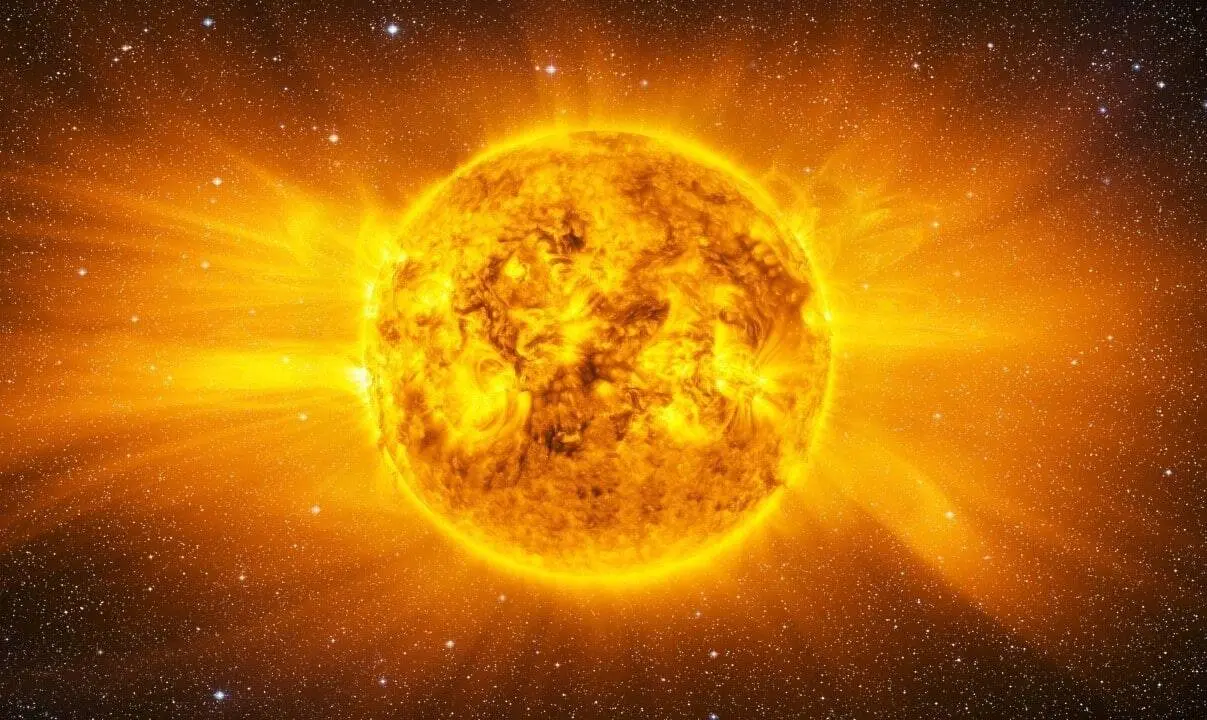
A massive wave of energetic particles collided with the Earth’s magnetosphere this Monday, January 19, triggering the most intense radiation event observed in the last two decades. The phenomenon, monitored by astronomy laboratories at Rússia and confirmed by North American agencies, raised global alert levels to category S4, considered severe. The abrupt arrival of these particles is a direct result of an instability on the solar surface that occurred less than 24 hours earlier, demonstrating how quickly space weather can deteriorate.
Orbital measurement instruments detected that the flow of protons with energy greater than 10 megaelectronvolts (MeV) broke the barrier of 10 thousand units, reaching alarming peaks close to 37 thousand particles per unit flow. Este volume of radiation has not been recorded since the beginning of the current century, surpassing all events in the current solar cycle and placing space infrastructure operators in a state of maximum attention.
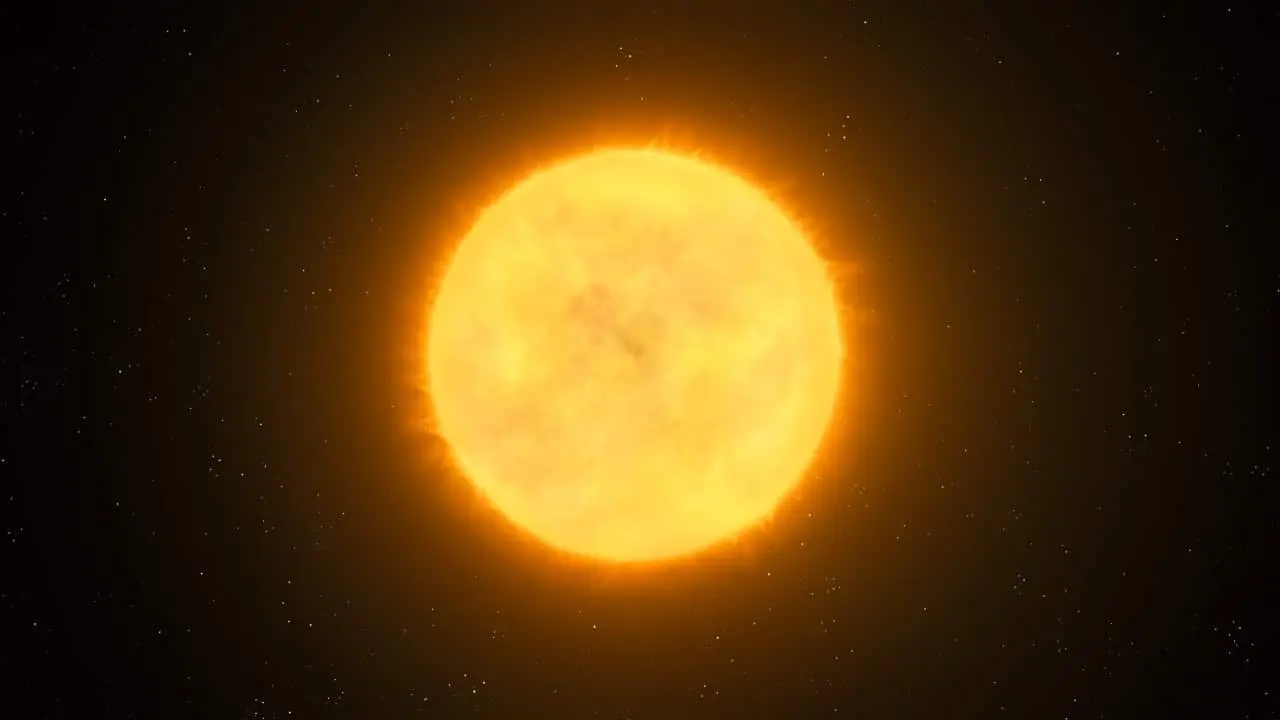
While the planet’s atmosphere and magnetic field provide effective protection for life on the surface, the picture is drastically different for in-orbit technologies and high-altitude activities. The density of the proton cloud is sufficient to penetrate conventional satellite shields and interfere with sensitive electronic systems that underpin modern navigation and communications.
Read also: X8.1 magnitude solar flare causes radio blackout and warns scientists about intense cycle
The origin of this disturbance was traced to an X1.95-class solar flare, the first of this magnitude this year, which ejected a significant amount of coronal mass towards Terra, accelerating particles to relativistic speeds.
Intensity monitoring and scaling
The classification of radiation storms follows a logarithmic scale that goes from S1 to S5, with the current level, S4, being an indication of real danger for technological and biological operations outside atmospheric protection. The maximum level, S5, remains a theoretical event in the modern era, having never been recorded instrumentally, which makes the current occurrence one of the most significant milestones in the recent history of solar physics.
Data collected by geostationary satellites, such as the GOES series, allows scientists to visualize the exponential increase in particle flux. Predictive ability, however, is limited by the speed of the event; the protons travel so fast that they arrive at Terra shortly after visual observation of the explosion at Sol, leaving a narrow window for implementing mitigating measures.
Full coverage: News (EN)
Experts point out that the maintenance of such high levels of radiation could persist for days, depending on the evolution of the active region in Sol. Surveillance is constant, as additional fluctuations may worsen or extend the period of interference.
Risks to aviation and human health
The biological impact of solar radiation is a primary concern for agencies managing polar route flights and manned space missions. Durante S4 events, Terra’s natural shielding is less efficient at the poles, allowing particles to penetrate at commercial cruise altitudes. Como safety protocol, several airlines have already started diverting routes that cross the Ártico to lower latitudes, aiming to preserve the health of crew and passengers against excessive doses of radiation.
Understand the case: High-intensity solar phenomenon causes rare auroras and warns of failures in global communication networks
For astronauts aboard the Estação Espacial Internacional (ISS) and future lunar missions, the risk is immediate and unavoidable. Procedimentos emergencies dictate that the crew must take shelter in the station’s most armored modules, where the thickness of the walls and the presence of equipment serve as an additional shield. Atividades Extravehicular, or spacewalks, are strictly prohibited under these conditions due to the potential lethality of direct exposure.
Impacts on technological infrastructure
The global satellite fleet faces the most severe challenge in its operation, with risks ranging from physical degradation to critical logical failures. Proton bombardment reduces the efficiency of solar panels, shortening the life of the equipment, and can cause the phenomenon known as “single-event upset”, where bits of memory in on-board computers are randomly changed, leading to erratic commands or forced restarts.
Learn more: Rakuten Mobile activates satellite SMS on iPhone 14 and Apple Watch Ultra 3
Global positioning systems (GPS) and high-frequency (HF) radio communications suffer notable disruptions, especially in polar and high-latitude regions. Navegadores maritime and air carriers that rely on these frequencies report instability and signal “blackouts” that can last for hours, requiring the use of satellite-based backup systems on other, less affected frequencies.
Internet constellation operators, such as Starlink, monitor the situation to adjust the orientation of the satellites and minimize atmospheric drag and exposure of the most sensitive components. The resilience of these modern networks is being tested in real time against an extreme environmental stress scenario.
Historical context and solar cycle
Comparatively, the magnitude of this event evokes the great solar storms of 2003, known as the Tempestades of Halloween, which caused extensive damage to the space infrastructure at the time. Desde So, although there have been significant eruptions, such as in 2012, none had generated such a dense and sustained flow of protons towards our planet.
More on this story: IPhone 14 and above gain access to the internet via Starlink satellites through T-Mobile
The current Ciclo Solar 25 has proven to be much more active than initial predictions suggested. The frequency and intensity of sunspots and coronal mass ejections indicate that solar maximum — the peak of activity of the 11-year cycle — could bring even greater challenges to a society increasingly dependent on orbital technology.
Space technology has evolved over the last two decades, with components that are more robust and “hardened” against radiation, but the number of satellites in orbit has also grown exponentially. The balance between the robustness of the new equipment and the severity of the space environment will determine the extent of the economic and operational losses from this historic event.
More news in News (EN)
See more → Samsung releases new system update with new features for Galaxy Watch 4 users
 Digital retail reduces the value of the Galaxy S25 5G smartphone with bank bonuses and device exchange
 Amazon’s wireless CarPlay adapter has a 50% discount and high approval ratings from drivers
 Zach Cregger’s new Resident Evil ignores games and focuses on an unprecedented story with new characters
 Rumor suggests that Nintendo is preparing a special edition of the Switch 2 with a remake of Ocarina of Time
 Apple accelerates production of the iPhone 17e and develops new Air model with dual camera system
 Epic Games platform releases twelve high-budget games at no permanent cost for PC users
 PlayStation 5 Pro price drop accelerates digital retail sales and eliminates global stocks
 New Galaxy Watch 9 firmware appears on server and confirms progress in software development
 Apple’s commemorative project tests cell phone with 1.1 millimeter edge and curved screen for 2027
 New Apple system update optimizes urgent task management for iPhone users
 Leak details hardware of the new portable PlayStation with superior graphics to the Xbox Series S
More news on Mix Vale
- 1Colby Minifie confirms Ashley Barrett’s powers in The Boys season five
- 2Napoli x Milan in Serie A with confirmed lineups and where to watch live
- 3New battery test puts Galaxy S26 Ultra ahead of iPhone 17 Pro Max in global ranking
- 4Research reveals that parents are unaware of how their children use artificial intelligence
- 5Oppo officially launches the Find X9 Ultra worldwide with Hasselblad lenses and robust battery
- 6Tim Cook reveals new iPhone and iPod prototypes in celebration of Apple’s fiftieth anniversary
- 7New edition of foldable smartphone brings gold finish to Winter Games competitors
- 8Android system receives native Gemini Nano 4 integration for offline processing on smartphones
- 9Samsung updates QuickStar module and expands visual control of the panel in the One UI 8.5 interface
- 10Leak reveals Lords of the Fallen and Sword Art Online in April’s PS Plus Essential catalog