
South African game challenges Western museums and proposes rescue of historical artifacts via parkour

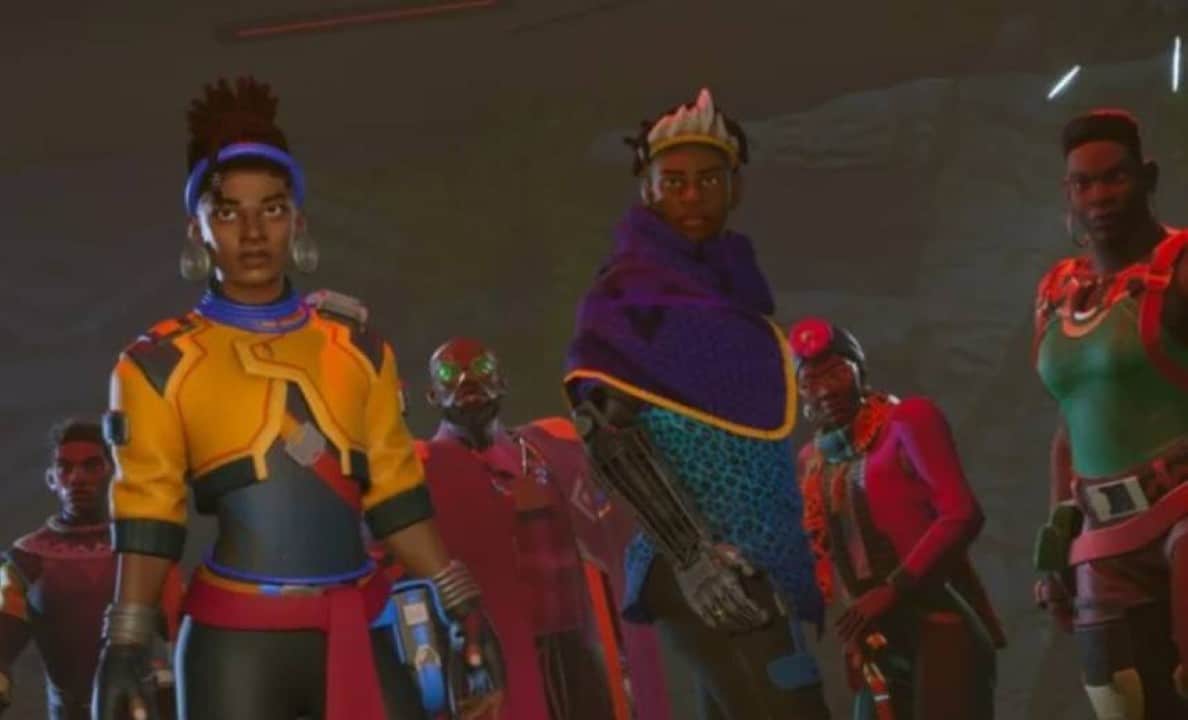
This February, the digital entertainment market received a work that combines mechanical agility with a strong political and cultural message. Desenvolvido by the Nyamakop studio, based at África from Sul, the recently arrived title on PC and Xbox Series The premise inverts the traditional logic of robberies, focusing on the recovery of historical heritage improperly held in foreign institutions.
Set in a futuristic setting at the end of the 21st century, the narrative unfolds after the signing of a fictional Tratado Transatlântico by Devoluções. Embora the agreement provides for the return of cultural assets to their places of origin, large Western museums exploit bureaucratic loopholes to hide valuable pieces in maximum security deposits. It is in this context that the protagonist group, led by Nomali, enters, determined to take justice into their own hands and with acrobatic skills.

The production stands out not only for its gameplay, but for its world-building based on the concept of Africanfuturism. Unlike dystopian visions common in science fiction, the game presents a technologically advanced and vibrant África, where tradition coexists harmoniously with innovation. The ultimate goal of each mission is to take the recovered items to Museu from Civilizações Negras, in Dakar, ensuring that history returns to its people.
Planning and execution dynamics
The gameplay is designed to require more than just quick reflexes. Cada excursion to museums is divided into distinct stages that test different user skills. Inicialmente, it is necessary to carry out tactical terrain reconnaissance using drones. Esta phase is crucial for mapping escape routes, identifying security systems and positioning allies at strategic points in the scenario.
When the action begins, fluidity of movement becomes the key to success. The parkour system implemented by Nyamakop rewards precision: sequences of correct movements increase Nomali’s momentum, allowing her to cross obstacles with greater speed. On the other hand, miscalculations or hesitations slow the pace and can compromise the entire operation, especially when the escape timer is activated after capturing the artifact.
The challenges faced during missions are varied and require constant adaptation. The player needs to coordinate the use of specific abilities of each team member, solve environmental puzzles that block progress, and often alter the original plan to deal with unforeseen security issues that arise dynamically.
A team with continental roots
To carry out such complex robberies, the protagonist relies on a diverse team, recruited from different regions of the African continent. The construction of the characters deviates from the usual stereotypes of heist games, presenting figures with deep motivations and personal connections to the cause. Nomali’s brother acts as the central link, managing the network and bringing new talent into the operation.
Among the available experts, Cryptic stands out, responsible for neutralizing digital barriers and surveillance systems remotely. Outra A fundamental piece is Ndedi, which offers physical support and extra agility to reach areas that would be inaccessible otherwise. The group also includes unusual profiles, such as a grandmother who possesses traditional knowledge and ordinary citizens who joined the fight for the preservation of cultural memory.
The interaction between these members takes place in the group’s hideout, located in a reimagined, futuristic version of Joanesburgo. Dialogues between missions serve to humanize the team, revealing their personal stories and reinforcing the sense of collective purpose that unites individuals from such different backgrounds around a common goal.
Education through digital interaction
One of the most praised aspects of the project is its ability to educate while entertaining. The game incorporates around 70 real historical artifacts, all based on items that were looted during the colonial period and which, to this day, are objects of diplomatic dispute. Upon recovering a piece, the player unlocks detailed information about its origin, original function, and the context of its removal.
The list of recoverable items is extensive and culturally rich. Inclui, for example, the famous Bronzes of Benin, ceremonial masks of the Asante people and sacred sculptures of Tanzânia, in private collections and museums.
This approach turns each successful mission into a small history lesson, contextualizing the impact of colonialism on the loss of cultural identity. Nyamakop used documented cases of denied repatriation requests to support the narrative, giving a weight of reality to the game’s fiction.
Reception and impact on the market
Since its launch on February 10, the title has maintained a mostly positive review on digital stores, such as Steam, with an approval rate close to 78%. The community has valued the balanced mix between “heist” mechanics and educational content, something rare in the commercial games industry.
Favorable reviews highlight the addictive gameplay loop, where meticulous planning is rewarded with perfect executions. Além Furthermore, many players point out the importance of seeing authentic representations of African culture, created by developers from the continent itself, in a global market often dominated by North American or European perspectives.
Available with launch promotional discounts and accessible at no extra cost to subscribers of the Microsoft service, the work seeks to expand its reach. The developer continues to monitor community feedback to fix minor technical issues and ensure the message of cultural restitution reaches as many players as possible.



