
Toyota renews its best-selling SUV with futuristic design and declares an end to combustion-only engines


The global automotive industry is about to witness a radical transformation in one of its most important players. The sixth generation of the sports utility vehicle that leads global sales marks an inflection point in the Japanese automaker’s strategy, consolidating electrification as the only way forward. The decision to completely abandon versions powered exclusively by gasoline reflects an alignment with modern environmental demands and a commitment to superior energy efficiency.
Esta new lineage of the vehicle, whose debut is scheduled for the end of next year at the Japão, promises to redefine the standards of the medium SUV segment. With a global expansion scheduled for the following year, the model not only updates its engine, but also presents a complete aesthetic redesign and significant technological advances to maintain its hegemony in the face of increasingly fierce competition.
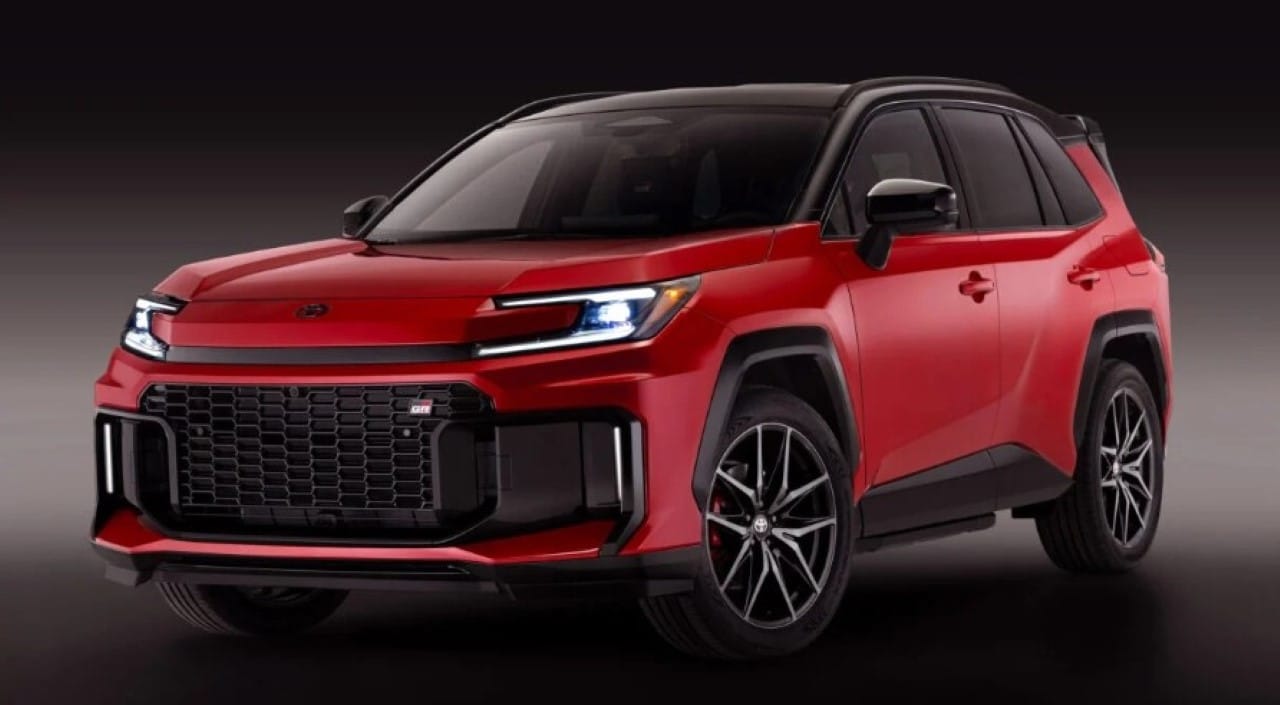
New visual and aerodynamic identity
The break with the past is evident from the first look at the renewed bodywork. The sports utility vehicle adopts the design language known as “hammer head”, an aesthetic signature that creates visual harmony with the brand’s most recent launches, such as the new generations of the Prius and the Crown. Esta configuration replaces the angular lines and aggressive stance of the previous generation with more fluid, sophisticated lines focused on aerodynamic efficiency.
At the front, the highlight is the conical-shaped LED headlights, which are integrated into a repositioned grille on the bumper, giving a cleaner and more modern appearance. The side silhouette has been reworked to convey greater dynamism, using soft creases and flared fenders that reinforce the car’s presence on the streets, without resorting to stylistic excesses.
The rear follows this evolution with taillights connected by a horizontal light bar, following a strong trend in contemporary automotive design. Além of the visual impact, each change to the bodywork aimed to optimize air passage, which directly contributes to reducing fuel consumption and improving acoustic insulation at cruising speeds.
Mechanical evolution and energy efficiency
Sob the hood, the big news is the standardization of the hybrid system for all versions, eliminating any purely combustion option. The mechanical package combines a 2.5-liter gasoline engine with electric drives, resulting in a combined power delivery that reaches 226 horsepower in standard configuration. Este number exceeds current generation indices, ensuring safer overtaking and superior agility in urban traffic.
Para consumers looking for maximum efficiency, the plug-in hybrid version (PHEV) appears as a game changer. The brand’s engineering promises a range in pure electric mode of more than 100 kilometers. Essa capacity allows the vast majority of daily trips to be carried out without consuming a drop of fossil fuel, transforming the vehicle’s usage profile.
The E-Four all-wheel drive system has also received important updates. Utilizando an electric motor dedicated exclusively to the rear axle, the system has been recalibrated to offer a faster and more precise response in low-grip situations, as well as improving stability in sharp curves.
Dados preliminary performance indicators indicate measurable improvements:
– Aceleração from 0 to 100 km/h reduced by approximately 0.5 seconds.
– Autonomia electric plug-in versions, overcoming the 100 km barrier.
– Redução estimated 15% in fuel consumption in urban cycle.
Technological revolution in the interior
The vehicle’s cabin underwent a complete renovation, raising the level of sophistication and connectivity. The center of attention is the new multimedia system, which features screens up to 14 inches with an intuitive interface and support for remote updates via the cloud. The instrument panel, now fully digital and configurable, allows the driver to view navigation maps, consumption data and driving assistant status easily and without unnecessary distractions.
The quality of finishing materials received special attention, with extensive use of soft-touch surfaces and premium synthetic leather upholstery options. Essa improvement in finishing aims to position the model as a viable alternative to luxury brand competitors. Connectivity has been expanded with the inclusion of standard induction charging and multiple USB-C ports distributed throughout the cabin, ensuring all passengers keep their devices powered during long journeys.
Active safety and driver assistance
The active safety package has been updated to its latest version, incorporating more precise sensors and cameras with an expanded field of view. The pre-collision system is now capable of detecting pedestrians and cyclists even in low light conditions, increasing protection in night-time urban scenarios. Adaptive cruise control operates more smoothly in traffic jams, allowing automatic stops and restarts more naturally.
Novos assistance features include blind spot monitoring with active steering intervention and an autonomous emergency braking system that also acts at intersections, preventing side collisions. The chassis structure was reinforced with ultra-high-strength steels, aiming to obtain top marks in global impact tests and offer a superior survival cell for the occupants.
Perspectives for the national market
In the Brazilian scenario, the arrival of the new model is expected in the first half of 2026. The vehicle should arrive in the country already adapted to use ethanol, taking advantage of the flex hybrid technology that has become an important competitive differentiator in the local market. Local engineering is working on calibrating the engines for vegetable fuel, which should further increase the car’s sustainability indexes when fueled with biofuel.
The market positioning should be slightly higher than the current line, justified by the increase in technology and complexity of the project. The dealership network is already beginning preparations for technical support for the new generation, which promises to maintain the low maintenance costs that have made the brand’s customers loyal over the last few decades. The model will have the mission of facing direct rivals such as the Honda CR-V and the Volkswagen Tiguan, focusing on mechanical reliability and energy efficiency as its main assets.



