Yuki Tsunoda’s departure from Red Bull marks the end of the cycle and opens up a disputed place for the team’s new era

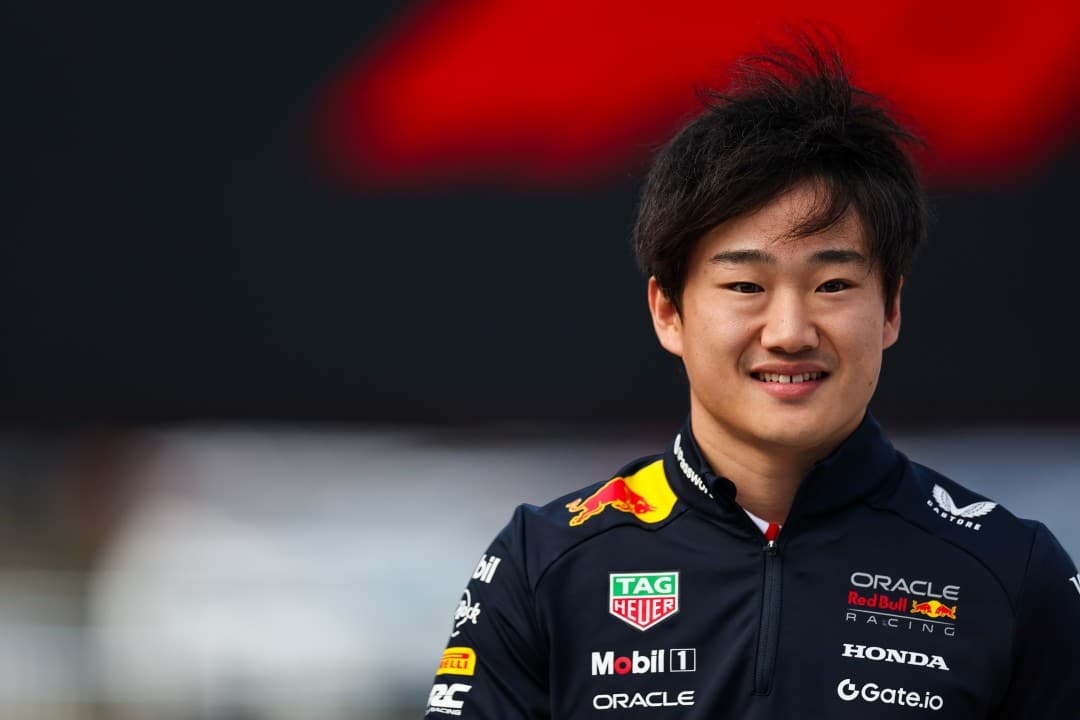
The official decision by Red Bull Racing to end its relationship with Yuki Tsunoda after the end of the 2025 season defines new directions for the team and the Japanese driver. The confirmation, communicated internally and now made public, ends a cycle of speculation about the athlete’s permanence in the energy drink brand’s main program. The termination of the partnership is not only due to contractual issues, but reflects a growing technical incompatibility between the riding style of Tsunoda and the demands of the new RB21 model, designed to maximize performance under specific guidelines that favor the current world champion.
Technical divergences and the development of the RB21
One of the determining factors for the non-renewal of the contract lies in the difficulty of adapting Tsunoda to RB21. The car, developed under the technical leadership of Pierre Waché, requires a level of precision and a very particular driving style, shaped around Max Verstappen’s preferences. Tsunoda’s inability to extract the maximum potential from this specific equipment was identified as a critical point by the team’s management.
The Red Bull’s engineering prioritized a design that demands extreme sensitivity when entering curves and tire management that differs from the Japanese driver’s more aggressive style. Durante the testing sessions and races, it became clear that the technical feedback provided by Tsunoda did not align with the development direction necessary to maintain the team’s hegemony in the face of rivals’ growth.
In addition to the piloting issue, the disparity in numerical results weighed on the final decision. Enquanto Max Verstappen accumulated 165 points in a decisive sequence of ten races, guaranteeing the lead in the constructors’ championship, Tsunoda scored just seven points in the same period. Essa performance gap made the justification for maintaining one of the most coveted seats in world motorsport unsustainable, especially at a time when every point is crucial to the brand’s financial and sporting ambitions.
The factor Honda and the doors of Aston Martin
Yuki Tsunoda’s career has always been intrinsically linked to the support of Honda. Desde the base categories, the Japanese manufacturer’s support was the driving force behind its rise to the elite of motorsport. However, the scenario for 2026 presents a significant structural change in the paddock, with Honda no longer supplying power units to Red Bull and entering into a new exclusive partnership with Aston Martin.
Logically, the natural path for Tsunoda would be to accompany the Japanese manufacturer in its new home. The president of Honda Racing Corporation (HRC), Koji Watanabe, has already publicly expressed his desire to see Tsunoda driving cars powered by his engines. Contudo, the reality of the pilot market imposes complex barriers to this transition.
The Aston Martin has a pilot configuration that leaves little room for immediate maneuvers. Com Fernando Alonso, two-time world champion, being the centerpiece of the team’s expansion project, and Lance Stroll, son of owner Lawrence Stroll, occupying the other seat with guaranteed stability, the options for Tsunoda become limited. The vacancy that seemed certain due to corporate connections now appears to be an unknown, leaving the Japanese driver’s future open for the 2026 season.
Trajectory of rise and stagnation
The arrival of Tsunoda to Fórmula 1 was marked by a meteoric rise. Integrante from Red Bull Junior Team and supported by the Honda Formula Dream project, he impressed in the access categories. Sua stint with the Japanese Fórmula 4 and, subsequently, third place in the Fórmula 2 championship in 2020, were enough credentials to guarantee his super license and promotion to AlphaTauri, Red Bull’s satellite team at the time.
The year 2024 was, statistically, the best of his career. Tsunoda consistently outperformed his teammate, Daniel Ricciardo, in both rankings and race pace. Essa performance raised expectations that he could finally make the jump to the main team. However, Red Bull’s internal assessment concluded that despite the raw speed, the driver lacked the consistency and analytical ability necessary to assist in the development of the 2026 car, which will debut under new engine regulations.
The search for the ideal technical profile
Red Bull, known for its relentless talent program, has already turned its attention to the future. The priority for the vacancy left by Tsunoda and for the composition of the team in 2026 is to find a driver with a strong technical profile. With the introduction of new power units developed by Red Bull Powertrains in partnership with Ford, the team needs someone capable of providing accurate feedback to engineers.
Analysts point out that Tsunoda’s communication, often passionate and direct via radio, was seen as an obstacle to the methodical work required in developing a new car. The Japanese work culture, which often values hierarchy and effort, clashed at times with the pragmatic, Anglo-Austrian approach of the team based in Milton Keynes. The search now is for a driver who combines speed with refined “mental engineering”.
Isaac Hadjar emerges as favorite
With Tsunoda’s departure confirmed, eyes turn to the next generation of talent at the Red Bull academy. The name that gains the most traction behind the scenes is Isack Hadjar. The French-Algerian driver has demonstrated maturity and speed in the Fórmula 2, characteristics that are deeply pleasing to the Helmut Marko and Christian Horner.
Hadjar is seen as the most logical bet to occupy the position and start the 2026 cycle. Hadjar’s promotion would follow the Red Bull tradition of investing in young promises, renewing the grid and seeking to replicate the success achieved with names like Sebastian Vettel and Max Verstappen himself.