
Archaeological Discovery: Betoma indigenous complex transforms understanding of pre-Hispanic urbanism in Colombia

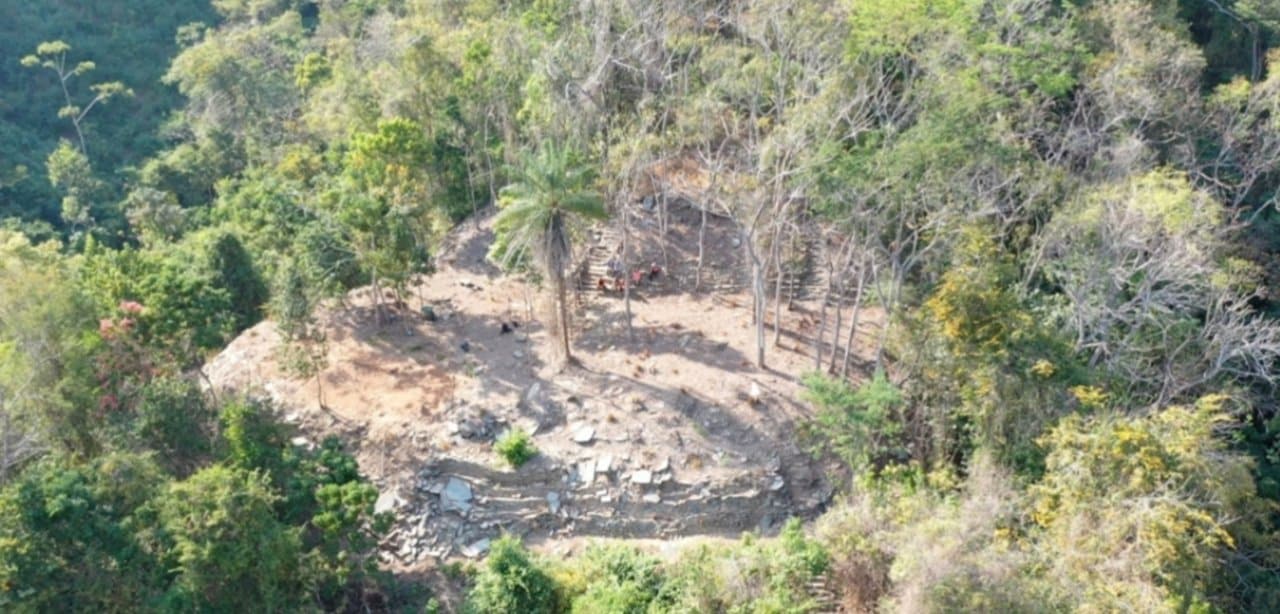
An archaeological discovery of unprecedented proportions in Serra Nevada of Santa Marta, Colômbia, is rewriting the history of pre-Hispanic urbanism in the region. The vast complex of Betoma, a network of indigenous villages that is 40 times the size of The revelation, the result of years of fieldwork and documentation, was detailed by archaeologists, with a significant impact on the understanding of ancient civilizations.
Situated on the western slope of Serra Nevada, in the upper basin of the La Aguja ravine, Betoma extends over 18 square kilometers. The site is home to an impressive count of 8,334 documented stone structures, including meticulously constructed terraces that demonstrate the advanced engineering of the Tairona people. Esta extensive network is not concentrated in a single monumental nucleus, but manifests itself as an interconnected conurbation of settlements.
The size of the settlement network
The magnitude of Betoma stands out for its scale when compared to other known archaeological sites. Enquanto Ciudad Perdida is an emblematic and concentrated complex, Betoma presents a distributed settlement model, with interconnections that form a continuous social and economic fabric. Essa characteristic suggests a highly developed territorial organization adapted to the geographical particularities of Sierra Nevada.
The study of Betoma, led by archaeologist Daniel Rodríguez Osorio since 2019, showed that the area functioned as a center of community life and diverse activities, with arrangements of structures that indicate housing, agricultural areas and ceremonial spaces. Conceiving of Betoma as a “conurbation”—a merger of several cities or settlements that maintain their identities but operate as a larger unit—is crucial to understanding social complexity and resource management in the pre-Columbian region.
Redefining pre-Hispanic urbanism
For decades, the archaeological narrative of Serra Nevada was heavily influenced by sites like Ciudad Perdida, which presented a hierarchical and concentrated model of organization. Betoma, however, offers a new perspective, showing that this was not the only, nor perhaps the most widespread, pattern of settlement. The absence of an apparent primary center in Betoma suggests a more decentralized or polycentric form of governance and social interaction.
This reinterpretation of pre-Hispanic urbanism paves the way for new hypotheses about population dynamics and cultural development between the 14th and 16th centuries, a period of population density in the region, as observed in Betoma. The discovery indicates that Sierra Nevada was a densely populated and interconnected territory, with complex networks that extended far beyond the few previously known monumental centers. The ability to support such a vast population in a mountainous landscape testifies to the Tairona’s great skill in engineering and agriculture.
The legacy of Tairona culture at Sierra Nevada
The Tairona culture, responsible for the construction of Betoma and Ciudad Perdida, is recognized for its advanced stone architecture, sophisticated agricultural systems, and intricate trade networks. Suas constructions, such as the terraces and stone paths found in Betoma, are testimony to a highly organized society with in-depth knowledge of the environment. Tais structures not only served for housing and cultivation, but also integrated drainage and defense systems, demonstrating remarkable urban and environmental planning.
The current year marks the 50th anniversary of the arrival of the first official commission to Buritaca-200, better known as Teyuna – Ciudad Perdida, a milestone in Colombian archaeology. The rediscovery and preservation of Ciudad Perdida, which is now one of five archaeological parks managed by Instituto Colombiano of Antropologia and História (ICANH), serves as a precedent for the importance of documenting and protecting Betoma. Essas discoveries not only enrich the country’s cultural heritage, but also provide crucial data for education and research.
The presence of several interconnected settlements, such as those identified in Betoma, highlights complex social coordination and the probable existence of agreements or political structures that allowed coexistence and collaboration between communities in such a vast territory. The engineering present in the 8,334 stone structures reveals an impressive adaptive and constructive capacity, optimizing the use of the mountain’s steep terrain for housing and agriculture. Terraces, for example, not only created flat areas for cultivation, but also prevented soil erosion, demonstrating in-depth knowledge of environmental management.
History of discovery and documentation
The rigorous documentation of Elver Enrique ‘Kike’ Osorio, a farmer in the region, played a crucial role, guiding archaeologists through areas he and his family had known for generations. The stone structures of Betoma were never “invisible” to local residents; The novelty lies in its formal documentation and scientific contextualization.
This collaboration between academic research and the traditional knowledge of the region’s people is an exemplary model for modern archaeology. The work of Daniel Rodríguez Osorio and his team, aided by local guides like Kike, has allowed the true scale and complexity of Betoma to come to light. Eles refrained from forcing discoveries into pre-existing structures from other contexts, allowing the uniqueness of Betoma to emerge through detailed and unbiased documentation.
Challenges and looters in the past
The history of Colombian archaeology, and especially that of Serra Nevada, is marked by significant challenges, including the actions of looters. In the case of Ciudad Perdida, before its official recovery, the site was the target of looting, with valuable objects being removed without any scientific record. Houve even attempts to negotiate the division of artifacts with the government, highlighting the urgent need for protection and institutional management of archaeological heritage.
The work of Instituto Colombiano, Antropologia and História (ICANH) has been fundamental in reversing this scenario, transforming previously vulnerable sites into protected archaeological parks. The experience with Ciudad Perdida highlights the importance of quick and complete documentation, such as that carried out in Betoma, to prevent future losses and ensure that the knowledge generated is preserved for future generations.
Preservation and future of research
The discovery of Betoma is not just an archaeological feat; is a reminder of the richness and complexity of pre-Columbian civilizations in Colômbia. The preservation of these sites is essential for the country’s cultural identity and for understanding human history in América of Sul. ICANH, together with local communities, plays a vital role in the protection and ongoing research of these heritage sites.
The future of research on Betoma promises to uncover even more details about the social, economic and political organization of the Tairona. Collaboration with indigenous and local communities is essential for a deep and respectful understanding of the site. Continuing documentation work and applying advanced technologies, such as laser mapping, will be crucial to revealing the full extent and still-hidden secrets of this impressive pre-Hispanic conurbation.



