
February marks the beginning of the holy month for Muslims with fasting that varies depending on the region of the globe


The international Islamic community awaits the arrival of one of the most important periods in its religious calendar, scheduled to begin between February 18th and 19th. The exact date depends on visual confirmation of the crescent moon, a practice that defines the beginning of the ninth month of the Islamic calendar. Durante This time, millions of believers around the world dedicate themselves to daily fasting, abstaining from food and drink from dawn until sunset, in an act of devotion and self-discipline.
The duration of the abstinence period is not uniform across the planet, varying significantly according to geographic location and the season in each hemisphere. Para the 2026 cycle, estimates indicate that fasting time will range between 11 and a half hours and 15 and a half hours. Essa difference occurs due to the inclination of Terra and the amount of sunlight that each region receives at this time of year.
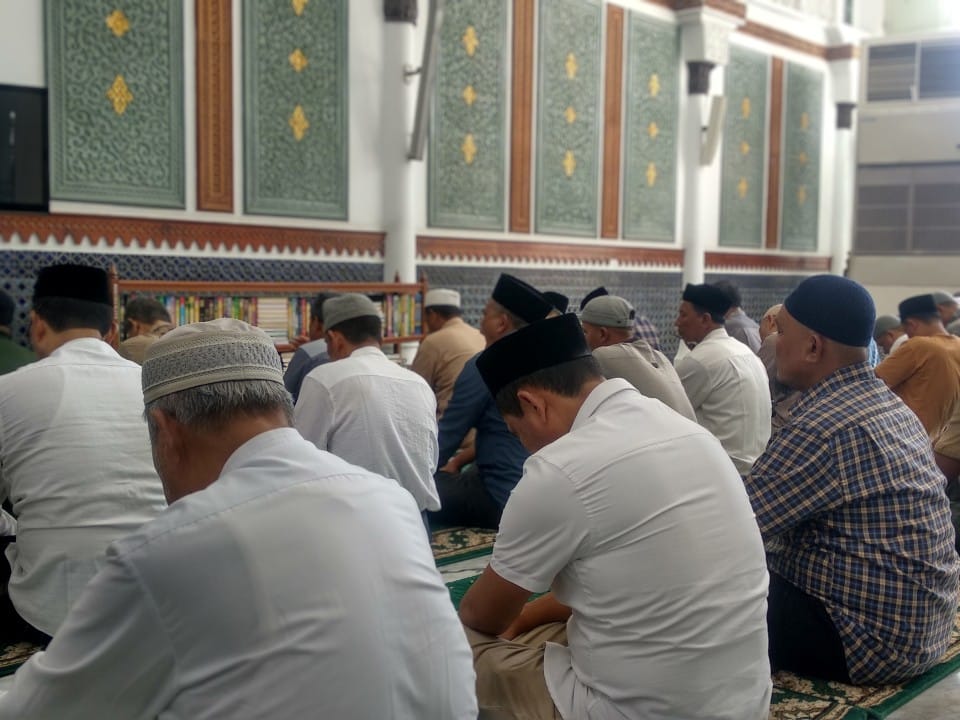
The holy month represents much more than dietary restrictions; It is a time of spiritual reconnection, charity and strengthening community ties. Families adjust their routines to accommodate pre-dawn and post-dusk meals, creating an environment of solidarity and reflection that transcends national borders.
Impact of latitude on fasting duration
Geography plays a crucial role in defining the daily routine of Muslims during this holy period. No Hemisfério Norte, where the majority of the Islamic population is found, the month will coincide with the end of winter. Isso results in shorter days and, consequently, shorter fasting periods, averaging around 12 to 13 hours in the first few weeks. Cidades like Londres and Nova York, for example, will have shorter abstention days compared to years in which the event takes place in the summer.
On the other hand, the faithful residents of Hemisfério Sul will face the opposite challenge, dealing with the long days characteristic of the southern summer. Países as Chile, África as Sul and Nova Zelândia will record the longest fasting durations in the world this year, reaching between 14 and 15 hours of restriction. The city of Christchurch, in Nova Zelândia, is an extreme example, where the period without food can extend considerably, requiring greater physical and mental preparation from the local community.
This inversion of realities between the Norte and the Sul is a cyclical phenomenon caused by the mismatch between the lunar calendar, followed by the Islã, and the Gregorian solar calendar. Como the lunar year is about 11 days shorter, the sacred month moves backwards annually, cycling through all the seasons over a cycle of approximately 33 years. In 2031, for example, the situation will reverse again when the period coincides with the winter solstice in the northern hemisphere.
Scenario and scheduled times for Brasil
In Brazilian territory, the continental extension and the geographical position mainly in the Hemisfério Sul directly influence the observance times. The average fasting duration in the country will be close to 13 hours, varying slightly depending on the latitude of each state. Islamic communities, present in several capitals, are already organized based on astronomical tables to guide the faithful about the exact moments in which abstinence begins and ends.
In Já in Brasília, the times are slightly different, with the restriction starting at 04:56 and ending at 18:09. Essas minute variations are crucial to the validity of the religious act and are strictly monitored by practitioners.
Other capitals have their own specific timelines:
– Rio of Janeiro: Suhoor must take place by 4:41 am, with iftar scheduled for 6:59 pm.
– Salvador: Apresenta times that vary a few minutes earlier in relation to the southeast.
– Porto Alegre: Devido at its southernmost location, tends to have a slightly longer period of sunlight, prolonging the fast.
Brazilian mosques and cultural centers play a central role in disseminating this information, in addition to organizing collective prayers and community dinners that mark the end of each day of fasting.
Food routine and health during the month
Physical adaptation is one of the main concerns for those observing the fast, especially in regions where the days are longer and hotter. The early morning meal, suhoor, is considered essential to ensure the energy needed for the rest of the day. Nutricionistas and religious leaders recommend the consumption of slow-digesting foods, rich in fiber and proteins, as well as intense hydration to avoid excessive thirst during hours of sunlight.
The moment of iftar, which marks the breaking of the fast at sunset, traditionally begins with the consumption of dates and water, following the customs of the Profeta Maomé. Esta practice not only carries a spiritual meaning, but also a physiological one, as dates provide a quick source of energy and sugar for the body after hours of deprivation. Após this light starter, families usually partake in a more complete meal.
It is important to highlight that Islã provides exceptions for specific groups that may have their health compromised by fasting. Idosos, chronically ill people, pregnant women, breastfeeding women and travelers are exempt from the obligation and can make up the days later or make charitable donations, depending on the case. Essa flexibility aims to preserve life and well-being, principles that are above rigorous ritualistic practice.
Spiritual meaning and social practices
Fasting goes far beyond simply abstaining from food and drink; it is an exercise in empathy and impulse control. When feeling hungry and thirsty, the faithful are invited to reflect on the condition of those who involuntarily face scarcity every day. Esse feeling drives one of the pillars of the month: charity, or Zakat, where donations and help to those less fortunate are encouraged.
Spiritually, the period celebrates the revelation of the first verses of Alcorão. Therefore, it is common for Muslims to intensify their prayers and dedicate more time to reading the holy book. The nights are marked by Tarawih prayers, held in congregation in mosques, creating a sense of unity and shared purpose among members of the community.
The greetings exchanged during this time reinforce the atmosphere of fraternity. Expressões as “Ramadan Mubarak” (Ramadan Abençoado) and “Ramadan Kareem” (Ramadan
Technology and precision in schedules
The exact determination of dates and times has evolved with the help of modern technology. While observing the moon with the naked eye remains a venerated and decisive tradition in many countries, the use of astronomical calculations and smartphone applications has become common to make life easier for the faithful, especially those who live in countries where there is no public call to prayer.
Global cities such as Dubai and Istambul serve as references for the Islamic world, combining tradition and modernity. Em Dubai, for example, suhoor on the first day is scheduled for 5:29 am and iftar for 6:37 pm. Já in Istambul, the times are around 05:24 and 18:15, respectively. Accuracy is guaranteed by local religious authorities who validate the astronomical data.
Mobile apps use devices’ GPS to calculate prayer and fasting times based on the user’s exact location, allowing Muslims on the move or in remote regions to carry out their religious duties accurately. Essa technological integration demonstrates how faith adapts to modern times without losing its essence and historical foundations.



