
GWM’s new hybrid SUV bets on a 243 hp engine and 3D design to lead sales in the automotive sector


Great Wall Motors officially announced the arrival of the 2026 line of its main product on the national market, introducing significant updates to the engine and visual package. The model, which now starts at R$223,000 in the entry-level configuration, seeks to consolidate the brand’s presence in the medium sports utility vehicle segment. The automaker’s strategy focuses on offering a robust mechanical package combined with semi-autonomous driving technologies to attract consumers looking for energy efficiency without giving up performance.
The technical highlight of the new version lies in the powertrain combination that combines a 1.5 turbo engine with an auxiliary electrical system. Esta configuration delivers a combined power of 243 hp and a torque of 55 kgfm, figures that position the vehicle competitively compared to direct competitors. The brand’s engineering team made specific adjustments to the fuel and Brazilian driving conditions, aiming to optimize durability and accelerator response in urban and highway situations.
The production of part of the components in Iracemápolis, within São Paulo, reflects the manufacturer’s commitment to the progressive nationalization of its products. With more than 25 thousand units already registered in the previous year, the expectation is that the update will keep the sales pace strong. The changes implemented in the design are direct responses to feedback from the first owners, focusing on usability and acoustic comfort.
The economic scenario for 2026 points to an intensification of competition in the electrified sector, with several brands presenting new solutions. GWM, by bringing forward the launch of this line, is trying to secure a larger share of the market before the arrival of new Asian and European rivals scheduled for the second half of the year. The after-sales infrastructure was also expanded, aiming to support the growing number of branded vehicles in circulation across the country.
Updates to the exterior design
The visual identity of the sports utility vehicle underwent a careful redesign, focused mainly on the front section of the vehicle. The new front grille adopts a pattern with 87 blocks arranged to create a three-dimensional effect, giving the whole a more modern and aggressive appearance. The headlights have also been redesigned, incorporating a vertical light signature that expands visibility and reinforces the car’s presence on the streets, differentiating it from previous versions.
On the sides, the 18-inch wheels received a new design and are shod with higher profile tires. Essa technical choice aims to prioritize passenger comfort when traveling on roads with uneven paving, a common feature in many Brazilian cities. The rear kept the integrated lights that cross the trunk lid, a design element that has become characteristic of the model and is well received among the consumer public.
Mechanical engineering details
The conventional hybrid system, identified as HEV2, operates with a 1.6 kWh battery that allows automatic energy regeneration during braking and deceleration. Esse system eliminates the need for external recharging via plug, which facilitates the routine of drivers who do not yet have charging infrastructure at home.
For the most complete versions, called PHEV19 and PHEV35, the energy storage capacity increases considerably. The 19 kWh and 35 kWh batteries provide ranges in pure electric mode of 73 km and 116 km, respectively, allowing many urban journeys to be carried out without using the combustion engine.
The 1.5 turbo combustion engine also received important technical improvements, such as the installation of a water intercooler and a variable flow oil pump. Essas modifications resulted in a gain of 1 kgfm in final torque, in addition to contributing to more efficient thermal management of the propellant under high demand.
Technology and connectivity on board
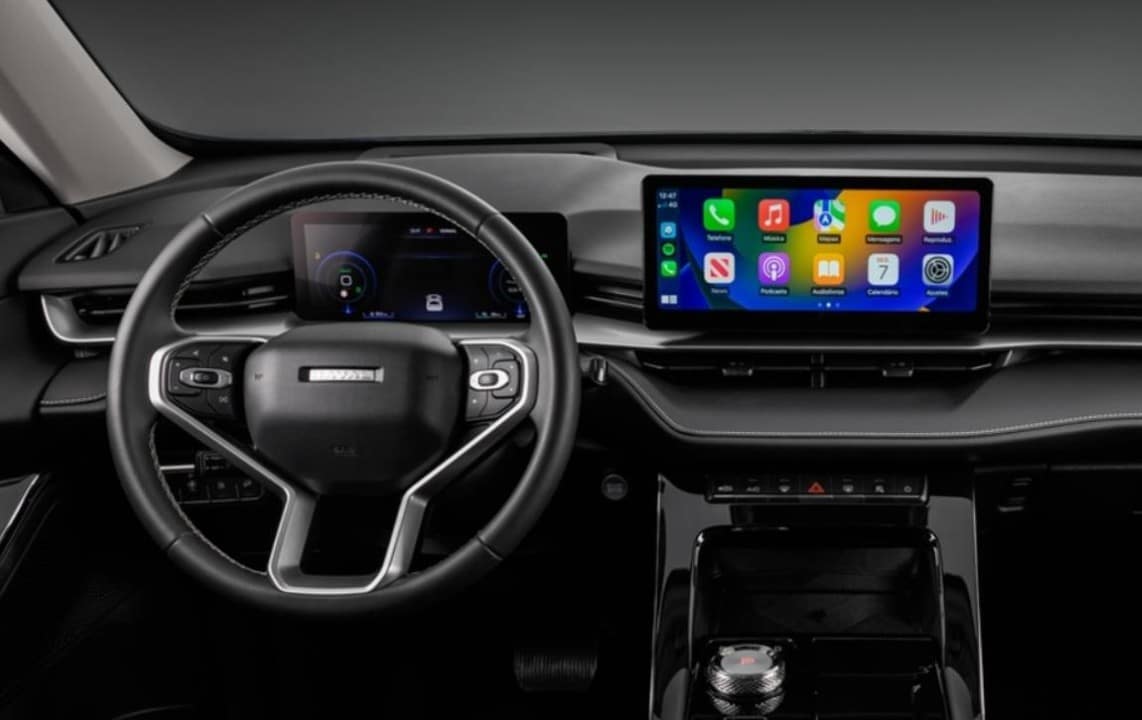
The vehicle’s interior has been updated with the adoption of a new 14.6-inch multimedia center, which now runs the Coffee OS 3 operating system. The interface promises more fluid and intuitive navigation between menus, facilitating access to vehicle functions and entertainment applications.
The multifunctional steering wheel was replaced by a model inherited from the Wey 07, featuring a more ergonomic grip and new control buttons. A standout feature is the facial recognition system, capable of identifying the driver and automatically adjusting driving preferences and comfort.
The seats were covered in new generation synthetic leather, with ventilation systems and electrical adjustments for the front occupants. The objective is to increase the level of comfort on long journeys, reducing passenger fatigue.
In terms of safety, the ADAS 2+ package continues to be a strong point, offering adaptive cruise control and automatic parking assistant. Sensores and cameras monitor the vehicle’s surroundings in real time, acting preventively to avoid collisions.
Competition and alternatives in the market
The price range in which the new model is positioned is one of the most sought after in the Brazilian market, with options that vary between traditional SUVs and urban pickup trucks. Consumers who have a budget close to R$230,000 will find alternatives with different engine proposals and internal space.
Among the main direct rivals identified in the current scenario, the following stand out:
– Renault Boreal Iconic: Seus features include a panoramic sunroof and a 360-degree camera system.
–
– Ford Maverick Lariat:
Comparative performance and efficiency
Analysis of the performance figures reveals that the GWM model accelerates from 0 to 100 km/h in approximately 8 seconds. The average consumption measured in urban cycle is around 14 km/l, a relevant figure for a vehicle of its size and weight. In comparison, competitors such as the Toyota utility achieve higher consumption averages, but lose in agility due to lower combined power. Já the Ford pickup, although it has greater torque for towing, has higher consumption, recording around 8.5 km/l in the city. Dados and Inmetro corroborate the energy efficiency advantage of Chinese hybrid sets compared to traditional flex options available in the same category.
Equipment and standard items
The list of standard equipment for the entire line includes comfort items such as dual-zone air conditioning and a panoramic sunroof. Sensores rain and twilight conditions are also part of the basic package, automating essential functions for daily driving.
Connectivity is guaranteed by a dedicated 4G internet chip, which allows “over-the-air” software updates, without the need to go to the dealership. The MyGWM app enables remote monitoring of vehicle status, including location and fuel level.
Expansion of the hybrid segment
The hybrid SUV market recorded significant growth of 40% last year, driven by tax incentives and consumers’ search for greater fuel economy. Brands of Chinese origin, such as GWM and BYD, already capture around 30% of this medium segment, benefiting from local production to reduce dependence on imports and protect themselves from exchange rate fluctuations. Pesquisas of the market indicate that buyers in this category prioritize autonomy in electric mode and an annual maintenance cost below R$1,000. The growth trend should remain strong in 2026, with the entry of new competitors such as the Geely EX5 EM-i, which promises to increase electric autonomy to around 200 km.
Higher versions and service network
For those looking for greater performance and off-road capability, the PHEV35 version is offered for R$288,000, delivering 393 hp and four-wheel drive. Já The GT Coupé variant, with sporty appeal and recalibrated suspension, has a suggested price of R$325,000. Ambas configurations compete in price and equipment with premium European models such as the Volvo XC40 Recharge, costing around 20% less.
The expansion of the dealership network is another pillar of the brand’s strategy, with the goal of reaching 40 points of sale and technical assistance by the end of 2026. The objective is to increase the capillarity of service and reduce purchasing insecurity in regions further away from large urban centers.
Keywords: Haval H6 2026, GWM Brasil, hybrid SUV, Haval H6 price, 2026 cars.
Long-tail keywords: GWM release Haval H6 HEV2 2026 datasheet.
Research sources: GWM Brasil, Inmetro, Portais of Notícias Automotivas.




