
New affordable MacBook with M5 chip promises to challenge Chromebooks’ dominance in education


The Cupertino technology giant is about to make one of the most significant updates to its line of portable computers, aiming to expand its presence in markets where cost is a decisive factor. Recent Informações indicate that the company is preparing to launch four new models equipped with the next generation of processors, but the main focus is on an aggressive commercial strategy. The objective is to introduce a device capable of directly competing with low-cost laptops, which currently dominate sectors such as education and entry-level corporate.
This strategic move suggests that the company is not just seeking to renew the performance of its high-end machines, but rather to penetrate a market segment saturated with more economical options. The introduction of a model with an estimated price of between 700 and 800 dollars would represent a paradigm shift for the brand, traditionally associated with premium products. By offering a more accessible gateway to the macOS ecosystem, the company aims to capture a broader user base that has previously opted for cloud-based solutions due to budget constraints.
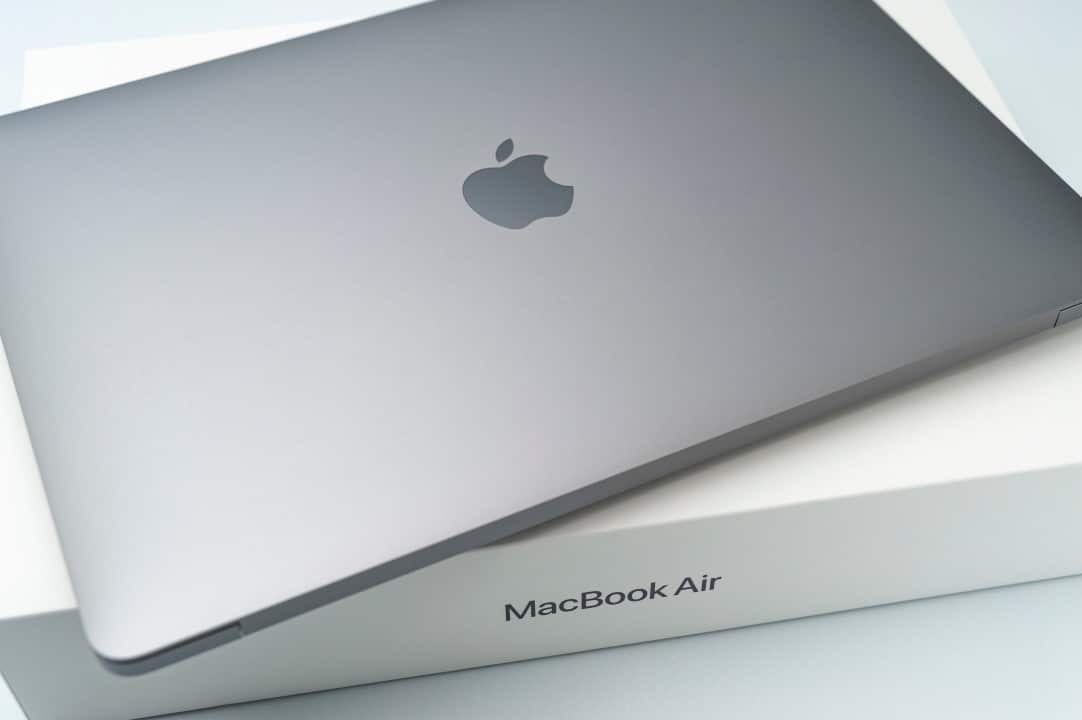
Market strategy and direct competition
The development of a MacBook worth less than a thousand dollars is seen by analysts as a direct response to the hegemony of the Chromebooks in schools and companies that depend on fleets of computers. The integration between hardware and software, the company’s trademark, will be the main competitive differentiator of this new device. Espera It is expected that, even at a reduced cost, the device maintains the fluidity and security characteristics of the operating system, offering a robust alternative for institutions seeking longevity and lower depreciation of their technological assets.
To reach this price range without compromising essential quality, the company’s engineering will likely reuse chassis from previous generations, such as the 13-inch model, optimizing the production line and reducing manufacturing costs. Essa approach allows you to focus investment on what really matters for performance: the processor. The inclusion of a variant of the M5 chip ensures that, despite the price, the device will have enough capacity to handle intense web browsing, document editing and media consumption, outperforming most direct competitors that use lower architecture chips in speed.
| モデル | メインチップ | 画面 | 推定開始価格 (相当) | 主な対象者 |
|---|---|---|---|---|
| 低価格MacBook | A18プロ | 13インチ液晶 | 699-899 | 学生と基本的な使い方 |
| MacBook Air | M5 | 13インチまたは15インチRetina | 999 | プレミアムモバイルユーザー |
| 標準MacBook Pro | M5プロ/マックス | 14インチまたは16インチのミニLED | 1999-3499 | 中級者向け |
| MacBook Pro OLED | M6(予定) | 14インチまたは16インチのタッチOLED | 非開示 | 一流のクリエイター |
Technical advances of the M5 processor
At the heart of this new lineup is the M5 processor, manufactured using TSMC’s advanced 3-nanometer lithography. Esta technology enables significantly higher transistor density, resulting in leaps in performance and energy efficiency. Testes Preliminaries and projections indicate that the new architecture will bring substantial improvements compared to the previous generation, consolidating the company’s leadership in custom silicon design. The focus is not just brute force, but the ability to perform complex tasks with less battery consumption.
The improvements expected for the new generation of chips include significant data that directly impacts the end user experience:
- Increased energy efficiency thanks to TSMC’s 3nm manufacturing process.
- Approximately 15% growth in CPU performance on single-core tasks.
- Significant jump of up to 36% in graphics processing capacity (GPU).
- Neural engine (Neural Engine) redesigned to accelerate artificial intelligence tasks.
- Greater battery life, especially in portable models in the Air line.
Artificial intelligence plays a central role in this update. The new Neural Engine is designed to process machine learning tasks directly on the device, ensuring privacy and speed. Recursos such as automatic photo editing, real-time audio transcription and more responsive virtual assistants will rely heavily on this new processing capacity, making the hardware ready for the software demands of the coming years.
Segmentation between lines Air and Pro
The MacBook Air will remain the flagship in terms of popularity, serving as many consumers’ first exposure to the M5 chip. The purpose of this model remains unchanged: to offer an ideal balance between portability and power. The passive, fanless cooling system must be maintained, which requires exceptional thermal efficiency from the new processor. Isso guarantees silent operation, ideal for study and office environments, without sacrificing performance during peaks of activity.
On the other hand, the 14-inch and 16-inch MacBook Pro models will receive the M5 Pro and M5 Max versions. Estas variants are aimed at professionals who demand workstation performance in a mobile format. Support for multiple external displays, 8K video rendering, and complex code compilation will be the tasks where these chips shine. The unified memory architecture will enable configurations with large amounts of RAM, essential for engineering, 3D design and high-end content creation.
In terms of connectivity and design, the company appears to have listened to feedback from professional users, maintaining the reintroduction of HDMI ports and SD card slots, which had been removed in past generations. The continuity of this utilitarian design reinforces the commitment to productivity, ensuring that the new chips are accompanied by versatile hardware capable of adapting to different workflows without the excessive need for adapters.
Future perspectives and evolution of the screen
Looking at the technological horizon, the transition from Mini-LED screens to OLED panels in the Pro models is already on the development roadmap, although only planned for subsequent generations, possibly with the M6 chip. Essa change promises to deliver perfect blacks, infinite contrast and instant response times, further raising the visual standard for creatives and video editors. However, for the current M5 cycle, the focus remains on maximizing silicon efficiency and democratizing access to the platform.
The company’s long-term strategy demonstrates a clear intention to maintain the superiority of its ARM-based chips over traditional x86 competition. By combining optimized hardware, integrated software and now a more aggressive pricing policy in the entry-level segment, the Cupertino company solidifies its position not only as a luxury brand, but as a provider of essential tools for education and work at all levels.



