
Rare phenomenon brings together six planets in the night sky and can be seen with the naked eye throughout Brazil

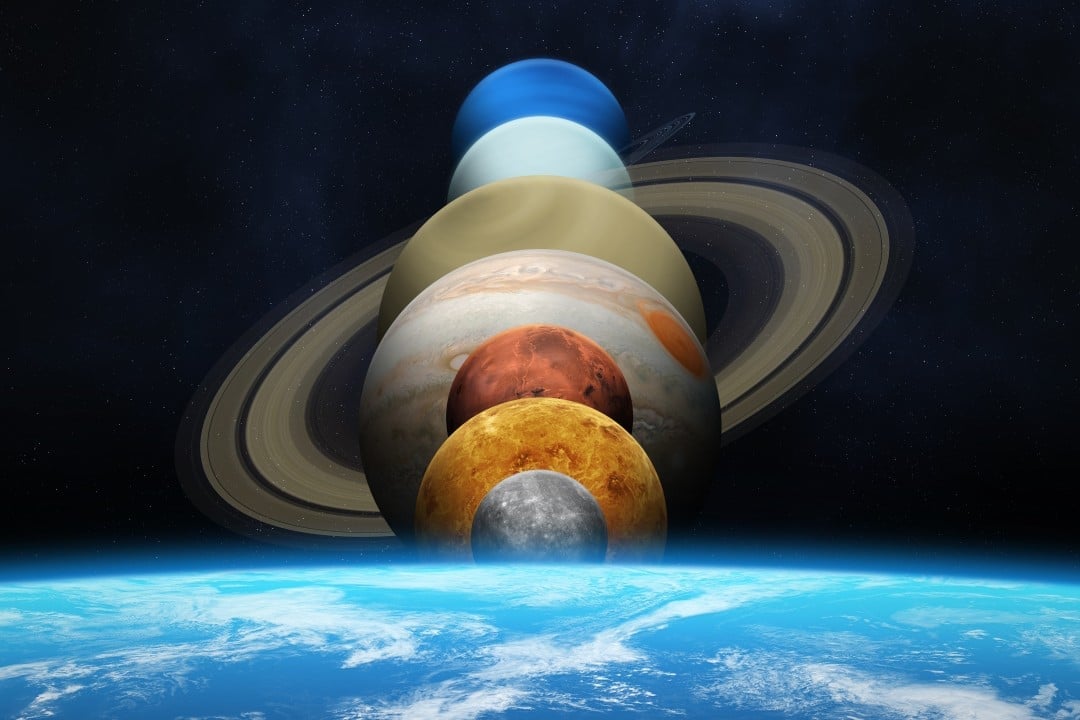
The night sky at the end of February holds a grand spectacle for observers across the country, with the formation of a planetary parade involving six neighbors of Terra. The astronomical phenomenon is highlighted in the 2026 calendar by allowing the simultaneous viewing of Mercúrio, Vênus, Júpiter, Saturno, Urano and The configuration reaches its peak of visibility on February 28th, creating a unique opportunity for photographic records and amateur observation.
Especialistas indicate that the observation should be carried out immediately after sunset, when the residual light helps to compose the scene, but the increasing darkness reveals the brightness of the stars. Embora the alignment involves half a dozen planets, the visual experience varies depending on the equipment available, four of which can be identified without the need for complex optical instruments in places with good atmospheric conditions.

The arrangement of the stars in the firmament does not represent a perfect straight line, but rather an arc that follows the ecliptic, the apparent path of Sol across the sky. Essa cosmic meeting is the result of the terrestrial perspective in relation to the individual orbits of each planet around the central star, generating the illusion of proximity between worlds that, in reality, are separated by millions or billions of kilometers in the vacuum of space.
Para Brazilians, the event promises to be democratic, accessible both to those with advanced telescopes and to curious people who just want to look to the west in the late afternoon. The combination of bright planets like Vênus and Júpiter with more distant gas giants offers a didactic overview of the diversity of our planetary system, encouraging the search for places with a free horizon to appreciate the entire phenomenon.
Visual characteristics and identification of stars
Correct identification of each light point is essential to enjoy the full alignment experience. Vênus takes center stage as the brightest object in the composition, appearing at dusk and serving as the main guide to locate the other members of the parade. Sua intense magnitude allows it to be seen even in cities with moderate light pollution, facilitating the observer’s initial orientation.
Júpiter and Saturno appear as stable and distinct points of light, positioned higher in the sky relative to the western horizon, creating an interesting visual contrast with the background stars that usually twinkle. Mercúrio, in turn, poses the biggest challenge of the night due to its proximity to Sol; it remains visible for a short time before disappearing below the horizon, requiring extremely clear skies and an unobstructed view to capture.
Já the observation of Urano and The use of simple binoculars can reveal Urano as a small greenish dot, while Netuno, the most distant of the group, requires telescopes with greater magnification power to be distinguished from adjacent stars.
Strategies for successful observation
The recommended period for monitoring the evolution of the alignment begins on February 25th and extends until the first days of March, offering a window of opportunity to overcome any cloudy days. The choice of location is crucial: rural areas, remote beaches or mountainous regions offer the necessary darkness for the less bright planets to become noticeable, away from the interference of the artificial lights of large cities.
Aplicativos astronomy tools for smartphones have become indispensable tools for this type of event, allowing the user to point the device at the sky and receive real-time identification of each planet. Além of technology, physical preparation includes adapting your vision to the dark, which takes about 30 minutes, and using flashlights with red light to consult maps or adjust equipment without dazzling your eyes.
Weather conditions in Brasil during late February tend to vary greatly between regions, which requires attention to the local weather forecast. No Sul and Sudeste, the probability of clear nights may be greater compared to Norte, where cloudiness is frequent at this time; however, intervals of clear skies can occur in any location, with patience and persistence on the part of the observer.
The Celestial Mechanics Behind Alignment
The observed phenomenon of Terra is an “illusion” of perspective caused by the different speeds at which the planets orbit Sol. Como the solar system is practically flat, with the planets orbiting at similar levels (the ecliptic plane). Enquanto to Terra completes one lap in a year, Júpiter takes almost twelve, creating overtaking dynamics that generate these configurations.
Astrônomos use precise mathematical models to predict such events years or decades in advance, confirming that there is no noticeable gravitational influence on Terra resulting from this alignment. The importance of the event is strictly visual and educational, serving as a reminder of the complex orbital dance that governs our cosmic neighborhood and providing a spectacle of natural beauty.
Busy astronomical calendar in 2026
Além of the great planetary parade in February, the year 2026 promises to keep Brazilians’ eyes focused upward with other significant events. An annular solar eclipse is scheduled to occur in February, the 17th, favoring observers in specific bands of Hemisfério Sul with the impressive “ring of fire”. Logo Then, on March 3, a total lunar eclipse can be seen in much of Américas, dyeing Lua red.
Meteor showers will also have their moments of glory, with Perseidas reaching its peak of activity in August and Geminídeas ending the year in December with dozens of shooting stars per hour. Smaller Conjunções between Vênus and Júpiter throughout June should create bright pairs in the sky, keeping interest in amateur astronomy hot throughout the semester.
Engagement in events like this has driven the creation of astronomy clubs and the organization of public observation sessions in parks and schools. The ease of recording with modern cell phone cameras allows the phenomenon to be widely shared on social networks, creating a community connected by admiration for the universe and reinforcing the need to preserve dark skies against light pollution.



