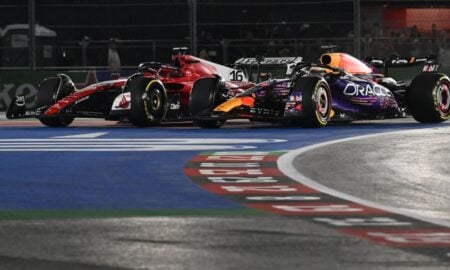
Red Bull loses chief designer Craig Skinner after two decades of career in Formula 1


Red Bull Racing has officially confirmed the departure of its chief designer, Craig Skinner, ending a 20-year cycle of collaboration with the team based at Milton Keynes. The engineer, who had assumed a role of greater technical relevance after the departure of Adrian Newey, had represented the Austrian team since 2006 and was a fundamental player in the organization’s era of dominance in the Fórmula 1 World Cup. The farewell comes at a time of profound transition for the team, which is trying to restructure itself internally while dealing with significant changes in its management and technical staff in recent years.
The announcement of Skinner’s departure comes just two weeks before the official start of Campeonato Mundial 2026, adding an extra layer of complexity to the team’s immediate planning. Although the team has demonstrated solid performance in recent tests, the loss of such an experienced technical mind raises questions about the continuation of aerodynamic development throughout the year. The technical staff will now need to redistribute design leadership roles to ensure that the current project is not disrupted in its competitive evolution.
- Skinner joined Red Bull Technology in 2006, right at the beginning of the team’s rise.
- He worked directly with Adrian Newey and Pierre Waché in the development of championship cars.
- His promotion to chief designer occurred to fill the strategic gap left by the departure of Newey.
- Red Bull publicly thanked the engineer for his dedication and contribution to the titles won.
Craig Skinner’s trajectory at Fórmula 1 is marked by constant technical evolution within the same structure, starting as a simulation engineer (CFD) before rising to command positions. Sua technical competence allowed him to head the aerodynamics department, where he refined the concepts that gave Red Bull a considerable competitive advantage over rivals during regulation changes. By being promoted to chief designer in 2022, he has consolidated his position as one of the pillars of British engineering focused on high-level motorsport.
Red Bull’s Chief Designer Craig Skinner has departed the team with immediate effect, having first joined the squad back in 2006 🚨
—Formula 1 (@F1)February 17, 2026
Read the full story here 👉https://t.co/b4KFxWOwFs#F1 pic.twitter.com/Bb6nPu3Q9g
Technical restructuring in Milton Keynes
The departure of Craig Skinner is not an isolated event, but rather the most recent chapter in a series of casualties that have hit the operational heart of Red Bull Racing over the last two years. The team, which once boasted one of the most stable leaders on the grid, saw historic figures seek new challenges from competing teams or end their ties due to changes in internal management. Esse movement of talent out has forced the organization to promote young engineers and seek home-grown solutions to maintain technological competitiveness.
The loss of Skinner is particularly sensitive due to its symbiosis with the work philosophy of With its departure, the Red Bull loses the last major direct link in the lineage of designers that shaped the brand’s success since the transition from V8 engines to hybrids. The technical board, led by Pierre Waché, now faces the challenge of maintaining the car’s identity without the advice of
Test performance and new partnership with Ford
Despite the turbulence behind the scenes and the frequent departures from positions of trust, the Red Bull car for 2026 presented encouraging results during the shakedown carried out in Barcelona, in Espanha. The first impressions gathered by pilots and engineers suggest that integration with the new Ford engines is occurring more smoothly than expected by the market. Esse initial technical progress serves as a buffer for the negative impact caused by the farewell to Skinner, maintaining optimism among the mechanics and track team at Bahrein.
Pre-season tests at the Sakhir circuit confirmed that the power unit developed in partnership with the American manufacturer has satisfactory reliability levels for the start of the championship. Isack Hadjar and other pilots in the Red Bull development program have accumulated important mileage, providing crucial data for fine-tuning the electronics and energy recovery systems. Esse volume of information is vital so that the replacement of Skinner can inherit a project already validated in real asphalt and high temperature conditions.
Profound changes in team command
Skinner’s departure ends a two-year period marked by drastic changes that included the dismissal of Christian Horner and the transfers of Jonathan Wheatley and Will Courtenay. Wheatley, who was the sporting director and right-hand man in racing operations, took charge of Audi, while Courtenay strengthened McLaren’s strategic structure after years of service at Milton Keynes. Essas moves indicate a realignment of forces within the paddock, where Red Bull is no longer the final destination to become an exporter of elite talent.
The departure of Horner, motivated by internal conduct issues, was the catalyst that accelerated the process of dispersion of part of the technical staff that felt aligned with his decades-long management. Muitos analysts point out that the team’s emotional and professional stability was tested to the limit during the investigations and subsequent administrative restructuring. Red Bull’s current challenge is to prove that the brand and its engineering processes are greater than the individuals who built its glorious history on international tracks.
Aerodynamic challenges and internal succession
The design department must now undergo an immediate redistribution of tasks to prevent the planned upgrade schedule for the European leg of the season from being delayed. The role of chief designer requires a holistic view of the vehicle, integrating suspension, chassis and aerodynamic packages harmoniously to maximize downforce without compromising top speed. Sem Skinner, Red Bull will have to rely on its new generation of designers, many of whom were trained under the direct supervision of the departing engineer.
Internal succession is seen as the most likely path, following the team’s tradition of valuing talents who already understand Milton Keynes’s intensive work culture. Espera New names are expected to appear in official announcements in the coming weeks, as the technical hierarchy is adjusted to respond to the requirements of the FIA and the new technical regulations. The ability to respond quickly in these internal promotions will determine whether Red Bull will be able to stay in direct competition against Ferrari and Mercedes at the beginning of this new era.
Impact on long-term project stability
The departure of a professional with 20 years of experience has impacts that go beyond technical design, affecting the morale of departments that depended on his leadership and constant mentoring. Craig Skinner was known for his ability to solve complex problems under pressure, an essential trait during Grande Prêmio’s weekends and emergency parts development. The absence of this accumulated experience can be felt at critical moments of the season, where the speed of technical decisions is the difference between victory and the middle of the pack.
Even with a scenario of uncertainty, Red Bull maintains a robust budget and a simulator infrastructure that is among the most advanced in the world, which facilitates the transition between leadership. The organization’s full focus is now on the first Grande Prêmio of the year, where the car’s actual performance under race conditions will be the final verdict on the health of the technical project. The departure of Skinner is, without a doubt, an end of an era, but the team is betting that the foundations laid by him and his former teammates are solid enough to sustain new achievements.
Skinner’s trajectory at Red Bull is an example of loyalty and growth within the sport, having witnessed everything from the team’s first victory to its consolidation as a global power. Sua contribution to the development of the cars that gave titles to Sebastian Vettel and Max Verstappen is recorded in the history of modern motorsport. Agora, the engineer heads towards new directions, while Red Bull begins the challenge of proving its technical resilience in an increasingly balanced and aggressive grid in the search for innovation.
The engineering transfer market at Skinner’s experience in CFD and aerodynamic design makes it an extremely valuable asset to any competitor looking to jump up positions in the manufacturers’ table. Enquanto That’s it, the atmosphere in