
Visual renewal of the Japanese sedan appears without camouflage and displays a front with a double optical assembly

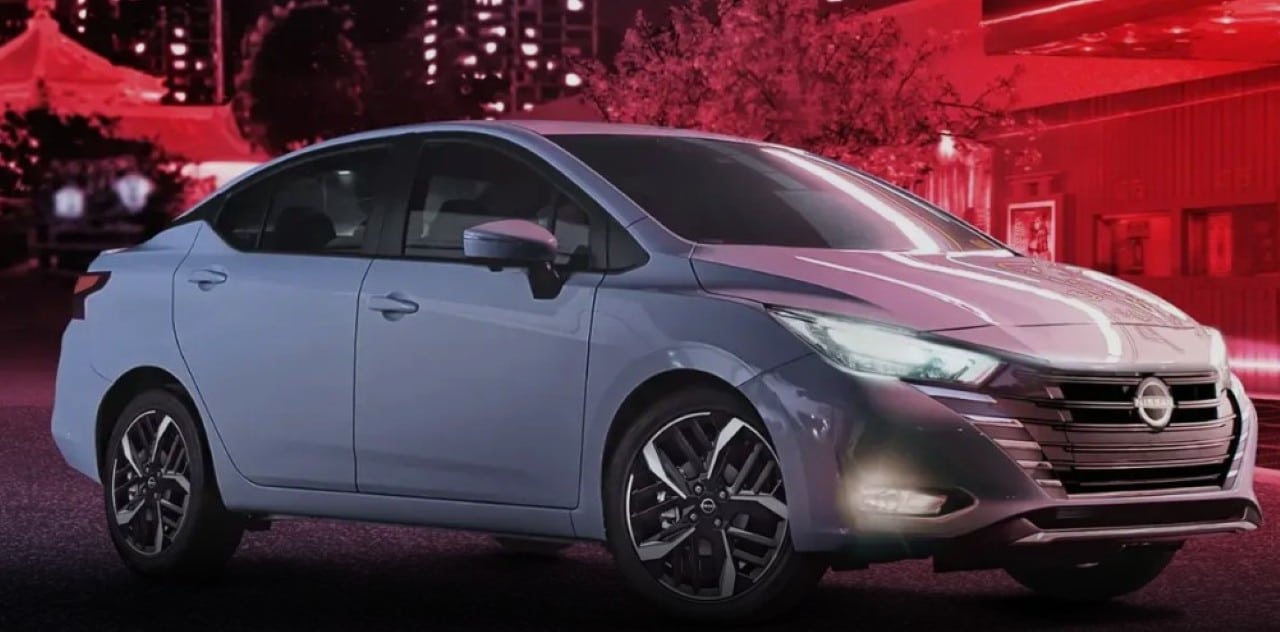
Recent images captured in the vicinity of the Aguascalientes industrial complex, at México, brought to light Nissan’s new visual strategy for its compact sedan. The vehicle was spotted driving completely free of camouflage, anticipating a drastic aesthetic change for the model’s current life cycle. The main highlight is the complete redesign of the front end, which abandons conservatism to adopt a more aggressive design language in line with contemporary trends in sports utility vehicles and pickup trucks.
The main change observed is concentrated in the front optical assembly, which now adopts the split headlight style. The upper part houses the LED daytime running lights, positioned close to the hood, while the main projectors responsible for nighttime lighting have been moved to the bumper, in a lower position. The Essa aesthetic solution refers to models such as the Fiat Toro and anticipates features that can be seen in the next generation of the Kicks, creating a renewed family identity for the Japanese automaker in the region.
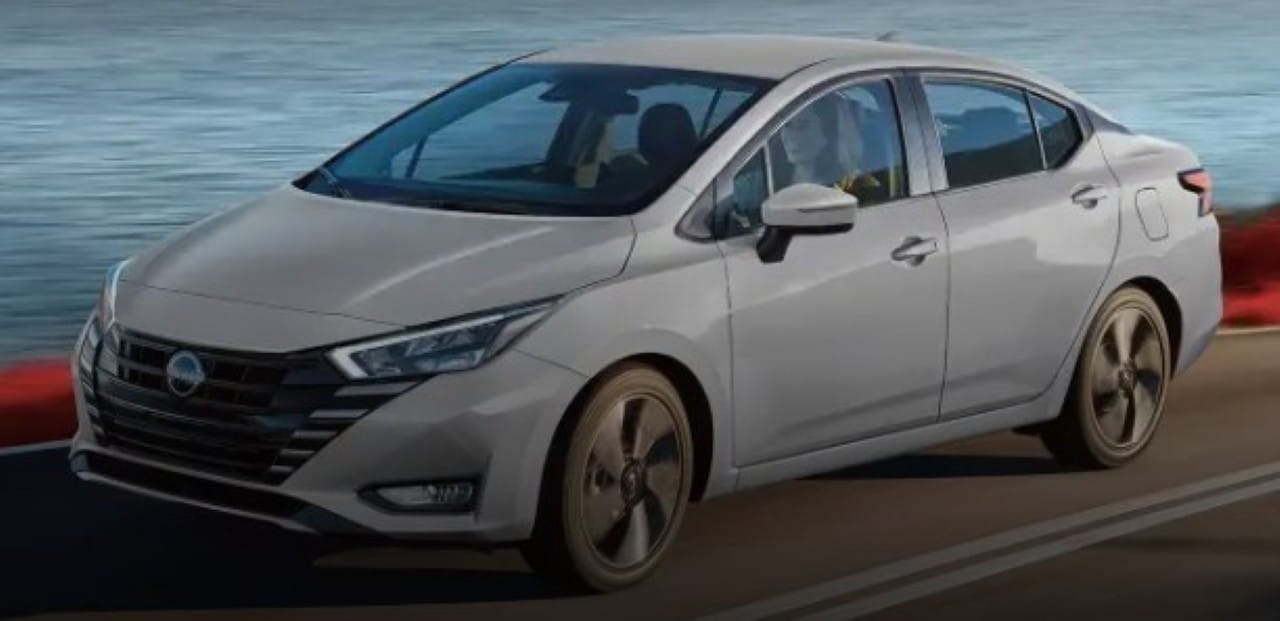
Além from the front, the rear of the sedan also underwent significant interventions. The headlights have been redesigned and are now connected by a horizontal bar in glossy black finish, which runs the entire length of the trunk lid. The name of the vehicle is highlighted centrally in this new piece, giving it an air of greater sophistication. The rear bumper follows the changes with more robust lines and repositioned reflectors, seeking to convey a feeling of greater width and stability to the car.
Production continues to be concentrated in the Mexican factory, responsible for supplying several América Latina markets, including Brazil. Apesar of the profound visual changes, the basic structure of the vehicle remains the same as the generation launched in 2020, using the renowned V platform.
Technical details and dimensions maintained
Mesmo With the extensive bodywork, the sedan’s dimensions should remain practically unchanged, preserving the characteristics that made it a reference in internal space in the segment. The model maintains its 4.49 meters in length and 1.74 meters in width, dimensions that guarantee comfort for the occupants. The 2.62 meter wheelbase continues to be one of its strong points, offering good legroom in the rear seat, while the trunk holds its capacity of 482 liters, ideal for family use and app transport services.
In terms of mechanics, the automaker chose not to make profound changes, prioritizing reliability and maintenance costs. The 1.6 aspirated four-cylinder engine should remain the only option for the Brazilian and Mexican markets. Este propellant delivers up to 113 horsepower and 15.3 kgfm of torque when fueled with ethanol. The CVT automatic transmission, known for its smoothness and focus on fuel efficiency, will continue to equip the main versions, with no plans for the introduction of turbo engines at this stage of the project.
Interior and equipment package
Embora the external photos have revealed almost everything about the design, the interior is still a matter of speculation, but it is expected that it will follow the logic of refinement applied to the exterior. The cabin should receive new finishing materials, with soft-touch surfaces on the dashboard and doors, as well as new fabric and leather patterns for the seats. Embedded technology will be a focal point, with the likely adoption of a multimedia center with a larger screen and updated interface, ensuring wireless connectivity for Apple CarPlay and Android Auto.
The instrument panel can also receive updates, with the introduction of configurable digital screens in the more expensive versions, replacing traditional analogue displays. In terms of security, the ADAS package (Systems Avançados from Assistência to Condutor) must be maintained and possibly expanded. Itens such as autonomous emergency braking, forward collision warning and 360-degree cameras will continue to be important differentiators to justify the model’s price positioning at the top of the compact sedan category.
Market scenario and launch
The renewal comes at a crucial time for the Nissan, which seeks to recover ground in a segment dominated by strong competitors such as the Volkswagen Virtus, the Honda City and the Hyundai HB20S. Sales figures for the current model, while consistent, show there is room for growth. With around 8,500 units registered for most of the previous year, the brand is betting that the striking look and generous equipment list will be enough to attract new consumers who value design and space.
The official presentation at México should take place soon, considering that the units caught already seemed ready for advertising materials. Para the Brazilian market, the expectation is that the model will arrive at dealerships throughout 2026. The pricing strategy will be decisive for the success of the restyling, with the automaker having to balance the cost of technological and aesthetic innovations with the need to keep the vehicle competitive in a price range that is already close to entry-level SUVs.



