
Volkswagen’s strategy with Tera and T-Cross puts pressure on Fiat in the fight for the national market

The race for hegemony in the Brazilian automotive sector took on new contours this year, with Volkswagen intensifying its offensive to overthrow the historic leadership of Fiat. The German automaker has consolidated a robust strategy based on renewing its portfolio and introducing models that fill specific market gaps. The current scenario reflects an aggressive movement by the brand, which combines the strength of already established vehicles with technological innovations to attract an increasingly demanding consumer.
The clash between the two automotive giants is not just limited to monthly registration numbers, but involves a complex dispute over brand positioning and customer loyalty. Enquanto the Italian competitor maintains its strength in entry-level and pickup truck segments, Volkswagen is betting on the diversification of SUVs and the modernization of its hatchbacks to gain volume and added value in direct and retail sales.

Industry experts point out that the German manufacturer’s movement is the most significant in recent years, signaling an investment cycle focused on returning to the top of the podium. Public response has been positive, reflected in the company’s increased market share in the early months of 2026, driven by a combination of updated design and competitive equipment packages.
The battle for the Brazilian consumer now focuses on the supply of embedded technology and energy efficiency. With the minimum wage in force in 2026 set at R$1,621, the cost-benefit ratio has become a decisive factor when choosing a new car, forcing automakers to balance attractive prices with more generous lists of standard items.
The impact of the new Tera on the access segment
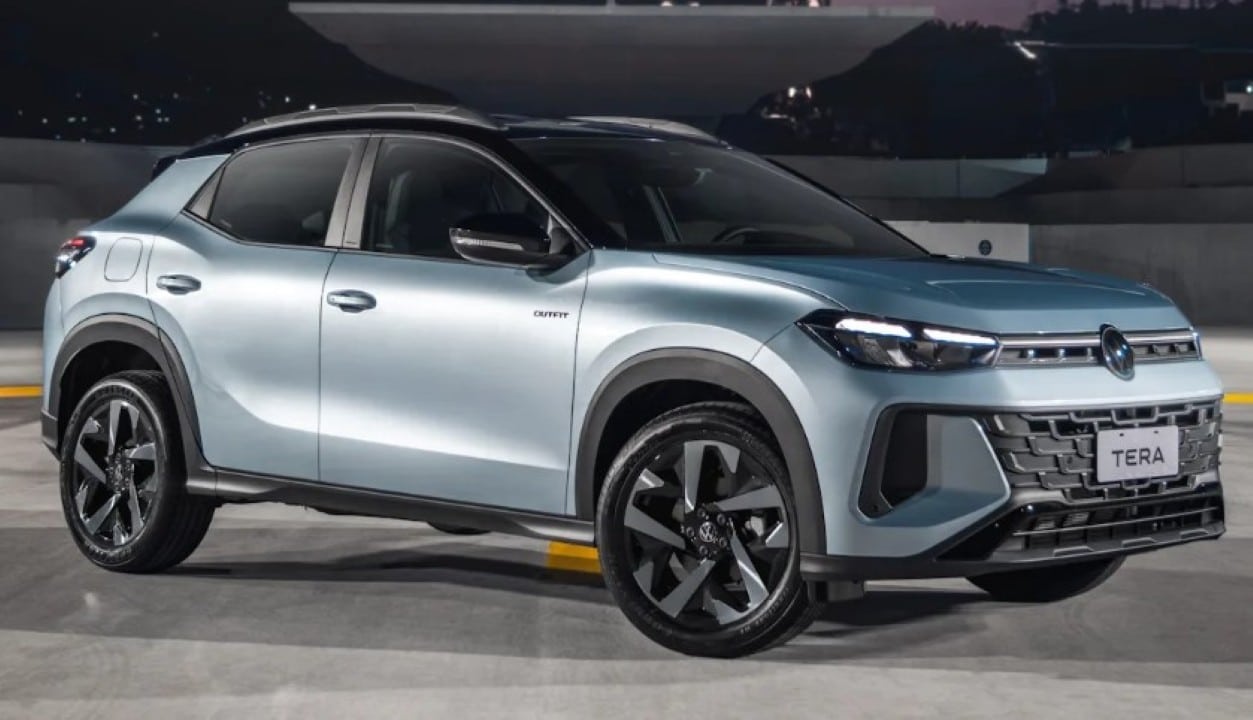
Volkswagen’s big move to change the balance of forces in the market is the launch and positioning of Tera. Este model arrives to operate in a strategic range, serving as a gateway to the brand’s line of sports utility vehicles. The vehicle was developed to attract consumers who want the visual robustness of an SUV, but with more accessible dimensions and prices, competing directly with entry-level versions of rivals.
The Tera not only fills a gap in the company’s catalogue, but also acts as a spiritual successor to popular models of the past, now in the guise that the market demands. Sua initial acceptance suggests that Volkswagen was right in reading trends, offering a product that combines urban agility with the connectivity demanded by young audiences.
Consolidation of veterans Polo and T-Cross
While the news attracts the spotlight, the Volkswagen’s support base remains firm in the commercial performance of the Polo and the T-Cross. The Polo hatch took the lead in sales, benefiting from the departure of former competitors and specific updates that kept it relevant. Sua version Track, focused on cost-benefit, has become essential to guarantee volume in corporate sales and for app drivers.
At the same time, the T-Cross continues to be a reference in the compact SUV segment. The model managed to maintain its attractiveness even years after launch, thanks to assertive restyling and the maintenance of reliable and efficient mechanics. The duo Polo and T-Cross form the financial foundation that allows the automaker to invest in new projects such as the Tera, creating an ecosystem of products that feeds back on each other.
Technology and modular platforms as a differentiator
One of the pillars of the Volkswagen strategy lies in the extensive use of modular platforms, which allow components to be shared between different cars, reducing costs and accelerating development. Essa flexible industrial architecture is what allows the brand to offer technologies from higher segments in more compact cars, such as adaptive cruise control and advanced multimedia systems.
The commitment to digitalizing the cabin and active safety has been a powerful selling point against the Fiat. By equipping its models with six standard airbags and digital panels in different versions, Volkswagen tries to raise the perception of value of its products, distancing itself from the image of basic popular cars and targeting a consumer who prioritizes safety and connectivity.
Competitor reaction and consumer benefits
Fiat, in turn, does not passively watch its rival advance. The Italian automaker has responded quickly, adjusting prices and launching special series of its best-selling models. Essa “action and reaction” dynamics create a highly competitive environment, where promotions and easier financing conditions become frequent to avoid loss of market share.
For the end consumer, this trade war is extremely advantageous. The need to outperform the competition forces manufacturers to deliver more complete cars and offer better after-sales conditions. The year 2026 promises to be marked by this fierce dispute, where every tenth of market share will be fought for in dealerships across the country.
The macroeconomic scenario, with the stabilization of components and the normalization of production lines, allows the dispute to occur under conditions of equal supply. Assim, leadership will be defined by each brand’s ability to understand and meet the desires of a Brazilian driver who seeks, above all, versatility and modernity in their vehicle.



