
Asteroid monitored by NASA has a high chance of hitting the Moon in 2032 and causing an explosion visible from Earth

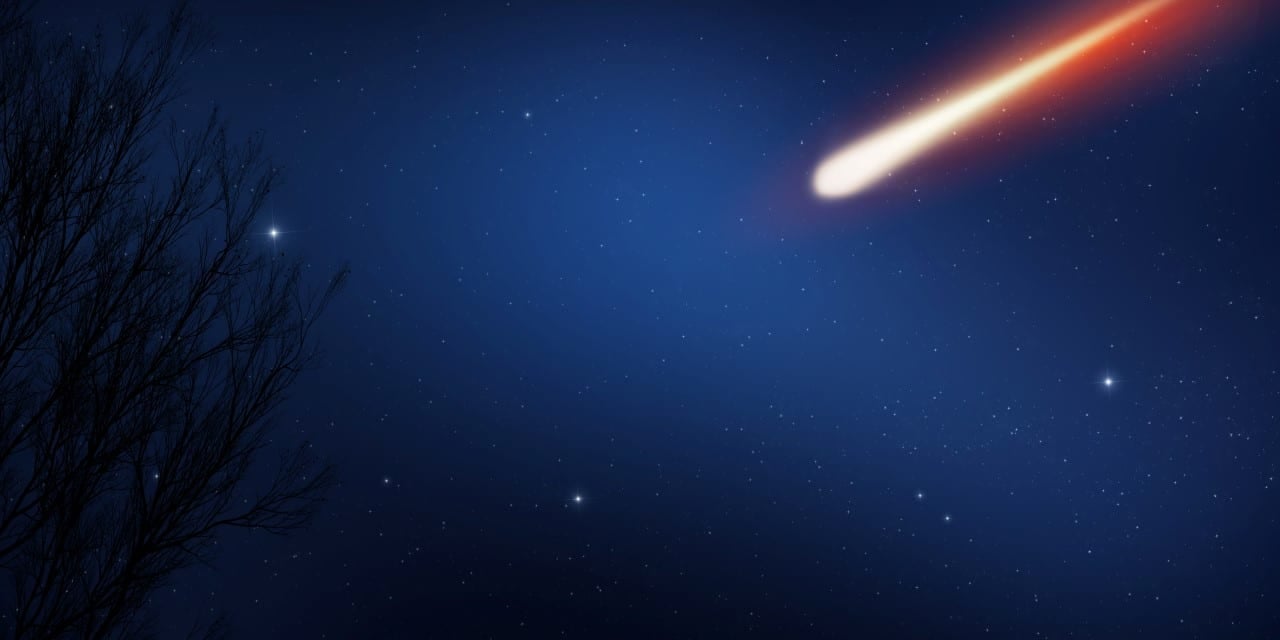
The celestial object identified as 2024 YR4, originally discovered at the end of 2024, had its trajectory meticulously recalculated by international space agencies. Novas observations carried out with the help of the James Webb space telescope allowed scientists to rule out any risk of collision with our planet, now pointing to a different scenario where the rocky body should impact the lunar surface in the next decade.
Space monitoring and orbital data refinement
Astronomical surveillance systems, including ATLAS on Chile, first detected the asteroid in December 2024. Initial Cálculos raised concerns about a possible dangerous approach to Terra, but subsequent observation campaigns, ending in mid-2025, eliminated this possibility. The accuracy of today’s data offers a robust safety margin for humanity.

Experts from Nasa and Agência Espacial Europeia (Esa) used the information collected to determine the physical characteristics of the object. The asteroid has an estimated diameter of around 60 meters and is classified as type S, composed mainly of silicates and metals, a common constitution in the main asteroid belt.
Orbital analyzes indicate that the gravitational interaction with the Terra-Moon system will be decisive for the final fate of the space rock. Modelos computational projects project that the trajectory of 2024 YR4 will place it on a direct collision course with our natural satellite, an event that offers a rare study opportunity for the global scientific community.
Impact energy and consequences on the lunar surface
Dynamic studies predict that the shock will occur on December 22, 2032, when the asteroid will reach Lua at an impressive speed of approximately 14 kilometers per second. The energy released in this event is estimated at around 650 megatons of TNT, enough force to locally alter the lunar geography.
The collision is expected to excavate a new crater about a kilometer in diameter on the satellite’s surface. Esse The process of crater formation, although common on geological timescales, is rarely observed so far in advance and with such precision, allowing astronomers to prepare instruments to record the exact moment of impact.
The phenomenon will generate an intense flash of light that can be observed from Terra with the naked eye, depending on local visibility conditions. The magnitude of the brightness is estimated to be between -2.5 and -3, comparable to the brightness of planets like Júpiter or Marte in their most visible phases, lasting several seconds in the night sky.
Possibility of meteor shower and terrestrial safety
Debris resulting from the explosion at Lua will be ejected into space and some of this material may be captured by Earth’s gravity. Simulações indicate that these fragments would reach our atmosphere days or even weeks after the main impact, creating a harmless light show for the population.
The entry of these small pieces of rock into the Earth’s atmosphere does not pose a threat to public safety or infrastructure. Most of the fragments will completely disintegrate due to friction with the air, generating what is popularly known as shooting stars or an atypical meteor shower.
Observatories in regions such as Leste Asiático and Pacífico, including Havaí, will be in the best geographic positions to monitor the event in real time. International coordination is already underway to ensure that all possible data is captured, from the spectrum of emitted light to the scattering of the lunar dust plume.
Unique opportunity to study impacts in real time
Scientists see the 2032 event as a natural laboratory to test planetary defense models and better understand the internal composition of celestial bodies. Analysis of reflected light and ejected materials will provide valuable information about the geology of the region impacted by Lua and the internal structure of the asteroid itself.
Amateur astronomers and citizen observation networks will also play a crucial role in recording the phenomenon. The event’s wide visibility window and predictability allow enthusiasts around the world to contribute images and data that will complement observations made by large professional telescopes.
Continuous monitoring of 2024 YR4 until the impact date will serve to calibrate instruments and refine software for tracking objects close to Terra. Esse practical exercise strengthens the global ability to respond to future space threats by demonstrating the effectiveness of current technology in predicting cosmic events years in advance.



