
Astronomers monitor a building-sized asteroid that could hit the Moon in 2032, generating flashes and meteors on Earth

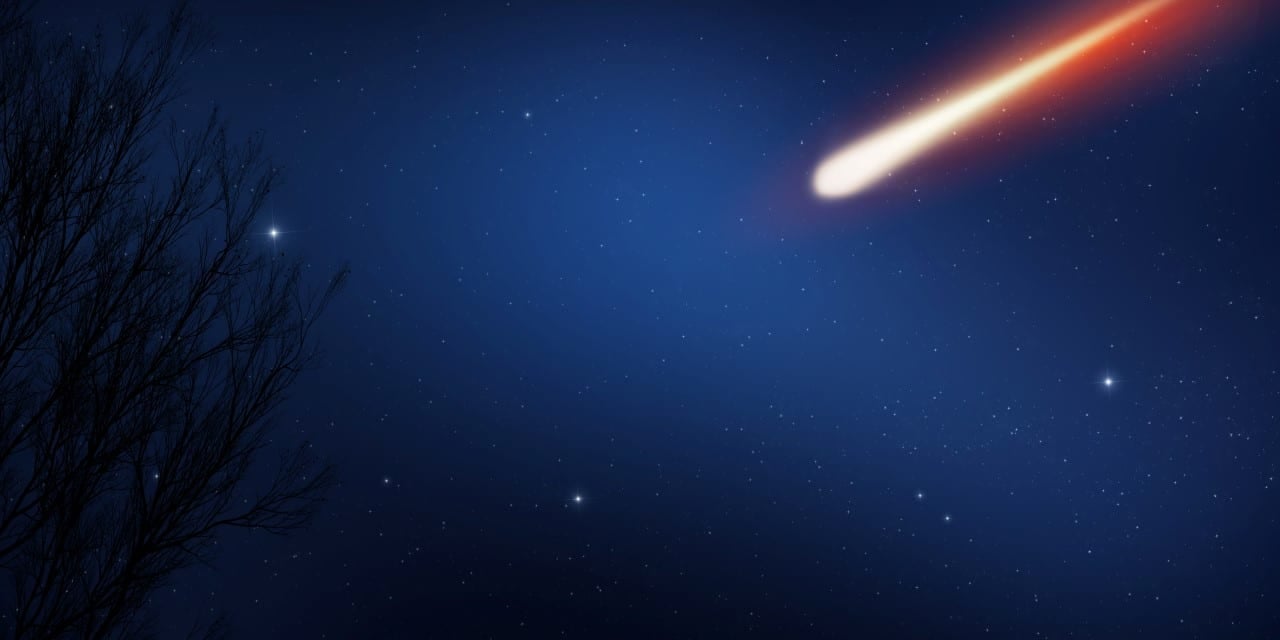
Asteroid 2024 YR4 remains under constant monitoring by space agencies. The space object measures between 50 and 70 meters in diameter and is approaching a possible collision with Lua on December 22, 2032. The current probability is around 4 percent according to updated calculations.
Agencies such as Nasa and Esa ruled out any relevant risk to planet Terra on that date. The focus remains on orbital data and trajectory simulations that indicate the lunar scenario as the only one of scientific interest. Novas observations refine these numbers since 2025.
Data collected by Telescópio Espacial James Webb helped define the asteroid’s exact size and trajectory. Essas information came from infrared images taken in March and May 2025. The update slightly increased the chance of lunar impact without changing the conclusion about Earth’s safety.
Initial monitoring revealed a risk that was later reassessed
Asteroid 2024 YR4 was discovered on December 27, 2024 by the ATLAS system at Chile. At the time, preliminary calculations indicated a small possibility of a dangerous approach to Terra on the same day in 2032. Subsequent Observações carried out by ground and space telescopes reduced this probability to zero in March 2025.
The scientific community has focused efforts on refining the orbit with additional data. The process involved multiple measurements that confirmed the absence of a threat to the planet. Especialistas highlight that the object follows a trajectory that now only points to the lunar possibility.
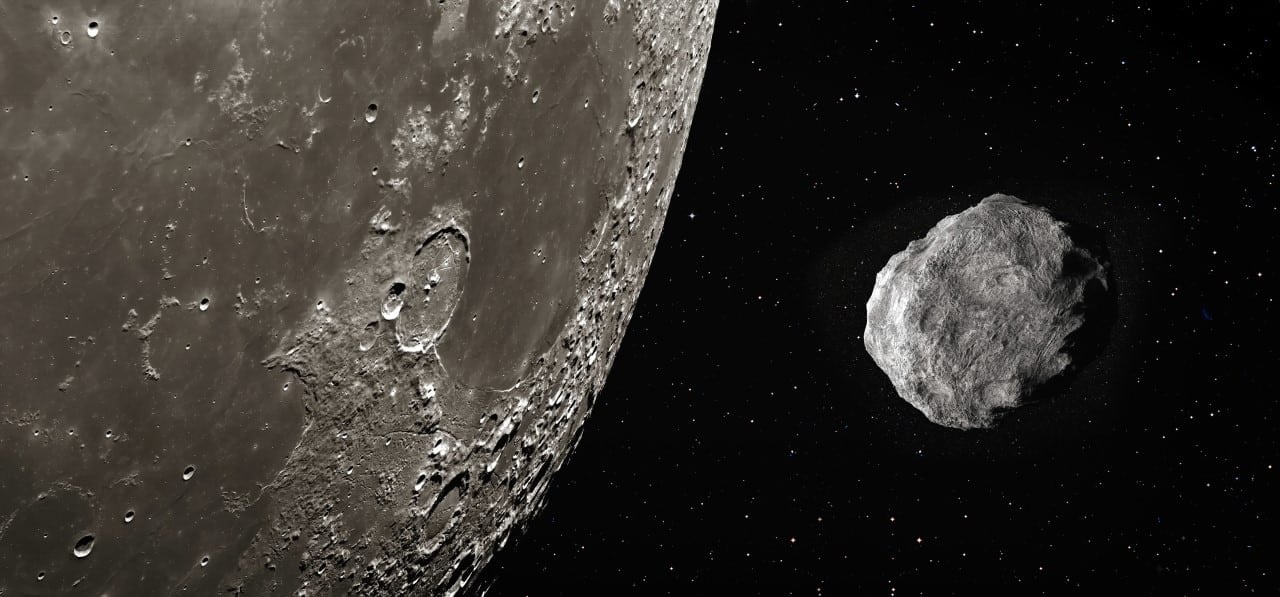
Telescope James Webb provided precise data on size and composition
Telescópio Espacial James Webb captured images of the asteroid in infrared wavelengths during the year 2025. Essas observations allowed the diameter to be estimated at around 60 meters with a reduced margin of error. The analysis also indicated that the celestial body is of type S, composed mainly of solid rock.
Data from James Webb improved the accuracy of the asteroid’s future position by nearly 20 percent. Essa improvement led to adjustment of collision probability with Lua. Cientistas plan new observations when the object returns to observable distances in 2028.
The space equipment operated under ideal conditions to capture thermal emissions from the asteroid. Resultados of these sessions were integrated into the orbital models maintained by Nasa and Esa. International collaboration ensured consistency in calculations carried out by different teams.
Possible collision would form crater and release significant energy
An impact on Lua would occur at a speed of approximately 14 kilometers per second. The energy released would be equivalent to around 6.5 million tons of TNT. Esse event would create a crater approximately one kilometer in diameter on the lunar surface.
Ejected fragments would be launched into space around Lua. Parte of this material could escape the lunar gravity and head toward Terra. Modelos computational simulates trajectories of up to 100 million kilograms of lunar rocks.
Visual effect of impact would include bright flash detectable from Terra
The flash produced by the impact would be visible to the naked eye in regions where Lua was above the horizon. The brightness would reach magnitudes between minus 2.5 and minus 3, comparable to that of Vênus in the night sky. Estimated duration ranges from 200 to 300 seconds, with clear visibility for at least ten seconds.
Regions such as east of Ásia, Oceania, Havaí and west of América of Norte would offer the best observation conditions. The predicted event time of 15:19 UTC on December 22, 2032 determines local visibility. Telescópios amateurs could record the phenomenon independently of lunar illumination.
Lunar ejecta could generate intense meteor showers in Terra
The material ejected from Lua would follow trajectories that cross Earth’s orbit. Entre two and a hundred days after the impact, observers could record super meteor storms. Essas rain would consist of rocky fragments entering the atmosphere at high speeds.
The meteors would not pose a direct risk to people on the ground. Most would completely disintegrate before reaching the ground. The visual spectacle would be remarkable on clear nights and would allow studies of the composition of the lunar surface.
Simulations indicate multiple secondary flashes at Lua
The main impact would lift rocks that would fall back to the lunar surface. Esse process would generate thousands of less intense secondary flashes. Instrumentos sensors could record these events for hours after the initial collision.
Models developed by researchers simulate the behavior of ejecta over 500-second intervals. The predictions consider variations in the asteroid’s trajectory within the uncertainty zone. Esses calculations help prepare observatories for the possible event.
Scientific importance of the event attracts attention from global teams
Scientists plan coordinated observation campaigns in case the collision occurs. The impact would offer unique data on crater dynamics in low gravity. Análises ejecta spectra would allow studying the internal composition of Lua without direct sampling missions.
Equipment in lunar orbit and future bases on the surface could record additional data. The rarity of impacts known in advance justifies the current interest. Equipes international institutions share models to maximize scientific achievement.
Future updates depend on observations in 2028
The asteroid is currently beyond the reach of ground-based and space telescopes. The next significant observation window is in June 2028. Dados collected at this time will definitively confirm or rule out a lunar impact.
Agencies maintain regular updates on tracking systems for objects near Terra. The 2024 YR4 case serves as an example of how monitoring evolves with new technologies. Especialistas emphasize that the probability remains low and subject to refinement.
Asteroid 2024 YR4 follows a trajectory that allows precise monitoring by existing systems. Agências space continues to integrate information from multiple sources to maintain model accuracy. Qualquer change in probability will be communicated based on observational evidence.
Details of the trajectory point to a specific approach to Lua
The nominal approach to Lua occurs around 15:10 UTC with a margin of error of around an hour and a half. The nominal minimum distance is around 11 thousand kilometers from the lunar center. The uncertainty zone covers 74 thousand kilometers at three sigma.
These numbers are derived from calculations incorporating all available observations up to May 2025. James Webb contributed a significant reduction in orbital uncertainty. Equipes continue to refine parameters with advanced statistical methods.
The rocky composition of the asteroid influences the effects of the impact
Type S indicates material rich in silicates and metals common in main belt asteroids. Essa composition suggests solid behavior during entry into lunar gravity. Fragmentation Modelos consider this characteristic to predict ejecta volume.
Laboratory studies with rock analogues validate the computational simulations. Resultados indicate that most of the ejected material remains at speeds sufficient to escape Lua. Future chemical analysis of lunar meteors could confirm these predictions.
Planetary warning systems demonstrate effectiveness in the current case
The planetary defense system has operated as planned since discovery. The transition from terrestrial to lunar risk occurred in an orderly, data-driven manner. Colaboração between Nasa, Esa and global observatories ensured complete coverage of observations.
Automatic tracking tools identified the object shortly after discovery. Manual and automated Follow-up refined parameters quickly. The process illustrates the maturity of international protocols for potentially dangerous objects.
Amateur observers can contribute visual recordings
Small telescopes in favorable regions would record the main flash. Aplicativos and networks of amateur observers facilitate real-time data sharing. Public participation expands the set of records available for scientific analysis.
Communities of amateur astronomers are already preparing protocols for the 2032 date. Essa complementary network to professional observatories increases global coverage.
Lunar climate models consider long-term effects
An impact of this magnitude would slightly alter the distribution of regolith in a localized area. Efeitos in surface temperature would be limited and measurable by satellites. Long-term Estudos would accompany changes in the reflectivity of the affected region.
Simulations indicate that the new crater would integrate with the existing lunar relief on a geological scale. Nenhum significant impact on lunar orbit is expected due to the asteroid’s reduced mass. Pesquisadores maintain focus on immediate and observable phenomena.
International collaboration accelerates understanding of the scenario
Teams from different continents share data and models in real time. Virtual Reuniões coordinate simulation and observational planning efforts. The case demonstrates the importance of cooperation for events of low probability but high scientific value.
Academic institutions contribute independent analyzes that validate official results. Publicações drafts in open repositories allow for rapid community review. Esse open flow strengthens the reliability of current forecasts.
Asteroid 2024 YR4 represents a classic example of an object near Terra under continuous surveillance. Agências spacecraft maintain updated protocols to respond to orbital variations. Monitoring ensures that any evolution is tracked accurately.




