
Battery module failure leads BYD to recall 97,000 hybrid vehicles for update


The Chinese automaker has initiated a large-scale safety procedure involving one of its most popular lines of electrified vehicles. The corrective action focuses on identifying an inconsistency in the manufacturing process of the power controllers, vital components for the safe operation of the hybrid system. The preventive movement aims to mitigate operational risks that could compromise the physical integrity of the occupants and the functioning of the car.
The technical call specifically covers the Qin Plus DM-i model, one of the brand’s highest-selling hybrid sedans. According to the official statement submitted to market regulatory authorities, a total of 96,714 units are included in this verification batch. The affected vehicles cover the production period between the beginning of 2021 and the end of 2023, requiring immediate attention from owners to regularize the system.
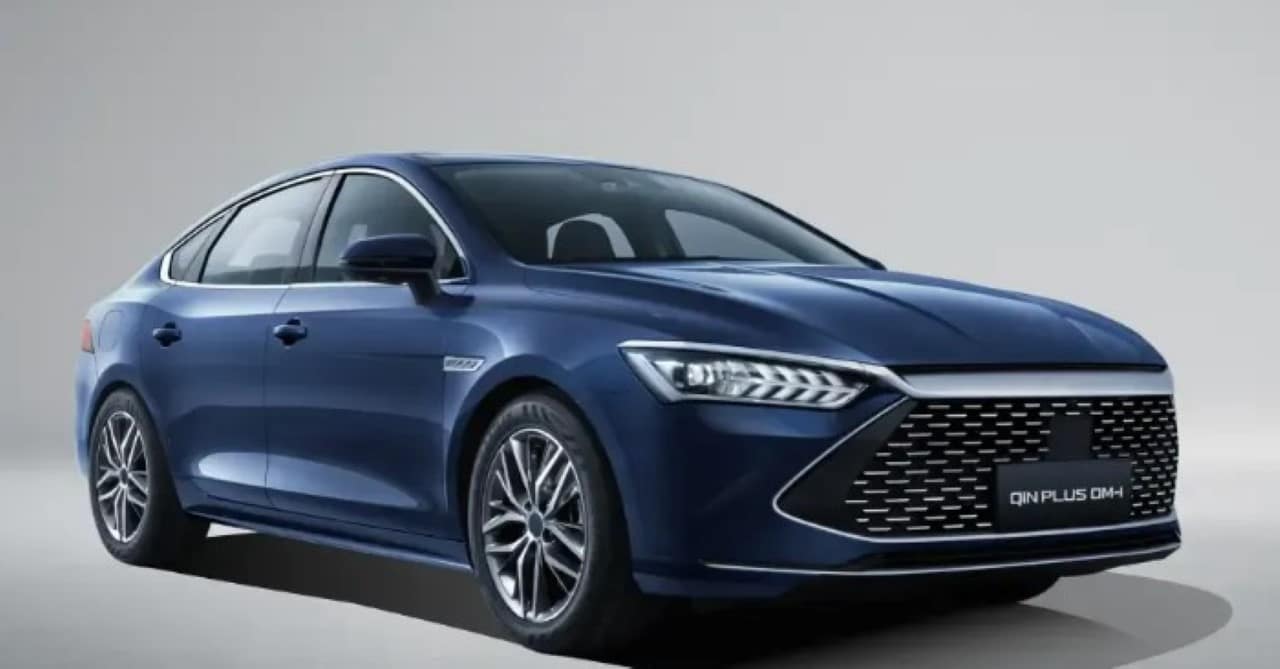
The manufacturer’s engineers detected that the fault resides in the battery control module, where an irregularity in the assembly of the electronic components could generate inaccurate voltage readings. Essa condition creates a scenario where the management system may not correctly interpret the battery status, leading to possible overheating in situations of continuous use or high load, which substantially increases the risk of thermal incidents.
The state market regulation administration supervises the process to ensure that all consumers are notified and served as quickly as necessary. The priority is to ensure that the circulating fleet operates within established safety parameters, eliminating any variable that could result in catastrophic failures while driving or recharging the vehicle.
Correction procedures via software and hardware
To solve the problem efficiently and minimize inconvenience to drivers, the company adopted a strategy based on remote technology. The initial correction will be carried out through an “Over-the-Air” (OTA) software update, eliminating, in many cases, the need for the customer to physically travel to a dealership for the first diagnosis.
The new data package sent to vehicles has the function of recalibrating the power cell monitoring parameters. The updated software is capable of detecting voltage deviations with greater accuracy and identifying whether the controller hardware has physical damage resulting from manufacturing failure. Caso the digital system indicates an irreversible physical anomaly, the owner will receive an alert on the dashboard indicating the need for free replacement of the part at an authorized workshop.
The implementation of this technology demonstrates the evolution of software-defined vehicles, enabling in-depth diagnostics without immediate mechanical intervention. However, physical replacement of the component remains mandatory in cases where the software identifies that the risk of fire or electrical failure is imminent due to premature wear of the controller.
Warning signals and system monitoring
Although the update is automatic for most users with connected vehicles, it is essential that drivers remain aware of the car’s behavior while the correction is not applied. The hybrid system usually emits clear signals when there is instability in energy management, and the correct interpretation of these warnings can prevent accidents.
Automotive safety experts recommend that owners of the affected model observe the instrument panel and the car’s dynamic behavior. Existem specific indicators that suggest that the battery module is not operating according to its original design, requiring the vehicle to be stopped immediately in a safe location.
The main symptoms that may indicate control module failure include:
– Error Mensagens illuminated on the panel related to the high voltage system or traction battery.
– Dificuldade sudden start of the vehicle or sudden loss of power while driving in electric mode.
– Flutuações abnormal battery charge indicators or erratic behavior in the estimated range.
– Excessive Aquecimento noticeable in the area of the floor or where the battery bank is installed.
Security protocols and corporate responsibility
This recall highlights the importance of battery management systems (BMS) in the era of automotive electrification. Diferente of combustion vehicles, where mechanical failures tend to be progressive, problems in high voltage systems require real-time monitoring and quick responses from automakers to avoid thermal propagation.
The manufacturer’s action in using remote updates for screening reflects an industry trend towards streamlining warranty processes. By filtering which cars need physical repair and which can only be fixed via software, dealership service logistics become more fluid, avoiding congestion in workshops and ensuring that the most critical cases receive priority attention.
Consumers who own the Qin Plus DM-i model manufactured in the stipulated period must check their vehicle management applications or wait for official notification. The free service is guaranteed by law, and the correction is essential to maintain the validity of the guarantee and, mainly, for road safety.
Electrified vehicle market context
The exponential growth of the fleet of hybrid and electric cars has brought new challenges to automotive engineering, especially regarding the quality of mass-produced electronic components. Quality control over semiconductors and power modules has become as critical as engine foundry in the last century.
Recalls of this nature, although they generate initial concern, demonstrate that the industry’s traceability mechanisms are working. The ability to identify a specific batch with a soldering or assembly failure and apply an accurate corrective solution is critical to maintaining consumer confidence in the energy transition.
Transparency in communicating about fire risks is a central pillar for global regulatory agencies. With the increasing complexity of vehicles, which today function as computers on wheels, the integration between robust hardware and intelligent software defines the new standard of passive and active safety in urban and road traffic.



