
F1: Gabriel Bortoleto details overtaking challenges with new Audi car for the 2026 season

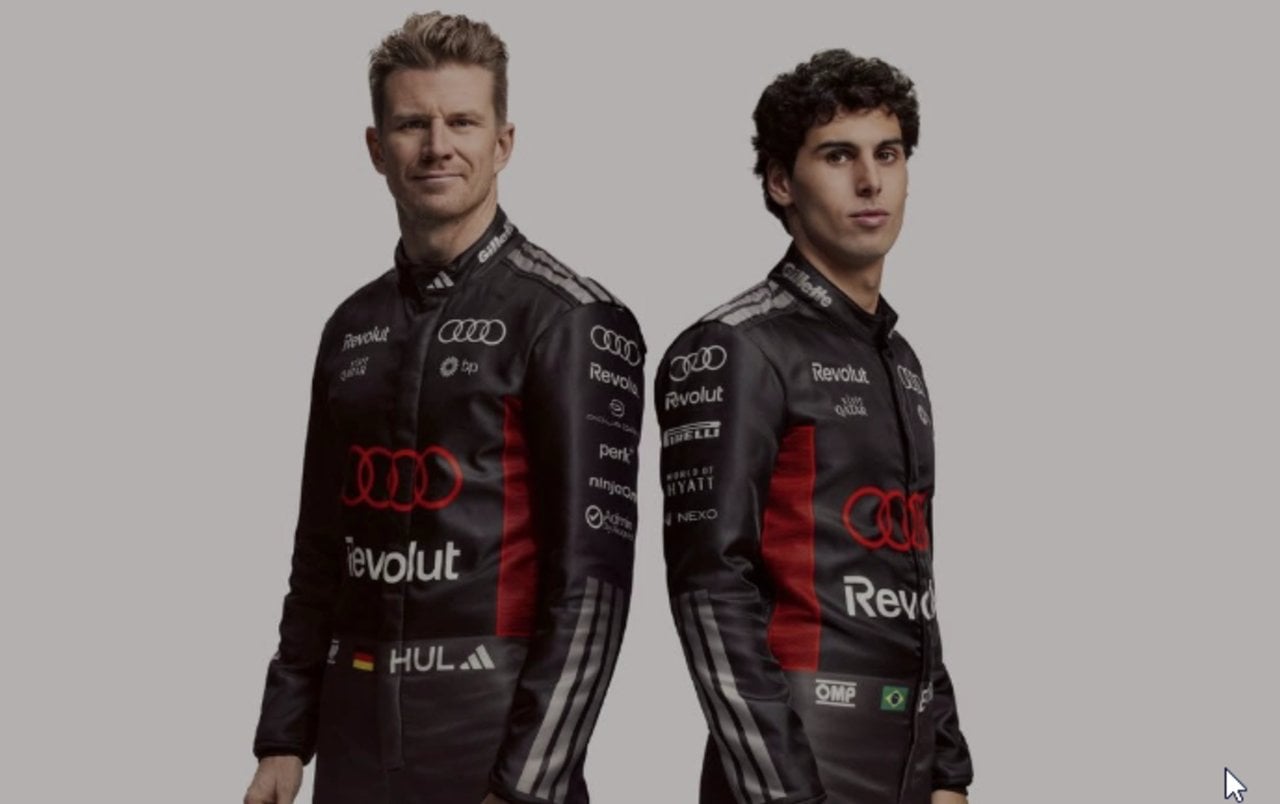
The Brazilian driver Gabriel Bortoleto returned to track work this Wednesday, at the Sakhir circuit, to continue the development schedule of the Audi in the reliability of its unprecedented power unit before the official opening of the championship.
The driver’s technical analysis focused especially on the difficulty in bringing cars together under racing conditions, one of the central points of the rule change. Bortoleto highlighted that the turbulence generated by the car in front still represents a significant obstacle for those trying to perform overtaking maneuvers. Além of the aerodynamic factor, the management of hybrid systems and the delivery of electrical energy emerge as critical variables that can redefine attack and defense strategies on the tracks.
The Audi testing schedule for this stage in Oriente Médio includes the following priority objectives:
- Validation of thermal and kinetic energy recovery systems in long-term simulations.
- Fine-tuning the unique power unit mapping developed in Neuburg.
- Monitoring the wear of internal components after the first week’s mileage accumulation.
- Collection of data on the efficiency of the active moving wing in different sectors of the Sakhir route.

Aerodynamic challenges and the feeling of driving in a vacuum
The experience of following an opponent closely does not seem to have progressed as expected by some members of the grid, according to Bortoleto’s report. The Brazilian driver stated that the air flow situation behind another single-seater does not present substantial improvements in relation to what was observed in the previous generation of vehicles. Essa aerodynamic resistance makes it difficult to maintain the minimum distance necessary to prepare the boat in the strongest braking zones.
Even with the introduction of new chassis concepts, the car’s balance remains unstable when subjected to the dirty air projected by the competitor in front. The Brazilian reinforced that first impressions indicate that the drivers will have to work harder to maintain proximity without sacrificing tire performance. The next training sessions will be fundamental for the Audi to find solutions that minimize this loss of frontal aerodynamic pressure.
Strategic energy management in new generation engines
The new Fórmula 1 regulations have brought a much greater dependence on the electrics, which drastically changes the way drivers approach attack laps. Bortoleto explained that pushing the pace on one lap to try to overtake can result in a critical energy deficit on the subsequent lap. Caso the pilot empties his battery reserve thoughtlessly, he becomes an easy target for an immediate counterattack by the opponent.
This dynamic requires refined tactical intelligence, where patience becomes as important as pure speed. The Audi propulsion system, being a new technology and without other customer teams to provide comparative data, requires extra caution from engineers and pilots. Cada kilometer traveled in Sakhir serves to map the limits of this balance between torque delivery and system recharging.
Technical evolution of Audi and learnings from Sakhir
The German team faces a unique challenge as it is the only one on the grid to operate with its own engine in isolation in this transition phase. Bortoleto emphasized that every mechanical failure or success recorded during testing represents a valuable lesson that cannot be shared or accelerated by third-party data. The team’s focus is on correcting the inconsistencies presented in the first week of activities to ensure a solid foundation.
The power unit’s progress is monitored in real time, with constant adjustments to the control software that manages combustion and electrical parts. The Brazilian demonstrated moderate optimism when projecting the necessary evolution until Grande Prêmio from Austrália, which will mark the official debut. The team works around the clock to resolve cooling and component integration issues that have arisen under the intense desert heat.
Physical and mental preparation for the debut at Austrália
Gabriel Bortoleto’s routine in Sakhir goes far beyond the time spent inside the cockpit, involving exhaustive telemetry analyzes with the Audi technical staff. The driver dedicates hours to studying the behavior of the new tires and the response of the electronic brake pedal, which has undergone important modifications for 2026. Quick adaptation to these new technologies is what can differentiate top drivers at the start of the season.
Fitness is also tested to the limit, as the new cars require a different application of force in high-speed corners due to changes in aerodynamic load. Bortoleto maintains a rigorous routine to withstand lateral G forces, which continue to be a considerable wear factor even with the weight reductions provided for in the regulations. Full focus is on Melbourne, where the set’s true potential will be revealed.
Impact of the new rules on the spectacle of racing
The changes introduced for 2026 aim to increase sustainability and maintain competitiveness, but concerns about the ease of overtaking remain on the radar. If cars cannot run close together, races can become processional, something the Federação Internacional of Automobilismo (FIA) has attempted to mitigate with the use of active aerodynamics. Bortoleto considered that it is still too early to draw definitive conclusions, but the warning signal is on.
The interaction between the adjustable front and rear wings will be the big difference in allowing the vacuum to be used more efficiently on the straights. Entretanto, if the loss of grip in curves remains high, the benefit of final speed may not be enough to complete the maneuvers. The Brazilian driver prefers to wait for the first real race scenario to understand how these variables will behave under competitive pressure.
Realistic expectations for the German brand’s first year
Audi enters the category with heavy investments, but aware that the learning curve at Fórmula 1 is traditionally steep for new manufacturers. Bortoleto acts as a fundamental piece in this maturation process, serving as a bridge between factory simulations and the reality on the track. The immediate priority is not necessarily victory, but rather the construction of a platform that allows constant fights for points.
Mechanical reliability will be the first big test of the Audi when the lights go out on the Austrália. Test history on Sakhir suggests the engine has potential, but full integration with the chassis still needs refinement. The Brazilian pilot remains focused on providing the most accurate feedback possible so that engineers at Neuburg and Hinwil can accelerate the necessary aerodynamic updates.
Tire performance considerations in critical conditions
Tire temperature management is another factor that Bortoleto highlighted as crucial to the success of strategies on the track. With new aerodynamics, the way heat is transferred from the brakes to the wheels has changed, requiring a new riding style to avoid overheating. On an abrasive circuit like the one on the Bahrein, any error in rubber management can ruin a complete racing simulation.
The Brazilian has been working specifically on understanding the ideal operating window for the compounds supplied for 2026. The ability to keep the tires alive while chasing a rival will be decisive for the success of the overtaking maneuvers commented by the driver. The balance between aggressiveness and conservation of resources seems to be the central theme of this pre-season for Audi.





