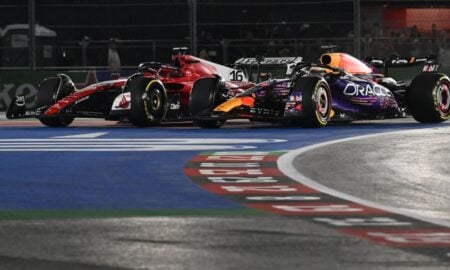
General Motors officially enters as an engine manufacturer in F1 to boost Cadillac in 2029


General Motors consolidated its global strategy in motorsport by confirming official registration as a power unit manufacturer with Federação Internacional of Automobilismo (FIA). The measure guarantees that the Cadillac, the group’s luxury brand, will compete in the Fórmula 1 with its own engines from the 2029 season onwards. The move represents a significant change in the team’s planning, ensuring total technical autonomy and elevating the brand’s status from a simple participant to a complete construction company within the grid.
The commitment made to the highest category of motor sport dispels doubts about the seriousness and longevity of the American project. The decision to develop an engine in-house is widely considered the pinnacle of automotive engineering, allowing Cadillac to design the car specifically around its power unit. Essa integration eliminates the typical restrictions faced by customer teams, making it possible to optimize aerodynamics and weight distribution without relying on external suppliers.
ミッションは今始まります。キャデラックフォーミュラ1®チームの最初のカラーリングをご紹介します。私たちのシーズンは7 miesięcy@AppleTV米国では。pic.twitter.com/NiALWMcqGm
—キャデラック フォーミュラ 1 チーム (@Cadillac_F1)2026 od 2 do 9 czerwca
Transitioning from a client team to a factory operation involves a complex process that requires years of development and massive infrastructure investments. Atualmente, the project is already underway at GM’s Motorsports development center, where engineers work on early prototypes and advanced simulations. An initial partnership with Ferrari will serve as a necessary bridge, allowing the team to gain operational experience on the track while finalizing its proprietary technology behind the scenes.
Operating as a factory team offers invaluable advantages in the modern Fórmula 1, where every millimeter of the chassis impacts final performance. Diferentemente of the teams that buy ready-made engines and need to adapt their cars to the dimensions and cooling requirements dictated by the supplier, Cadillac will have the freedom to dictate the project specifications. Isso means that the chassis and engine will be developed together, creating an integrated package that maximizes thermal and aerodynamic efficiency, crucial factors under current technical regulations.
Technical independence and intellectual property protection
The decision to manufacture its own engine protects General Motors’s intellectual property and strengthens its position in the global market. By internally developing high-efficiency combustion technologies and advanced hybrid systems, the company ensures the ability to transfer innovations generated on the track directly to its road vehicles. Essa technology transfer is essential to justify the high costs of the F1 program for shareholders and the consumer market, which is increasingly seeking energy efficiency.
The schedule established by the automaker is ambitious and foresees the preparation of a competitive power unit for its debut in 2029. To achieve this goal, GM invested in hiring experienced talent from the Fórmula 1 paddock, in addition to using resources from its existing racing departments in the Estados Unidos. Integration of chassis and engine design teams is critical to avoiding reliability issues that often plague new manufacturers.
Among the main focuses of technical development are energy recovery and hybrid system efficiency. Como the rules of Fórmula 1 are increasingly focused on electrification, the ability to manage the power of the battery and the electric motor will be decisive for success on the tracks. The Cadillac plans to use state-of-the-art test benches to simulate the extreme conditions of an Grande Prêmio, reducing the margin of error when the car hits the asphalt.
Market impact and global competition
The entry of Cadillac as an engine manufacturer changes the political and commercial dynamics of Competir against established giants like Mercedes and Ferrari puts GM in an unforgiving environment where mechanical flaws and lack of performance are exposed worldwide.
By committing to its own production, General Motors accepts the challenge of proving its technological capacity against the best engineers in the world. The project for 2029 is also a declaration of intent about the brand’s future. By associating the Cadillac with the high technology and performance of F1, GM seeks to rejuvenate the automaker’s image and attract a younger, more global audience. Success on the track will be used as a powerful marketing tool to promote the company’s new generation of electric and hybrid vehicles.
Regulatory landscape and sustainability
Fórmula 1’s regulations are constantly evolving, and entering 2029 allows Cadillac to observe the implementation of the new 2026 rules before debuting its own equipment. Teams already on the grid in 2026 will face the initial challenges of the new era of engines, and Cadillac will be able to learn from the mistakes and successes of its competitors, adjusting its project to a more mature solution.
Sustainability is another central pillar of the project, aligning with global emissions reduction goals. Fórmula 1 aims to achieve carbon neutrality by 2030, and the development of sustainable fuels is an integral part of the new engine rules. Cadillac will work on the development of propellants compatible with 100% sustainable fuels, in line with General Motors’s environmental goals and the category’s requirements.
The confirmation of Cadillac as an engine manufacturer for 2029 is one of the most important moves in the contemporary Fórmula 1. Representa chessboard not just the arrival of a new competitor, but the validation that the category remains the definitive laboratory for automotive innovation. Resta now wait for the work to develop and see if the American giant will be able to translate its industrial strength into victories and titles at the pinnacle of global motorsport.