
Observatory indicates new moon on February 18, marking the beginning of a new celestial cycle

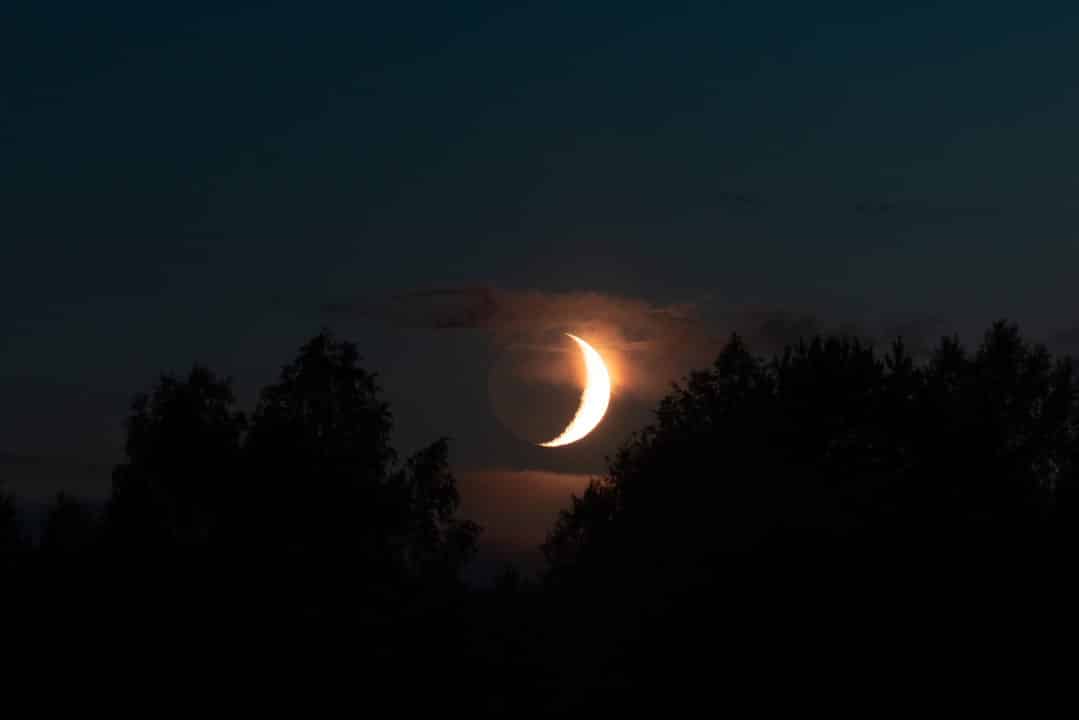
On February 18, 2026, the celestial stage highlights the Lua Nova phase, a period in which our natural satellite aligns perfectly between Terra and Sol. Essa particular astronomical configuration causes Lua to appear 0% visible from our point of view, a moment of cosmic stillness before its gradual re-emergence. Apesar of its visual discretion, this date is crucial, symbolizing the birth of a new complete lunar cycle, with anticipation growing for the next six days leading up to the emergence of Lua Crescente. Este event not only influences the rhythms of natural phenomena, such as tides, but also guides various cultural and agricultural traditions, reinforcing the ancient connection between humanity and the universe. Observing the night sky, even in the absence of lunar glare, offers a unique opportunity to study other celestial bodies, keeping curiosity about the cosmos that surrounds us alive.
Following the phases of Lua is a habit that transcends generations, offering a deeper understanding of celestial rhythms and their influence on our planet. Accurate astronomical data is key to predicting these movements, allowing enthusiasts and scientists to prepare for each stage of this cosmic ballet in advance.
For the month of February 2026, the lunar calendar presents a clear sequence of transformations, from the plenitude of Lua Cheia to the rebirth of Lua Nova and the promise of Lua Crescente. Cada change is a significant milestone, inviting contemplation of the ceaseless orbital motion and its implications.
The lunar calendar for February 2026

The month of February 2026 presents a well-defined lunar schedule, with all its main phases scheduled to occur within this period. The cycle begins with Lua Cheia and culminates with Lua Crescente, providing skywatchers with several opportunities to follow the satellite’s journey.
The phases of Lua in February 2026 are as follows:
- Moon Cheia: February 1st, at 7:10 pm
- Moon Minguante: February 9th, at 9:44 am
- Moon Nova: February 17th, at 9:03 am
- Moon Crescente: February 24th, at 9:28 am
It is important to note that, although Lua Nova officially occurred on February 17th, on February 18th it still remains in this phase, with 0% visibility and taking the first steps in its growth period. Essa initial transition is a reminder of the continuous flow of celestial cycles.
Understanding the lunar cycle and its stages
A lunation, or lunar cycle, represents the complete time interval between two consecutive Luas Novas, with an average duration of approximately 29.5 days. Durante this period, Lua goes through its four main phases – Nova, Crescente, Cheia and Além of these well-known phases, the cycle also includes the so-called “interphases”, such as Quarto Crescente and Crescente Gibosa, which occur between phases Nova and Cheia, and Minguante Gibosa and the fluidity of celestial movements.
The dynamics of each lunar phase
Each of the lunar phases is distinguished by a specific astronomical configuration between Sol, Terra and Lua itself, resulting in distinct lighting patterns that we observe from our planet. Essas variations in reflected light are not merely aesthetic, but indicators of precise orbital positions, which shape the perception of the satellite.
These phases offer a unique visual spectacle at each stage, directly influencing known terrestrial phenomena, such as ocean tides, and marking important periods for different cultures around the world. Understanding each dynamic allows for a greater connection with the natural rhythms of our solar system.
The essence of the new moon
In the Lua Nova phase, the satellite is positioned directly between Terra and Sol, creating an alignment that causes the illuminated side of Lua to face our star, while the dark side remains facing us. For this reason, Lua becomes practically invisible in the night sky, immersed in sunlight seen from behind.
This phase is traditionally associated with starting over, renewing and planting new intentions. Culturalmente, Lua Nova is seen as a favorable period to start new projects and make plans for the future, taking advantage of the energy of a new cycle.
The advance of the crescent moon
After the Lua Nova period, the satellite enters the Crescente phase, at which time a small illuminated band begins to gradually appear in the sky, expanding with each passing night. Inicialmente, only a thin arc of light is observed, which slowly widens until half of the lunar surface is visible.
When half of Lua is illuminated, we reach the stage known as Quarto Crescente, marking an intermediate point in its visual development. Essa gradual progression of luminosity reflects the continuous movement of Lua in its orbit around Terra.
This phase is widely symbolized as a period of growth, development and the construction of new paths and opportunities. It is a time of action and progress, where you are encouraged to take firm steps towards the established goals.
The height of the full moon
The Lua Cheia phase occurs when Terra is positioned between Sol and Lua, allowing the entire lunar face facing us to be fully illuminated by sunlight. Esse alignment results in a spectacle of intense brightness in the night sky, transforming the satellite into a luminous and completely visible disc.
It is the period of greatest luminous intensity of Lua, when it rises on the horizon exactly at the moment that Sol sets, providing a dramatic and beautiful contrast in the sky. Essa feature makes it easy to observe most of the night.
Lua Cheia is often associated with plenitude, the peak of processes and the peak of energy, being a time of harvest and celebration. In many cultures, this phase is linked to important events and rituals that celebrate abundance and the completion of cycles.
In addition to its visual and cultural impact, Lua Cheia exerts a strong influence on the tides, generating spring tides, which are the highest and lowest, due to the most powerful gravitational alignment between Sol, Lua and Terra. Este is a fascinating phenomenon of celestial interaction.
The reflection of the waning moon
Shortly after the radiance of Lua Cheia, the lunar luminosity begins to progressively decrease. Each night, a smaller portion of its surface is seen illuminated, a process that continues until only half is visible again.
This stage, known as Quarto Minguante, represents the opposite phase to Quarto Crescente, indicating that the light reflected from the The Lua persists in losing its luminosity until it returns to the Nova phase, completing its cycle.
Preparation for a new cycle
The Lua Minguante, which ends the lunar cycle before the rebirth of the Lua Nova, symbolizes a period of reflection, completion of stages and preparation for new beginnings. It’s a good time for introspection and releasing what no longer serves, making space for what’s to come. The constant movement of Lua in its orbital path guarantees that, after each decrease, there will be a new beginning, perpetuating the cycle of nature.




