
Toyota’s São Paulo unit will manufacture sports utility vehicles with plug-in technology and 223 horsepower


The Toyota factory located in Sorocaba assumes a central role in the automaker’s electrification strategy for América Latina with the confirmation of production of its new line of sports utility vehicles. The industrial complex is undergoing technical adjustments to receive the platform that will give rise to the models planned for the 2027 cycle, marking a significant evolution in national automotive engineering. The industrial decision aims to strengthen the presence of the Japanese brand in an increasingly competitive segment, especially with the aggressive arrival of Asian competitors that are betting on alternative propulsion technologies.
The main focus of this productive update is the introduction of a plug-in hybrid system (PHEV), a first for this vehicle in the region. Esta technology allows external charging of the battery, differentiating itself from the conventional hybrids that the brand popularized in the Brasil in the last decade. Local and global engineering collaborated to adapt the mechanical package to the region’s driving and fuel conditions, promising a superior balance between energy efficiency and dynamic performance.
Industry experts point out that the automaker’s move responds directly to the new demands of the Brazilian consumer, who seeks the economy of an electric car without giving up the autonomy of the combustion engine for long journeys. The choice of
The main innovations planned for the model include:
– Motorização combined with a total power of 223 horsepower.
– Autonomia in purely electric mode estimated at 70 kilometers.
– Sistema charger compatible with 220V domestic sockets.
– Atualização depth in the front design and internal technology package.
Mechanical performance and increased power
The new mechanical configuration represents a considerable technical leap compared to previous generations manufactured in the country. The plug-in hybrid system was calibrated to deliver a combined power of 223 horsepower, a number that places the SUV at a higher level of performance within its category. The integration between the thermal engine and the electric thrusters has been refined to offer immediate responses to the accelerator, ensuring safer overtaking and agile driving in both urban and highway environments.
Power management acts intelligently to switch between propulsion modes, prioritizing electricity at low speeds and combining forces when there is high torque demand. The adjusted transmission works to maintain linearity in power delivery, eliminating excessive noise and vibrations. Além of raw power, the engineering focus was to ensure that the vehicle maintains vigor even when loaded or on steep climbs, overcoming limitations observed in older hybrid systems.
Energy efficiency and electrical autonomy
One of the great attractions of the project is the ability to run without emitting pollutants on daily journeys. Technical data indicates that the vehicle will be able to travel up to 70 kilometers using just the electric motor, a distance sufficient to cover the daily routine of most drivers in large urban centers. Essa feature allows the owner to use the car as an electric vehicle during the week, reserving the combustion engine for specific situations or trips that exceed the battery’s range.
The charging infrastructure was designed to be democratic and accessible. The system supports connections to conventional 220V sockets, allowing you to recover 80% of the battery’s energy in around two and a half hours. Essa facility reduces dependence on high-voltage public charging stations, making “supply” possible in the home garage or office. Quando hybrid mode comes into action, consumption efficiency stands out, with estimates of 16 km/l, resolving the issue of range anxiety common in 100% electric models.
The combination of high efficiency with the practicality of traditional supply creates a robust transition solution for the Latin American market. In a scenario where the fast charging network is still expanding, PHEV technology offers the security of a fuel tank combined with electricity savings, meeting varied usage profiles and geographic needs.
Visual update and connectivity
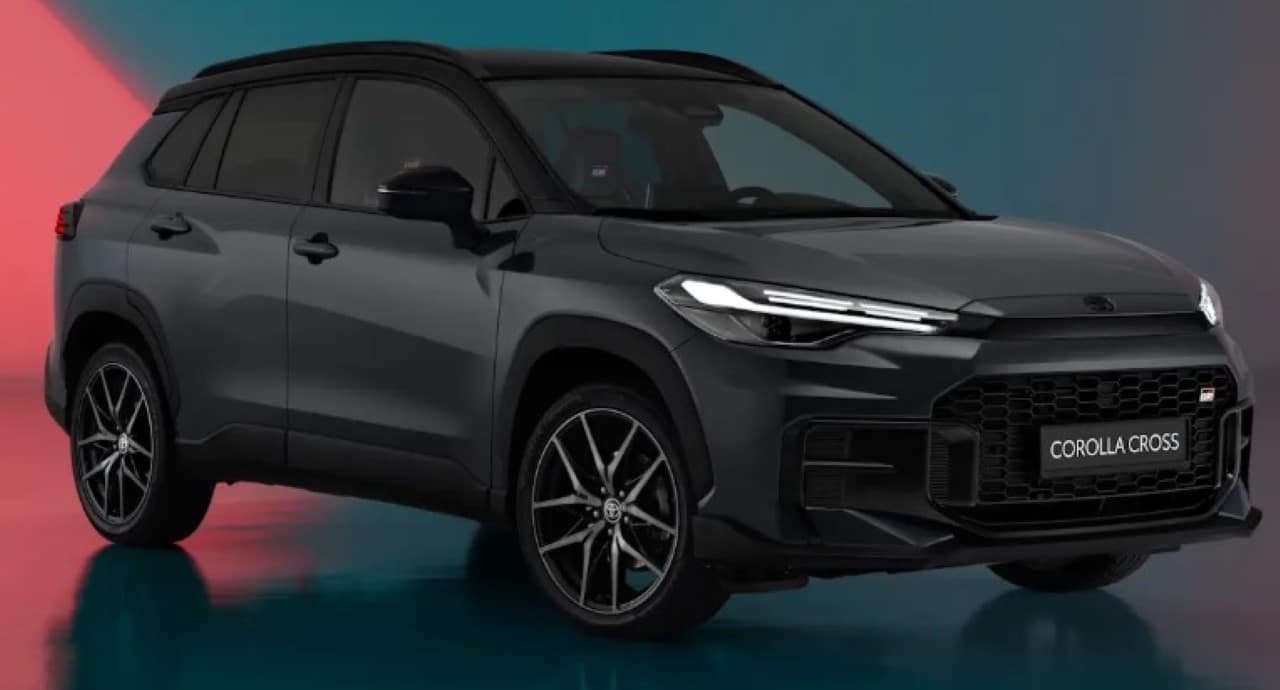
The aesthetics of the new SUV adopt a more modern visual language in line with the brand’s global trends. The front features a grille with a gradient finish that integrates fluidly into the bumper, creating a striking visual identity. The LED optical assembly has been redesigned with a new light signature, connected by a crossbar that expands the perception of the vehicle’s width. At the rear, the lights gained a new internal layout, and the alloy wheels received exclusive designs for each version.
Inside, the revolution is digital and focused on the user experience. The analogue instrument panel has been replaced by a 12.3-inch configurable screen, allowing the driver to personalize the information displayed. The 10-inch multimedia center centralizes the vehicle’s entertainment and settings controls, offering wireless connectivity for the main smartphone platforms. The interior environment also received improvements in finishing materials, with soft-touch surfaces and a more powerful 15W induction charger, increasing comfort on board.
Version with sporty appeal
The 2027 line marks the debut of the GR-Sport configuration, developed with the expertise of the brand’s competition division. Diferente of purely aesthetic packages, this version features real mechanical modifications, including a recalibrated suspension with new springs and shock absorbers that reduce ground clearance by 10 millimeters. The chassis has received structural reinforcements to increase torsional rigidity, resulting in more precise and engaging driving dynamics.
The electric steering has been adjusted to offer more direct feedback, better connecting the driver to the car’s reactions during curves and quick maneuvers. Visualmente, the version is distinguished by exclusive bumpers, a honeycomb grille and 18-inch wheels with a sporty design. The interior follows the proposal with seats with greater lateral support, contrasting stitching and exclusive emblems, catering to consumers who value performance and exclusivity.
Impact on national industry
The nationalization of production of these models reaffirms the automaker’s long-term commitment to the Brasil. The investment in the Sorocaba plant to manufacture plug-in hybrid technology components strengthens the local supply chain and increases the competitiveness of the national product compared to imported ones. The Brazilian factory is consolidating itself as a strategic export hub, sending high-technology vehicles to several América Latina markets and balancing the automotive sector’s trade balance.



