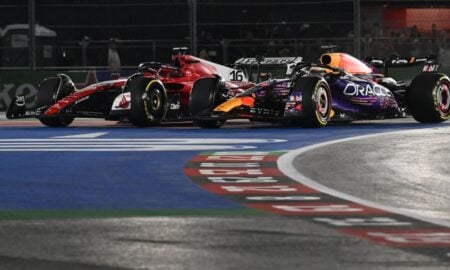
Verstappen ends participation in virtual tests after failing the dynamics of the new hybrid engines


The behind-the-scenes environment of the main category of world motorsport is facing a period of adjustments and significant divergences in relation to future technical guidelines. The Dutch driver of Red Bull Racing took a firm stance and decided to stop their collaboration on the development of the virtual prototypes designed for the next generation of cars. The decision came after preparatory sessions held at Bahrein, where the driving experience provided by the new standards did not meet the four-time champion’s expectations.
The dissatisfaction was communicated directly to the top management of the Austrian team, showing dissatisfaction with the direction the sport is taking. Segundo the competitor, the dynamics required by new vehicles, which demand excessive focus on energy management and electrical systems, remove the fundamental pleasure of high-performance driving. Para him, the constant need for adjustments during laps turns running into a mathematical exercise in efficiency, to the detriment of natural aggression and pure speed.

This stance raises questions about the motivation of big names on the grid in the long term, given that the sporting factor is intrinsically linked to the quality of the equipment. Embora the current contract with the team is valid until 2028, performance clauses and personal satisfaction are variables that the driver has always highlighted as priorities for his continuity in the sport.
Structural changes and vehicle engineering
The standards established for the new phase of the category represent one of the biggest engineering revolutions in recent decades. The reconfiguration of the power units defines an equal division, with 50% of the power coming from the internal combustion engine and the other 50% generated by the electrical system. The turbo V6 engines will be maintained, but will use fully sustainable fuels, aligning the sport with global environmental demands.
In addition to the engine, aerodynamics will undergo drastic changes with the implementation of active systems in the front and rear wings. The technology will replace the current drag reduction system, allowing the car to automatically change its configuration to gain speed on straights or increase grip in corners. The international federation’s objective is to create tougher competitions, with slightly smaller and lighter cars, reducing total weight by around 30 kilos compared to previous models.
Another relevant technical point is the elimination of the MGU-H, a component that recovered energy from exhaust gases, aiming to simplify the engine architecture and reduce costs. In return, the electrical attack power will receive a significant increase to 350 kW. Também there will be the introduction of a manual overtaking system, offering pilots an extra reserve of power for offensive maneuvers.
Repercussions between teams and drivers
The reaction to the new regulations is not uniform among grid members, generating heated debates in the paddocks. Lando Norris, from McLaren, adopted a more pragmatic stance by suggesting that the changes bring technical challenges that could level the competition. Para the British, adaptation is part of the job of an elite pilot and those who are not comfortable with technological developments may need to reconsider their careers.
George Russell, from Mercedes, also commented on the current phase of development, highlighting that first impressions in the simulators may not reflect the final product on the track. The teams are still in the initial phase of understanding energy variables and it is likely that, with advances in engineering, the balance between thermal and electrical power will become more natural for those in the cockpit.
Engine development and strategic partnerships
Red Bull Racing faces the monumental challenge of consolidating itself as an independent manufacturer of power units through its Powertrains division. The strategic partnership signed with Ford aims to accelerate the development of electrical parts and batteries, areas crucial to success under the new regulation. The progress of this project is closely monitored, as the competitiveness of the engine will be decisive in keeping its top talent motivated.
Helmut Marko, an influential figure in the team’s management, has already signaled that providing equipment capable of winning races is the only guarantee to retain its stars. Investments in the Milton Keynes factory are massive and seek to rival historic structures such as Ferrari and Mercedes. The technical staff’s ability to adapt will be tested to the limit, as there will no longer be dependence on external suppliers such as Honda.
Grid expansion and automotive market
The new regulatory cycle also marks the official entry of automotive industry giants into the competition. Audi takes over the operations of Sauber, bringing its expertise in hybrid systems developed in other resistance categories. Simultaneamente, Cadillac plans its foray in partnership with the Andretti structure, promising to raise the technical level and visibility of the category in the North American market.
The arrival of these new brands confirms the direction taken by the organization towards sustainability and electrification. The regulation was designed to be relevant to the street car industry, serving as a laboratory for technologies that will reach the end consumer. With the possibility of new seats becoming available, the pilot market is projected to heat up, creating opportunities for new talent and requiring traditional teams to accelerate their innovation processes.