
Volkswagen confirms Tukan as successor to Saveiro with hybrid engine and production in Paraná

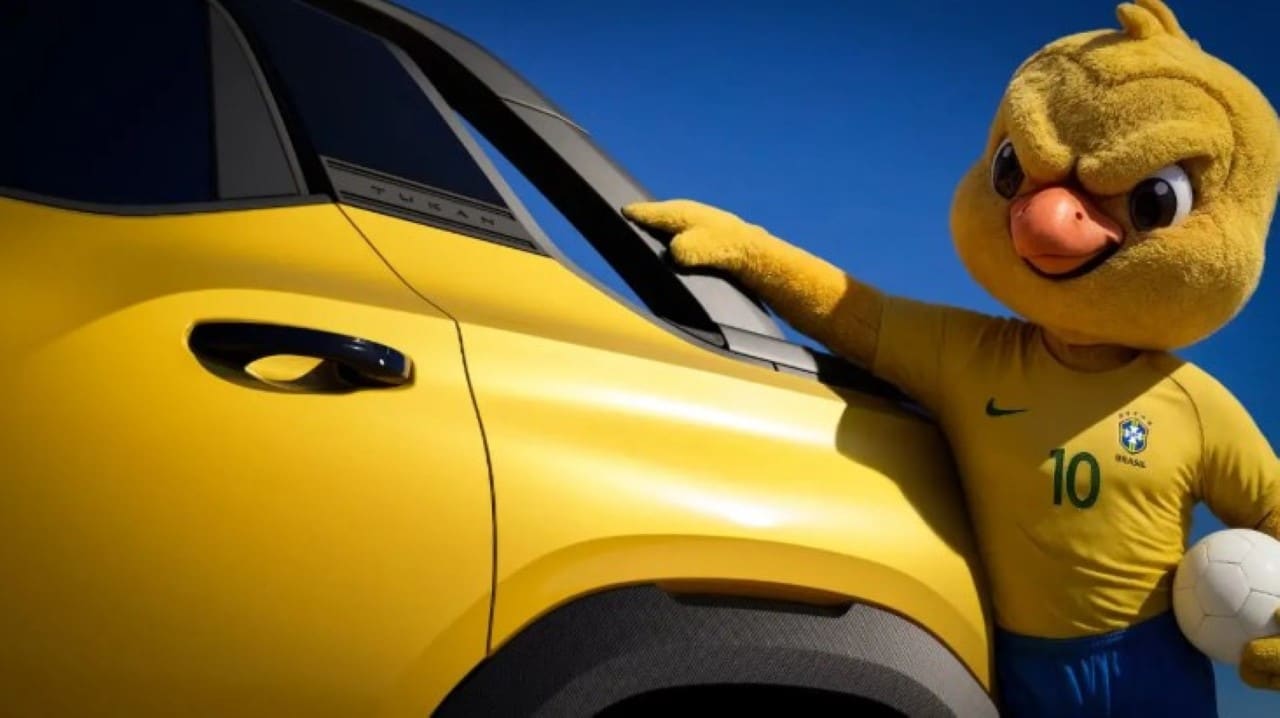
Volkswagen made official the name of its new bet for the pickup truck segment in the national market, confirming rumors circulating in the automotive industry. Batizada from The project represents one of the central pillars of the automaker’s investment cycle in the country and promises to raise the technological standard of the category with modern mobility solutions, aiming directly at leadership in the segment that currently has strong competitors.
Production of the new model is scheduled to begin in 2027 at the São José dos Pinhais factory, located in the state of Paraná. The vehicle inherits aesthetic and functional elements from the Tarok concept, originally presented in 2018, but incorporates significant updates to suit both severe professional use and urban and leisure lifestyles.
The German brand’s commercial strategy includes the launch of different versions to ensure that current Saveiro customers are not left without assistance. Therefore, the Tukan must cover a wide range of prices and configurations, combining the practicality required in the work with the energy efficiency technologies demanded by the current market.
Technical platform and elongated structure
The construction base of the Tukan uses an extended version of the renowned MQB A0 platform, which already serves as the foundation for sales successes such as the T-Cross, the Polo and the Virtus. Essa modern architecture offers high torsional rigidity, a characteristic that directly contributes to the vehicle’s robustness when facing uneven terrain and adverse driving conditions. The structure received specific reinforcements at critical points to support the payload of a pickup truck without compromising the dynamic behavior and safety of the occupants.
Engineers applied high-strength materials to reduce the overall weight of the assembly where possible, increasing durability in the most demanding areas during load transport. Além Due to its mechanical robustness, the platform is already prepared for future electrification, which considerably expands the possibilities for product evolution throughout its life cycle. Essa technical flexibility allows Volkswagen to serve different buyer profiles, from fleet owners to families, using the same basic set of engineering.
Motorization with an emphasis on efficiency
The 1.5 eTSI Evo2 flex engine represents an important evolution in the brand’s mechanical offering for the South American market. Esse propellant delivers 150 horsepower and 25.5 kgfm of torque, working in conjunction with a 48-volt mild hybrid system.
MHEV (Mild Hybrid Electric Vehicle) technology helps reduce fuel consumption and reduce pollutant emissions, both on urban and highway journeys. The electrical assistance comes into action mainly when starting and restarting, relieving the effort of the combustion engine.
In entry-level versions, the Volkswagen must maintain simplified mechanical options to preserve the cost appeal of the line of work. The balance between performance and economy was a key focus throughout the project’s development.
Versions for different customer profiles
The Tukan offer includes simple cabin configurations specifically aimed at commercial and professional use. Essas variants maintain essential features for heavy work, focusing on durability and low maintenance costs.
Models with double cabins and more refined finishes aim to attract customers looking for versatility for mixed use between work and leisure. In Nesses cases, comfort and safety content receives additional attention to compete in a more demanding segment.
The inclusion of active safety equipment, such as autonomous braking and lane keeping assist, must be gradual depending on the trim level. The brand seeks to balance costs to maintain accessibility across all catalog options.
The rigid axle rear suspension with leaf springs was the technical choice to guarantee robustness on bumpy roads or with maximum load. Essa solution has already proven its effectiveness in other models in the category and was adapted to the specific needs of the new pickup truck.
Brand positioning strategy
The Volkswagen reinforces its presence in the pickup truck segment with the arrival of the Tukan, strategically positioning it alongside the Amarok to cover the entire market spectrum. The president and CEO of the company at Brasil, Ciro Possobom, indicated that the brand will continue to offer solutions for different price ranges, confirming the interest in not abandoning the public that today depends on Saveiro for their economic activities. The Brazilian market for compact and intermediate pickup trucks has shown consistent growth in recent years, driven by changes in the profile of buyers who began to see these vehicles not just as work tools, but as viable alternatives to SUVs. The Tukan arrives at a time when consumers value both cargo capacity and comfort on longer trips, and the automaker carefully analyzes this data to define the initial production mix that will reach dealerships.
Investment and national production
The manufacturing of Tukan in São José from Pinhais will generate significant opportunities in the supply chain of Paraná and the region. The plant already has extensive experience in producing models on the MQB platform, which facilitates the integration of the new pickup and optimizes industrial processes to meet initial demand.
Investments in tooling and team training ensure that quality standards are maintained at a high level from the first units. The strategic location in the south of the country facilitates logistics both for national distribution and for possible exports to other markets in the América of Sul.
The project is supported by a regional contribution that reaches R$16 billion and includes more than twenty launches planned until 2028. Essa scale demonstrates the company’s commitment to the local automotive industry and to the development of products adapted to the continent.
Local engineering was essential to define the final specifications of the model and ensure that it meets expectations of robustness and economy in real use conditions. Integration with Brazilian suppliers reduces costs and speeds up the technical validation process.
Design details and visual identity
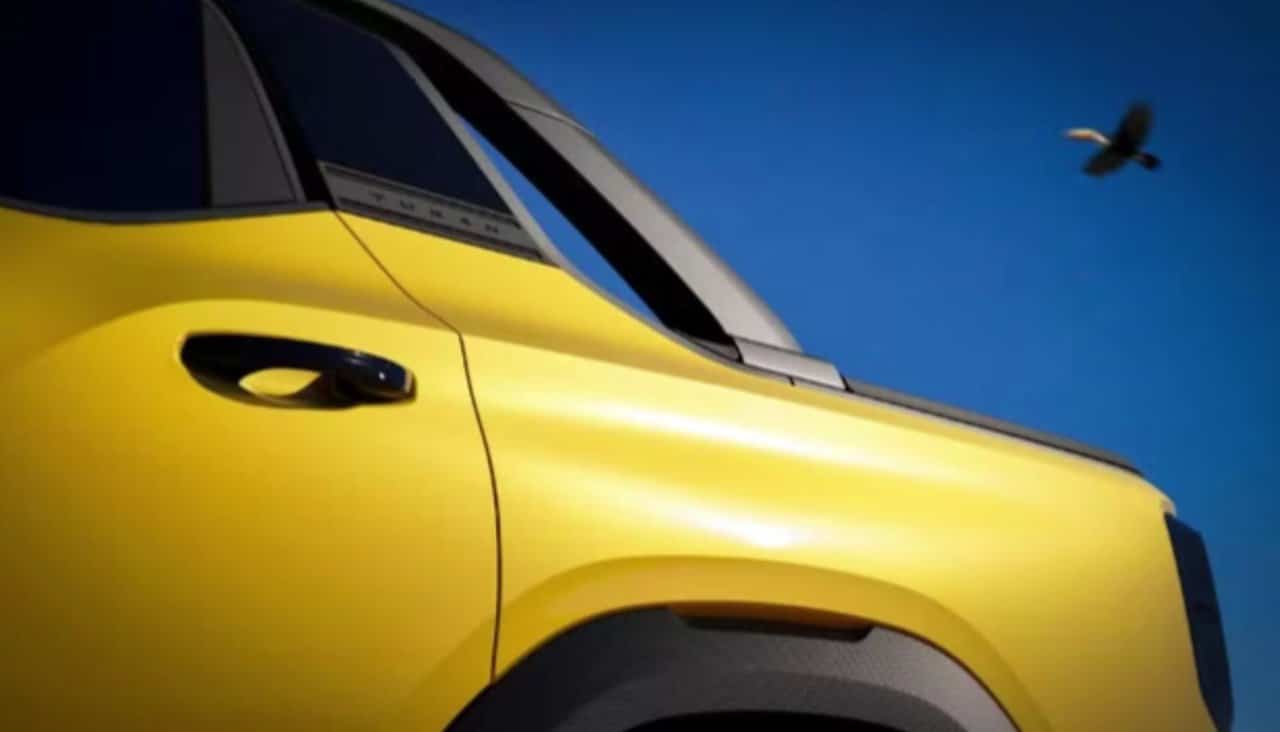
The name Tukan refers to the toucan, an iconic bird of the Américas, and symbolizes the model’s adaptation to the regional environment and agility. The first teasers released show the vehicle in canary yellow, which refers to the Brazilian football team and adds personality to the launch, while the general style should combine modern lines with functional elements typical of pickup trucks.
The front end should bear the current Volkswagen identity, with connected headlights and a pronounced grille that conveys strength. The side reveals balanced proportions between the cabin and the bucket to maintain good drivability, and the finishing details will vary depending on the version to visibly differentiate work options from leisure options.



