
BYD announces massive recall of popular hybrids after identifying battery fire risk


Chinese automotive giant BYD has initiated a large-scale safety protocol involving one of its most sold vehicle lines in the Asian market. The measure directly affects the Qin Plus DM-i plug-in hybrid model, recognized for its high sales volume, due to inconsistencies detected in the manufacturing process of the battery control modules. Preventive action aims to mitigate operational risks that, in extreme situations, could compromise the physical integrity of occupants and road safety.
The official statement, endorsed by Administração Estatal of Regulação of Mercado of China, details that the recall campaign covers approximately 90 thousand units. The focus is on correcting faults that can lead to the energy storage system overheating. The automaker moved quickly to notify owners and establish a repair schedule, demonstrating an effort to maintain consumer confidence amid the exponential growth of the electrification sector.
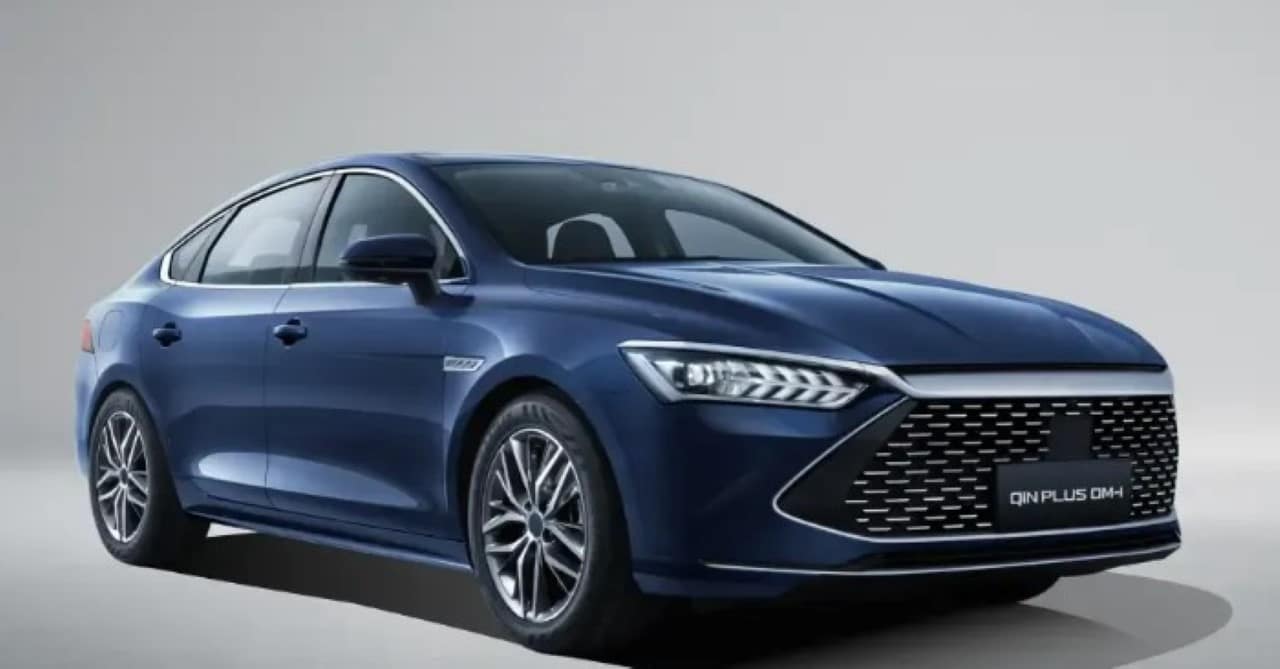
Internal investigations indicated that the origin of the problem lies in an irregularity in the production of the battery module controller. Essa specific fault may result in inaccurate voltage readings, preventing the management system from identifying thermal anomalies in a timely manner. Sem this correct reading, the vehicle is at risk of suffering the so-called “thermal runaway” or thermal runaway, a chain reaction that can culminate in fires, especially when the car is in severe operation or with the battery under load stress.
Correction strategy via remote technology
To resolve the defect quickly and minimize inconvenience to owners, BYD opted for a modern technological approach. The first stage of the recall consists of updating the battery management software (BMS) via the OTA (Over-the-Air) system. Essa technology allows the vehicle to receive new safety parameters via the internet, without the immediate need to travel to a physical dealership, speeding up the initial diagnosis of the affected fleet.
The software update aims to refine the power cell monitoring algorithms. Caso the new system detects, after installation, that the controller hardware presents critical voltage deviations that cannot be digitally compensated, the owner will then be notified to attend an authorized workshop. In Nesses cases, the physical replacement of defective components will be carried out completely free of charge, ensuring that the hardware complies with the required safety standards.
This hybrid repair methodology — combining remote diagnosis and physical intervention when necessary — reflects a trend in the smart vehicle industry. The ability to patch security flaws through software updates demonstrates the evolution of automobiles toward code-defined platforms, although it also highlights the increasing complexity of embedded electronic systems and the need for constant vigilance over the quality of semiconductors and sensors.
Impact on models manufactured between 2021 and 2023
The vehicles included in this safety campaign were manufactured during a specific period of the brand’s expansion. The affected production window comprises units assembled between January 2021 and September 2023.
The Qin Plus DM-i model is strategic for the automaker, serving as a gateway to plug-in hybrid technology. Sua popularity is due to the combination of energy efficiency and extended autonomy, which makes any systemic failure in this model an issue of high corporate priority. Proactively identifying the defect prevents isolated incidents from turning into a larger reputation crisis, preserving the company’s image in a highly competitive market.
Automotive sector analysts note that recalls of this magnitude, although they generate immediate operational costs, are indicators of the maturity of quality control protocols. Transparency in risk communication and the offering of advanced technological solutions tend to be well received by consumers, who prioritize safety and after-sales support when deciding to purchase electric and hybrid vehicles.
Challenges of thermal management in modern batteries
The technical issue at the heart of this recall illuminates one of the biggest challenges in automotive engineering today: the thermal management of high-density batteries. The Sistema of Gerenciamento of Bateria (BMS) acts as the brains of the power pack, constantly monitoring the voltage, current and temperature of each cell. Quando one controller component fails to report accurate data, the entire protection system goes blind, unable to activate preventative measures such as forced liquid cooling or power cut.
The manufacturing flaw identified by BYD compromises precisely this vital communication. In a heavy usage scenario, where the battery naturally heats up, the lack of accurate data prevents the car from “knowing” it is in danger. The proposed fix aims to reestablish this data integrity, ensuring that the vehicle can operate within the safe limits established by engineering, regardless of external conditions or the driver’s driving style.
This episode serves as a critical reminder to the entire electric vehicle supply chain about the importance of precision in electronic component manufacturing. As cars become more dependent on digital systems for basic safety, tolerance for hardware errors has drastically decreased, requiring increasingly rigorous validation processes before vehicles hit the streets.



