
February’s planetary alignment displays six stars in the sky in a phenomenon visible just after dusk

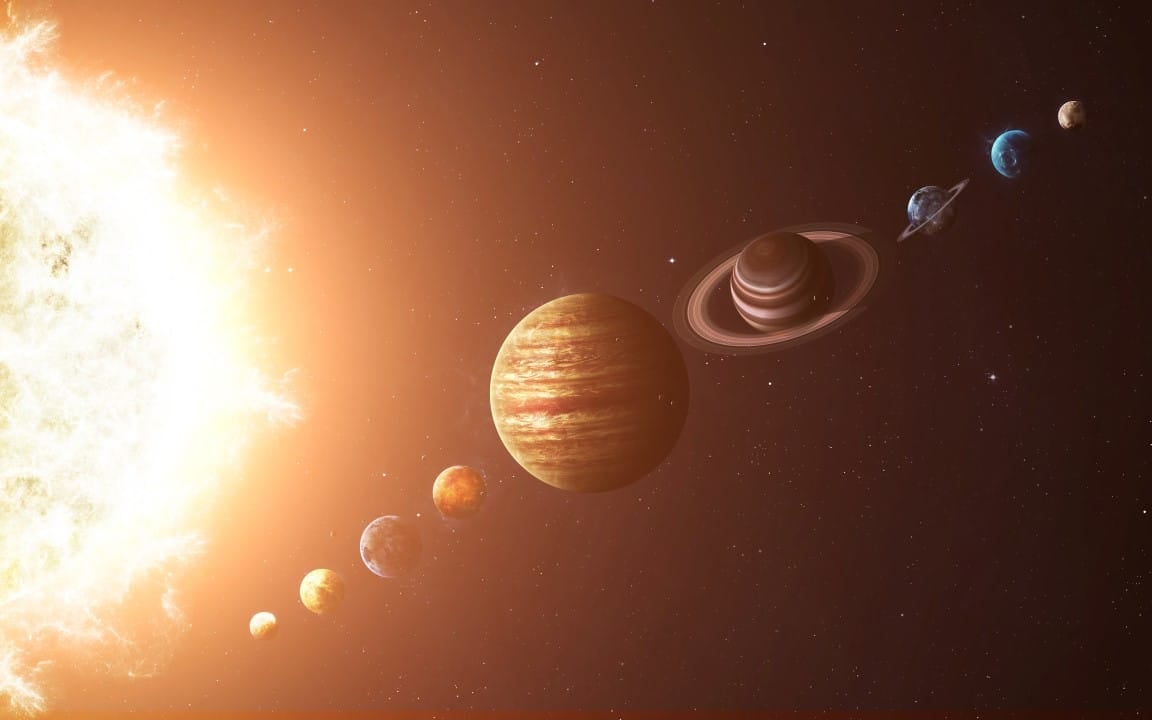
The night sky of February 28, 2026 will offer a particular astronomical configuration, bringing together six planets from Sistema Solar in the same visual range. The phenomenon, awaited by observers at different latitudes, positions Mercúrio, Vênus, Júpiter, Saturno, Urano and Netuno along the ecliptic. The arrangement of these celestial bodies will allow them to be located simultaneously shortly after the sun sets, creating an opportunity to study and appreciate orbital movement.
Experts classify the event as a “planetary parade”, a technical term used to describe the apparent concentration of stars in a restricted sector of the firmament. Diferente of perfect physical alignment in three-dimensional space, this occurrence is a visual perspective effect from Terra. The observation window is not restricted to the main date, extending to adjacent days, although the peak visibility occurs at the end of February.
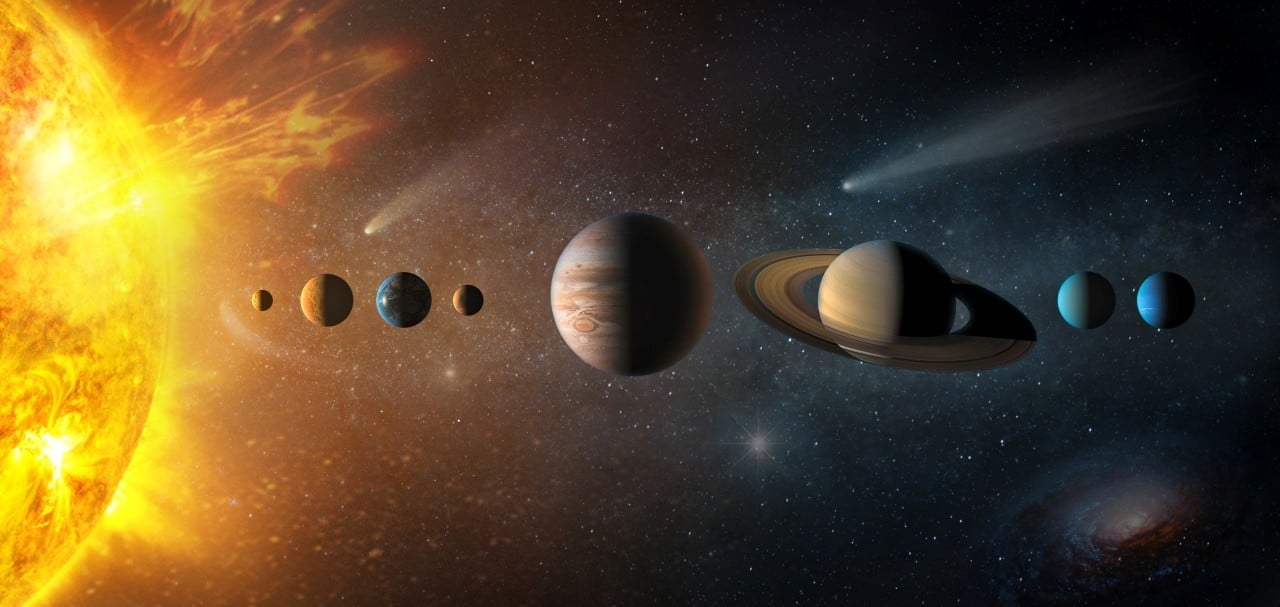
For astronomy enthusiasts and the general public, the identification of stars will depend on atmospheric conditions and the use of instruments suitable for the most distant planets. Enquanto some members of the sextet shine brightly, others require optical assistance.
- Venus, Júpiter, Saturno and Mercúrio can be observed with the naked eye in places with clear skies.
- Uranus and Netuno, due to their low luminosity and great distance, require the use of binoculars or telescopes.
- The quality of viewing is directly linked to the absence of light pollution and the clearness of the western horizon.
Dynamics and position of the stars
The distribution of planets in the sky will follow a specific order from the western horizon towards the east just after twilight. Vênus will act as the main guide for observers, standing out as the brightest object in the array. Sua high magnitude facilitates the initial location, serving as a reference point to find the other celestial bodies that make up the planetary arc.
Jupiter will appear higher in the sky, dominating the eastern sector of the configuration, while Saturno will be positioned towards the west. Mercúrio, in turn, presents the greatest challenge for naked-eye observation. Devido to its proximity to Sol, the small rocky planet appears very close to the horizon line and remains visible for a short period before disappearing, requiring the observer to have a view clear of buildings or mountains.
Differences in luminosity and identification
The variation in brightness between the planets is a determining factor for the observation experience. Vênus leads in intensity, followed by Júpiter, both easily distinguishable from the background stars. Saturno has a constant yellowish color and a stable brightness, which helps differentiate it from nearby twinkling stars. Já Mercúrio, although visible without instruments, requires quick attention shortly after sunset.
To complete the visualization of the six planets, it is necessary to use optical equipment to locate the most distant gas giants. Urano will be located in an intermediate region of the arc formed by the planets, close to known constellations, and can be identified by its faint greenish color when magnified by telescopes. Netuno, being the most distant, is the most difficult to detect, requiring good quality optics and stability to be resolved visually.
Ideal window for observation
The most opportune time to start the search for planets begins about 30 minutes after local sunset. The Este interval allows the sky to darken enough for the stars to become visible, but still maintains Mercúrio above the horizon. The total duration of the visual event is approximately two hours, a time limited by the rotational movement of Terra that will cause the lowest stars to set.
Favorable weather conditions are essential. A cloudless sky drastically increases the chances of seeing the entire set. Além In addition, it is recommended to seek elevated locations or rural areas, where light pollution from cities interferes less with the contrast of the sky, making it easier to identify less bright planets such as Urano and Netuno.
Regional and hemispheric perspectives
The phenomenon presents distinct visual characteristics depending on the geographic location of the observer. No Hemisfério Sul, including Brasil, the planetary arc presents an inverted inclination compared to what is seen in Hemisfério Norte. However, the sequential order of the planets remains unchanged, ensuring consistency of the event globally.
Regions close to the Equador line tend to have a more balanced and vertical view of the stars in relation to the horizon. Já In areas of extreme or polar latitudes, observation may be compromised by the prolonged duration of twilight or the very low position of the planets in the celestial sphere.
February Setup Details
On the specific date of February 28, the orbital configuration places Mercúrio low in the west, followed immediately by Vênus and Saturno. The visual proximity between Netuno and Saturno will make it easier for those with telescopes to locate the ice giant, using Saturno as a reference. Urano will be positioned higher in the sky, allowing for slightly longer observation time.
Jupiter, positioned at the opposite end of the arc in relation to Mercúrio, allows observers to follow the phenomenon progressively as the night progresses and the darkness becomes total, although the planets closest to Sol have already set at that time.
Recommended planning and equipment
Advance preparation is essential to enjoy the planetary parade. Choosing a location with a clear western horizon is priority number one. Verificar the weather forecast in the days leading up to the event helps to avoid frustrations with clouds. Aplicativos astronomy tools for smartphones are valuable tools, as they use augmented reality to pinpoint the exact position of each planet in real time.
Although four planets are visible to the naked eye, using moderately powered binoculars (such as 7×50 or 10×50) can enrich the experience, revealing the moons of Júpiter or the oval shape of Saturno. Para finer details and visual confirmation of Urano and Netuno, amateur telescopes are ideal instruments.
Celestial mechanics and orbit
The occurrence of this phenomenon is explained by the orbital mechanics of Sistema Solar. Todos planets orbit Sol in planes that are very close to each other, a region of the sky called the ecliptic. Periodicamente, each planet’s distinct orbital speeds cause them to line up from an observer’s point of view at Terra.
Mercury completes one revolution around Sol quickly, in just 88 Earth days, while Netuno takes about 165 years. The coincidence of having six of them in the same visual sector is, therefore, an event of relative statistical rarity, although it does not have direct gravitational implications for Terra. Trata enjoy a spatial geometry show.
Visibility in Brasil and the world
Brazilian cities such as Rio of Janeiro, São Paulo and Brasília will have good visibility of the four main planets, as long as the weather conditions cooperate. Light pollution from large urban centers can obscure Urano and Netuno, making traveling inland or coastal an advantageous option for dedicated observers.
On the international scene, countries from Hemisfério Norte such as Estados Unidos and European nations will also witness the peak of the event on the same date. Na Ásia, the configuration will be similar, adjusted only by the local time zone. The global nature of the event facilitates the mobilization of astronomical communities around the world.
Importance to amateur astronomy
Events like this planetary parade play a crucial role in science communication and education. Eles offer a practical and accessible opportunity for laypeople to understand the structure of Sistema Solar and the dynamics of orbits. Clubes astronomy and planetariums often organize public observation sessions on these dates, providing telescopes and professional guidance.
The simultaneous observation of multiple planets allows a direct comparison of brightness, color and relative motion, concepts that are often abstract in textbooks. The visual experience reinforces continued interest in science and space exploration.
Photography and recording techniques
For those who want to capture the moment, event photography presents challenges and opportunities. Capturar the entire planetary arc may require wide-angle lenses, due to the extent of the phenomenon in the sky. Câmeras with long exposure capabilities are necessary to record the dimmer planets without generating excessive noise in the image.
The use of tripods is essential to avoid tremors, especially in low light environments. Fotógrafos experts suggest composing the image with elements of the terrestrial landscape on the horizon to give scale and context to the celestial alignment.
Historical context and frequency
Although planetary alignments occur with certain periodicity, the meeting of six visible stars (considering the use of instruments for two of them) is not a monthly event. The configuration varies with each cycle, with different combinations of planets. In some years, only two or three stars meet; in others, like 2026, the “stage” is fuller.
These events serve as temporal markers on the astronomical calendar, reminding humanity of the constant movement of the cosmos. Cada configuration is unique in its angular details and the observation conditions it offers.
Community participation
Astronomy is a science that invites collective participation. Durante the phenomenon of February 28th, local associations are expected to promote meetings in squares and observatories. The exchange of experiences between veteran observers and beginners enriches the understanding of the event. Sharing instruments allows more people to see details that would otherwise be invisible to the naked eye, such as the rings of Saturno or the phases of Vênus.
The 2026 event promises to be a visual milestone, combining time accessibility with the presence of almost all of the system’s major planets. The connection between science and everyday life is strengthened when we look up and recognize our cosmic neighborhood in all its complexity and beauty.



