Flamengo’s squad is worth five times more than Lanús’ in the fight for the Recopa Sul-Americana title

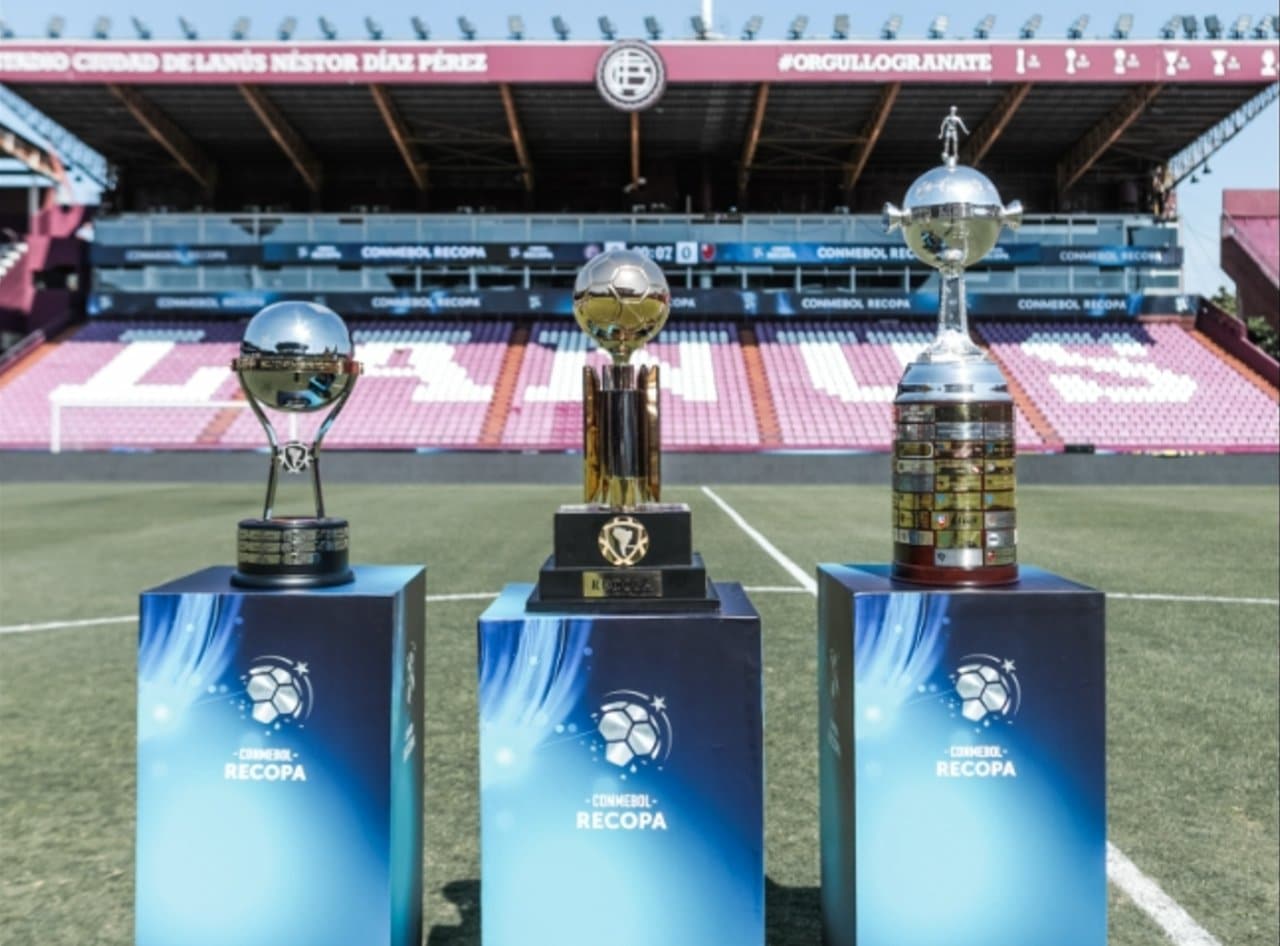
Flamengo takes the field this Thursday, February 19, 2026, to begin the dispute for the Recopa Sul-Americana title against Lanús, on Argentine soil. The clash, scheduled for 9:30 pm local time, puts two completely different financial realities face to face on the continental football scene. Enquanto the Rio club seeks to consolidate its technical and economic hegemony, the Argentine team is betting on the home factor and tactical organization to overcome Brazilian favoritism.
The disparity between the two institutions becomes evident when analyzing market data from platforms specializing in sports finance. The red and black squad is valued at approximately 223.70 million euros, which corresponds to around R$1.386 billion at the current price. In contrast, Lanús has a cast estimated at 43.80 million euros, totaling R$271.56 million, showing a ratio of five to one.
- Lucas Paquetá is the most valuable player in the competition with a value of 35 million euros.
- The Flamengo squad has ten athletes valued at over 9 million euros each.
- Marcelino Moreno leads the Argentine team’s valuation ranking with 5 million euros.
- The salary bill and investment in hiring in Flamengo break historical records in Brasil.
🏆😍 The sense of belonging of@clublanus! El playing field in CONMEBOL#Recup…pic.twitter.com/XMvTv370YR
— CONMEBOL Recopa (@ConmebolRecopa)February 19, 2026
Historic hiring of Lucas Paquetá raises financial level
The recent repatriation of Lucas Paquetá by Flamengo not only technically strengthened the team led by Filipe Luís, but also had a direct impact on market statistics. Sozinho, the Brazilian midfielder is valued at 35 million euros, which represents almost 80% of the total value of the Lanús players. Essa concentration of investment in a single athlete demonstrates the fundraising capacity and firepower of the Gávea club.
The presence of Paquetá in the starting lineup changes the marking dynamics that coach Mauricio Pellegrino intends to implement at Ciudad’s stadium. The player, who is the most expensive signing in the history of Brazilian football, becomes the central point of the Red and Black offensive strategy for the first leg. The expectation is that his international experience and technical quality will be decisive in breaking through the Argentine defensive blockade in a traditionally hostile environment for visitors.
Logistical challenges and tension at Grande Buenos Aires
The preparation for the first leg of the Recopa Sul-Americana was marked by external unforeseen events that affected the movement of fans and professionals. A general strike at Argentina resulted in the cancellation of several flights and generated protests in areas close to the airports and access roads to the stadium. Flamengo needed to closely monitor the situation to ensure that the delegation did not experience delays or security problems during the journey to the city of Lanús.
Despite the demonstrations and the turbulent political climate in the neighboring country, Confederação Sul-Americana de Futebol confirmed the maintenance of the event’s original schedule. Local policing was reinforced around the stadium to prevent protests from interfering with the entry of teams and the public present. The red and black players focus on adapting to the pitch and the pressure from the Argentine fans, who tend to turn the stadium into a cauldron.
Tactical strategies of Filipe Luís and Mauricio Pellegrino
Coach Filipe Luís must take an offensive formation to the field to try to resolve the tie in the first clash on foreign territory. The likely lineup features Rossi in goal, protected by a defensive line led by Léo Ortiz and Léo Pereira, while the midfield will have the creativity of Arrascaeta and Paquetá. In attack, the presence of Pedro as a reference seeks to take advantage of the physical strength against the defenders Carlos Izquierdoz and Dominguez.
- Rossi; Varela (Royal), Léo Ortiz, Léo Pereira and Alex Sandro make up the starting defense.
- Pulgar acts to protect the defense, allowing freedom for the articulators.
- Carrascal and Cebolinha guarantee speed at the ends of the offensive sector.
- Losada and the Lanús defensive line will have the mission of containing the best attack on the continent.
On the Argentine side, coach Mauricio Pellegrino knows that collective organization is the only way to balance actions against a technically superior opponent. Lanús should rely on a defensive compaction system, using Marcelino Moreno and Eduardo Salvio to exploit quick counterattacks from the flanks. The order is to maintain possession of the ball for as long as possible to frustrate the pace of play that Flamengo usually imposes.
Recent history of Flamengo at the end of Recopa
This is not the first time that the Rio club has competed for the supremacy of América from Sul in an Recopa final. In 2020, Rubro-Negro won the trophy by beating Independiente del Valle, consolidating a period of international glory that began the previous year. Já in 2023, the team ended up finishing runners-up against the same Ecuadorian opponent, which increases the pressure for a positive result now in 2026.
The experience accumulated in continental competitions in recent years is seen as an important asset by the club’s football department. Atletas, like Arrascaeta and Pedro, have already experienced several finals and have the necessary tranquility to deal with moments of adversity during the 180 minutes of the decision. The objective is to take a comfortable lead into the second leg, which will be held at Maracanã, where the strength of the crowd is usually decisive.
Detailed assessment of teams’ financial assets
When detailing the ten most valuable players on each side, it is clear that the tenth player in Flamengo, Jorge Carrascal, is worth almost twice as much as the most expensive athlete in Lanús. Enquanto Carrascal is valued at 9 million euros, Marcelino Moreno, the Argentine club’s main asset, reaches the 5 million euros mark. Essa abysmal difference reflects the economic moment of Brazilian football, which has isolated itself as the main financial power of América Latina.
The appreciation of young talents and the signing of established players at Europa transformed Flamengo into a global showcase for the sport. Samuel Lino, valued at 20 million euros, and Léo Ortiz, with 15 million, exemplify the level of investment made by the Rio de Janeiro board. No Lanús, the strategy is based on experienced players and specific bets on base promises, such as Dylan Aquino and Agustín Medina, who seek international visibility in this final.
Technical preparation for the lawn of Ciudad of Lanús
The Flamengo technical committee carried out in-depth studies on the conditions of the pitch and the dimensions of the Argentine stadium to adjust the positioning of the athletes. The speed in exchanging passes is a characteristic that Filipe Luís is keen to maintain, even when playing away from home under constant pressure. Set-piece training also received special attention, as balanced clashes in finals are usually decided on minute positioning details.
Lanús, in turn, carried out training behind closed doors to test tactical variations that could surprise the Brazilian scheme. Pellegrino believes that if he manages to cancel out Arrascaeta’s articulation, he will have a real chance of balancing the physical confrontation in midfield. The Argentine team trusts in the leadership of captain Izquierdoz to maintain defensive order and prevent Flamengo from scoring goals early in the match.
Expectations for the return match at Rio of Janeiro
Regardless of the result obtained at Argentina, the final decision will be made next Thursday at the Maracanã stadium. The Flamengo board has already started selling tickets, and the expectation is for a full house for the second game of the final. The competition regulations do not provide for the criterion of a qualified goal away from home, which makes each move in Lanús even more competitive for both teams.
The planning for Flamengo involves an immediate return to Brasil immediately after the first leg to begin the physical recovery of the starting athletes. Como the national calendar remains intense, the squad’s energy management is essential to avoid muscle injuries to key players. The total focus is on securing another international cup for the club’s vast trophy gallery, reaffirming its prominent position in world football.