
NASA warns of the risk of 15,000 undetected asteroids with the potential to destroy cities

Terra faces a critical space security challenge due to the existence of approximately 15,000 medium-sized asteroids that remain invisible to current monitoring systems. X__NM1____ Durante a conference from Associação Americana to Avanço from Ciência (AAAS) held at
The current scenario reveals a significant technological gap, since the North American space agency estimates the existence of 25,000 objects of these proportions orbiting close to our planet. Atualmente, only 40% of these space rocks have had their location and trajectory accurately mapped by scientists. The difficulty in identification lies in the fact that these bodies are too small for conventional optical telescopes, but large enough to cause catastrophes on a regional scale if they cross the Earth’s atmosphere without prior warning.
- Most undetected asteroids are hidden by sun glare or low reflectivity.
- The impact of a 150-meter rock is equivalent to the detonation of multiple high-power nuclear bombs.
- Terrestrial monitoring systems have geographic and climatic limitations that prevent full surveillance.
Thermal monitoring emerges as a solution for space defense
To mitigate the risks of an unexpected impact, the scientific community advocates the urgent launch of a new space telescope equipped with thermal signature sensors. Este equipment would be capable of identifying dark asteroids and comets that do not reflect visible sunlight, operating at a frequency that allows the heat emitted by rocks to be mapped against the cold background of space. The implementation of this technology is considered the most important step to fill the gaps in the catalog of near-Terra objects (NEOs).
Early detection is the determining factor in the success of any diversion or interception mission, as it allows years of logistical preparation. Sem the use of heat signatures, many of these rocks would only be noticed when they were too close for effective intervention. Investment in infrared surveillance would transform response capabilities, allowing space agencies to monitor trajectories decades in advance of potential collisions.
Lack of ready ships worries security experts
Although previous experiments have proven that it is possible to alter an asteroid’s trajectory through kinetic collisions, humanity does not yet have a fleet at the ready. Atualmente, there is no stockpile of built and tested spacecraft that can be launched immediately in the event of a last-minute detected planetary emergency. Developing, assembling and testing an intercept mission takes years, time that may not be available if an object is discovered to be on an imminent collision course.
The logistics required to deflect a celestial body require absolute precision and a very specific launch window. Sem ready-to-use space vehicles, the global response would be limited to passive observation or ground evacuation measures, which would be insufficient for densely populated areas. The proposal to keep ships in a state of “strategic reserve” is gaining momentum among defense researchers, aiming to reduce reaction times from years to just a few months.
Risks of impact on the moon in 2032 accelerate scientific debates
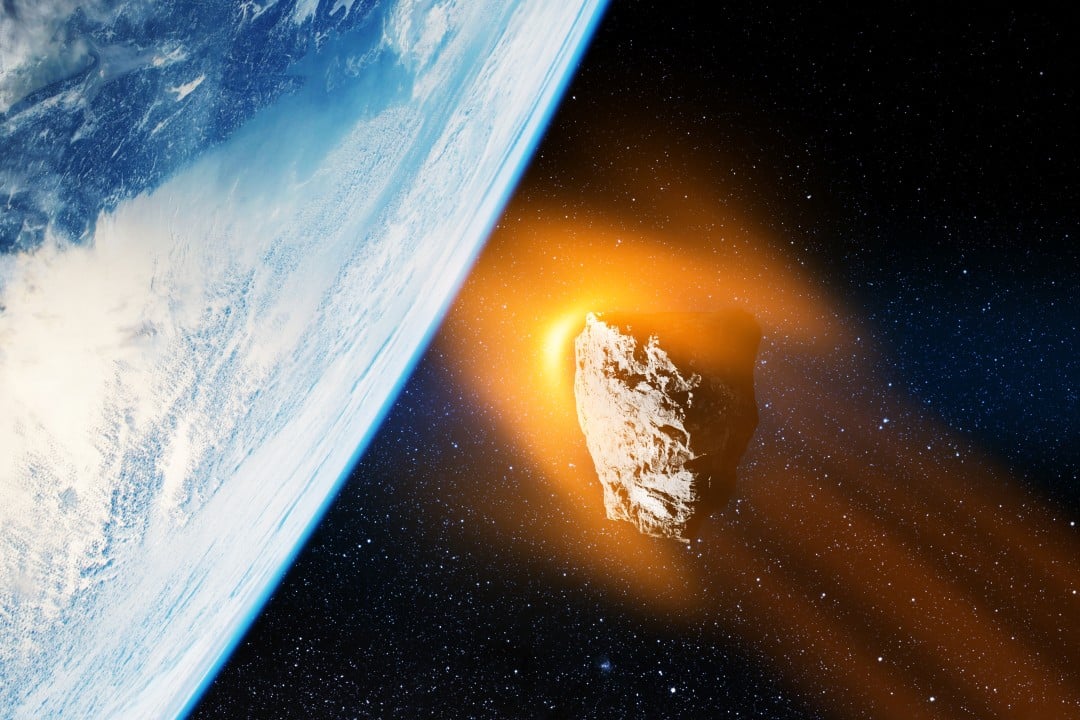
One of the focuses of immediate attention is the asteroid YR4, which has a 4% probability of colliding with Lua in the year 2032. If the impact is not directly on Terra, a lunar collision of these proportions could generate space debris and affect future exploration and colonization missions. Este specific case serves as an alert to the urgency of improving planetary defense systems before similar threats are confirmed towards our planet.
The possibility of using nuclear devices to fragment or deflect asteroids has also returned to the center of technical discussions as a last resort. In situations where the warning time is too short for a kinetic deflector, the energy of a controlled explosion could be the only way to avoid a tragedy. Contudo, this alternative involves geopolitical complexities and international treaties that make it difficult to immediately implement it as a standard security protocol.
Strategies to avoid catastrophes in metropolitan regions
Planetary defense planning involves coordination between multiple nations and government agencies to ensure the planet is not caught by surprise. Além of detection technology, scientists emphasize the need for constant impact simulations to test communication between civil defense bodies and space agencies. Preparing for the worst-case scenario includes mapping risk areas and developing mathematical models that predict the atmospheric effects of a mid-air explosion caused by an asteroid.
- Computer simulations help predict the range of the shock wave from an impact.
- International cooperation agreements seek to standardize the response to space threats.
- Studying ancient craters on Terra provides data on the frequency of catastrophic events.
Technological challenges in identifying small celestial bodies
Current ground-based radar and telescope technology suffers from the vastness of space and the rapid movement of smaller objects. Mesmo With the advancement of artificial intelligence in the processing of astronomical images, the identification of 150-meter rocks requires a sensitivity that current sensors rarely reach at great distances. The challenge is constant, as the orbit of these objects can be changed by the gravity of larger planets, making monitoring a task that requires daily updating.
The international scientific community continues to press for more government funds allocated exclusively to planetary defense, separating them from scientific exploration budgets. The justification is that the cost of a prevention mission is negligible compared to the economic and human damage of an impact on a large capital. The transition from a reactive stance to proactive surveillance is seen as the only way to ensure the long-term survival of urban land infrastructure.
Prospects for the implementation of new global systems
In the medium term, the expectation is that the surveillance network will be expanded with the collaboration of private companies in the aerospace sector. The entry of new players into the space market can accelerate the development of cheaper and more efficient sensors, allowing full coverage of the sky. Até While this network is operational, humanity remains dependent on the luck and dedication of the limited teams operating current monitoring systems under budgetary constraints.
The debate on space security has gone from being a science fiction topic to becoming a national security priority for the great powers. The reality that thousands of threats circulate silently around Terra demands a change in mindset about how we protect the planet. The success of planetary defense will depend on the technological capacity to see what is currently invisible and the political will to prepare intervention ships before danger becomes an inevitable reality.




