
New calculations indicate the chance of an asteroid hitting the Moon in 2032 and generating a phenomenon visible from Earth

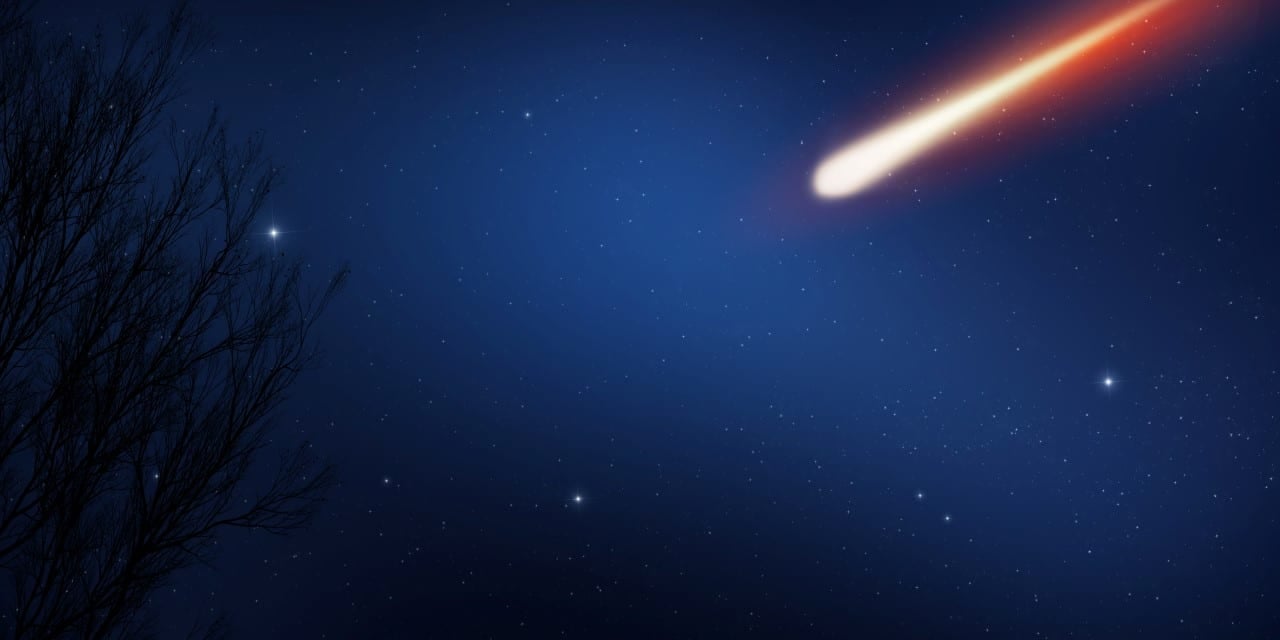
The celestial object cataloged as 2024 YR4 remains under constant monitoring by the world’s main space agencies due to its unique trajectory in the solar system. Descoberto at the end of 2024, the rocky body has an estimated probability of around 4% of colliding directly with the lunar surface in the next decade. The predicted date for the possible impact is December 22, 2032, an event that arouses the interest of the international scientific community.
Experts from NASA and Agência Espacial Europeia (ESA) have already ruled out any risk of a collision between this asteroid and the planet
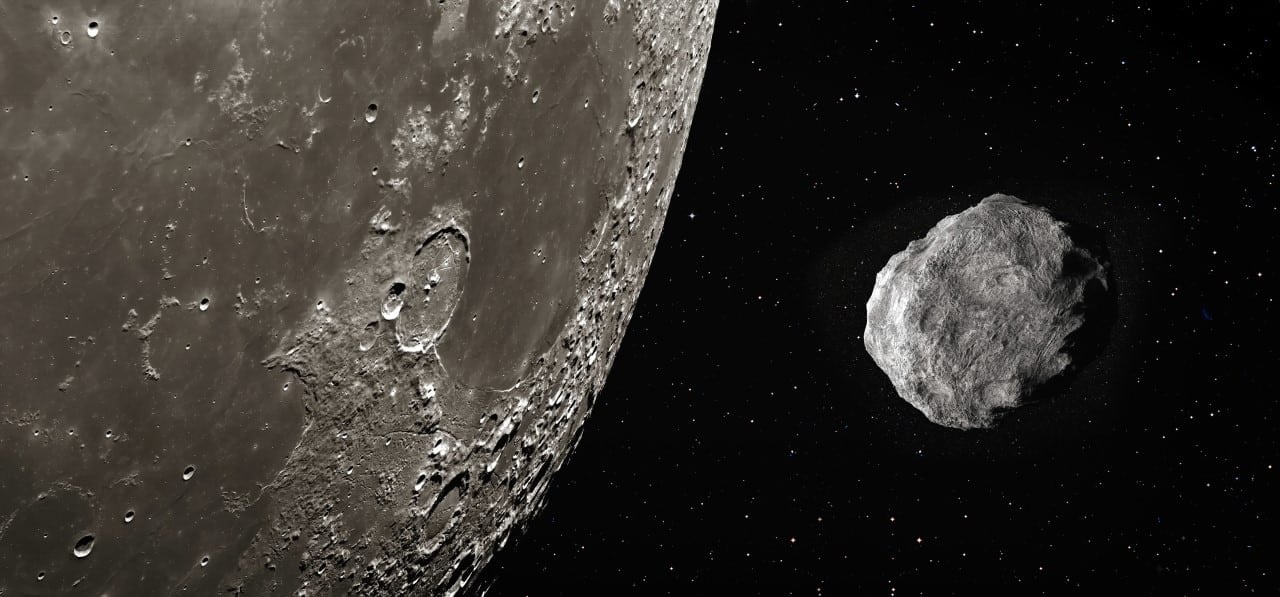
The most recent analyses, powered by data from the James Webb space telescope, have defined the dimensions of the asteroid with greater precision. Estima The body is approximately 60 meters in diameter and is mainly composed of silicates, classifying it as an S-type asteroid.
Impact energy would be equivalent to hundreds of megatons and would create a new crater
If the collision occurs, the encounter between 2024 YR4 and Lua will occur at an impressive speed of 14 kilometers per second. The violence of this shock would release a massive amount of kinetic energy, comparable to the detonation of 650 million tons of TNT. The immediate result would be the formation of a new crater on the lunar surface, with a diameter estimated at around one kilometer.
Mathematical models indicate that the event would release a significant amount of debris and dust into cislunar space. Parte of this ejected material could eventually enter Earth’s atmosphere, creating artificial meteor showers. Key features of the potential impact include:
- Collision speed estimated at 14 km/s.
- Release of energy exceeding 600 megatons.
- Instantaneous crater formation visible through telescopes.
- Bright flash observable with the naked eye from Terra.
The magnitude of the flash generated by the impact would range between -2.5 and -3.0, shining in the night sky with an intensity similar to that of planets like Vênus or Marte. The luminous phenomenon would only last a few seconds, but would remain visible for up to ten seconds as a point of residual light, depending on local atmospheric conditions.
Observers at Ásia and Oceania would have a privileged view of the phenomenon
Earth’s geography will play a key role in observing the event, if it occurs according to current projections. Regiões as well as Leste Asiático, Oceania, Havaí and the west coast of América of The scheduled time for the event is around 3:19 pm (UTC) on December 22, 2032.
For amateur astronomers and enthusiasts, the event represents an unprecedented opportunity to observe real-time geological change on another celestial body. Redes of global observation are already beginning to plan protocols to record the moment, ensuring that, if the impact occurs, it will be one of the most documented astronomical events in history.
The next critical observation window will only occur in mid-2028
Despite current estimates, absolute certainty about the impact still depends on future observations. The asteroid is currently in an unfavorable position for detailed tracking by ground-based and orbital telescopes. The next crucial opportunity to refine trajectory calculations will not arise until June 2028.
During this period, 2024 YR4 will once again be in a position that will allow high-precision measurements. Será at this point that scientists will be able to confirm whether the asteroid is, in fact, on an inevitable collision course with Lua or whether it will graze past it. Até there, the 4% probability remains the official working statistic.
The scientific interest goes beyond the visual spectacle. The impact would function as a seismology experiment on a planetary scale. Seismographs left on Lua by previous and future missions could capture the shock waves, revealing unprecedented details about the natural satellite’s internal structure and core, data that would be impossible to obtain by other means.




