
New Fiat SUV promises to revolutionize the family category with seven seats and affordable hybrid versions

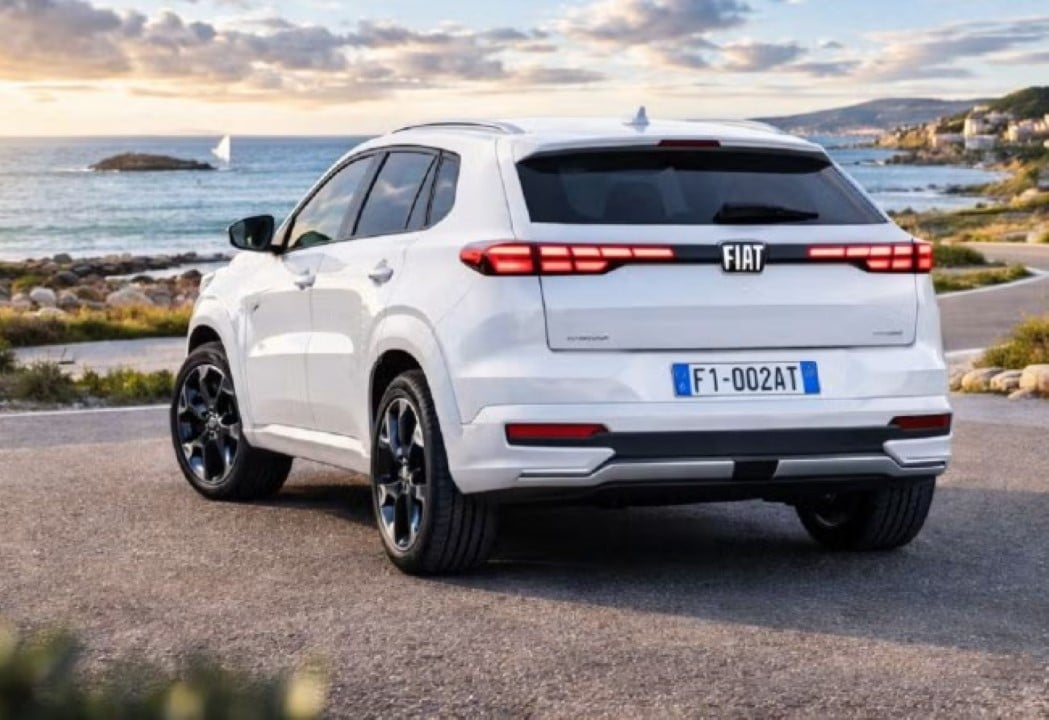
The automotive industry eagerly awaits Fiat’s next big move into the SUV segment, designed to consolidate the brand’s presence among families seeking space and versatility. The project, known internally and by specialized media as “Giga Panda”, represents a significant expansion of the current line, positioning itself as a robust C-SUV. The Italian automaker uses the Smart Car platform from the Stellantis group, a versatile technological base that allows the sharing of essential components with sister models, such as the Citroën C3 Aircross and the Opel Frontera, guaranteeing production efficiency and reducing industrial costs.
The official launch of this model is scheduled for the second half of the year, when the manufacturer is expected to reveal the definitive name and final specifications for global markets. The core strategy revolves around accessibility and transportability, offering a competitive alternative in a market saturated with high-cost options. With dimensions estimated between 4.4 and 4.5 meters in length, the vehicle was designed to maximize internal use, offering a cabin configuration that prioritizes passenger comfort and cargo capacity.

One of the most anticipated features is the possibility of configuration for seven occupants, a difference that puts the new SUV at a direct advantage against established competitors. The vehicle’s architecture allows the installation of a third row of seats, making it a practical solution for large families who do not wish to migrate to minivans or large, high-priced SUVs. Fiat engineering focused on creating a modular environment, where functionality overrides unnecessary luxuries, maintaining the value proposition of the original Panda line.
Functional design and modern visual identity
The aesthetics of the new utility vehicle follow the visual language inaugurated by the Grande Panda, adopting straight lines and a quadrangular posture that refer to robustness and simplicity. The design concept favors the creation of a generous internal volume, moving away from coupe silhouettes that compromise head space and trunk space in favor of style. The front of the vehicle must bear the brand’s new lighting signature, with LED headlights that use pixelated graphic elements, giving a technological and distinct appearance on the streets.
Elements such as functional roof bars, moldings on the wheel arches and plastic protections on the underbody reinforce the utilitarian character of the model. The Fiat seeks to convey the image of a car ready for intense daily use and small adventures, without the pretension of being an extreme off-roader, but with the necessary durability to face the varied conditions of urban and rural driving. The interior must follow the “less is more” philosophy, with durable, easy-to-clean materials and an ergonomic arrangement of controls, integrating essential connectivity without digital excesses that make the final product more expensive.
Engine options and energy efficiency
The new SUV’s mechanical offering was planned to meet stringent emissions standards and, at the same time, offer fuel savings to the consumer. The base of the range will be electrified combustion engines, with emphasis on the 48-volt mild hybrid system (MHEV). The 1.2 PureTech engine, widely used within the Stellantis group, should equip the entry-level and intermediate versions, delivering power that can reach 136 horsepower, coupled to an automatic dual-clutch transmission that integrates the auxiliary electric motor.
For markets that demand zero emissions, Fiat is also preparing fully electric variants. Estas versions must offer different levels of power, ranging between 113 and 156 horsepower, depending on the battery configuration and electric motor chosen. The autonomy will be designed to cover the needs of urban commuting and short trips, keeping the cost of batteries under control so as not to make the final price of the vehicle unviable. The Smart Car platform was designed from the ground up to be multi-energy, allowing the same assembly line to produce thermal and electrical versions on demand.
Market positioning and pricing strategy
The commercial objective of the Fiat with this launch is clear: to challenge the brands that dominate the entry-level segment of medium SUVs, such as the Dacia. The initial price estimate for the Europa is around 20,000 euros for the combustion versions, an extremely aggressive value for a vehicle of this size and capacity. By offering a larger car, with a seven-seat option and hybrid technology at an affordable price, the automaker hopes to attract rational customers who value value for money above premium brand status.
Production will be allocated to strategic factories that allow operating costs to be kept low, possibly at Sérvia or Marrocos, following the industrial logic applied to the Citroën’s sister models. With this approach, Fiat not only renews its portfolio, but also reaffirms its commitment to democratic mobility, delivering a product that meets the real needs of modern families without requiring a prohibitive financial investment. The “Giga Panda” promises to be a game changer, democratizing access to electrification technologies and generous internal space.



