
Space monitoring points to the risk of an asteroid impact on the Moon capable of generating a meteor shower

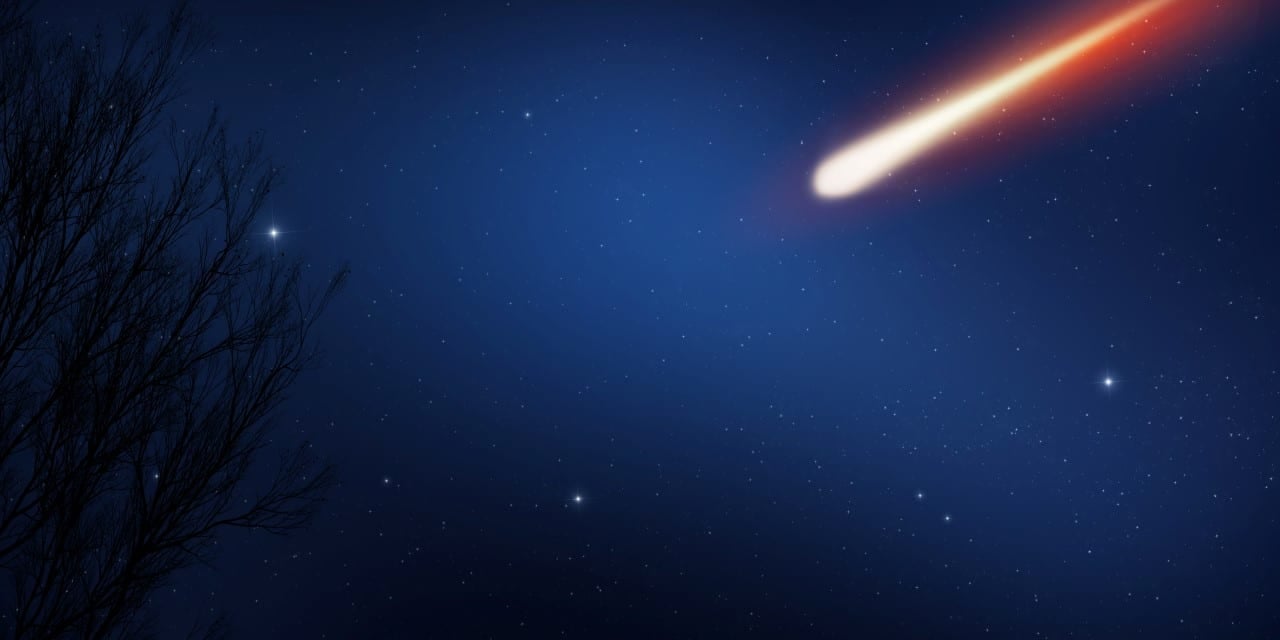
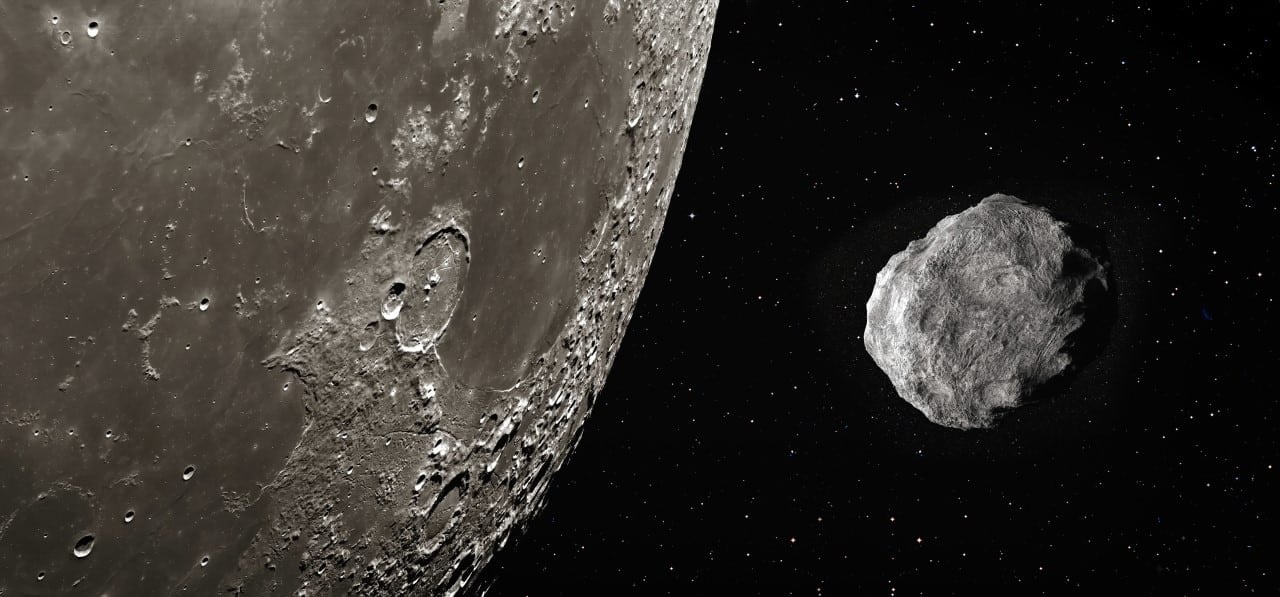
International space agencies have intensified the tracking of asteroid 2024 YR4, a celestial body with an estimated diameter of between 50 and 70 meters, which has a probability of collision with Lua calculated at around 4% for the end of 2032. Recent Dados obtained by lunar surface. Analysis indicates that the event would release kinetic energy comparable to millions of tons of TNT, creating a crater approximately one kilometer in diameter.
The phenomenon is expected to occur specifically on December 22, 2032.
Confirmation of the safe trajectory for Terra brought relief to the scientific community, which is now focusing on observation opportunities.
Trajectory refinement and exclusion of ground hazards
The object was initially identified by the ATLAS system, at Chile, on December 27, 2024, generating preliminary warnings about a possible dangerous approach with Terra in the 2030s. Initial Cálculos suggested a margin of uncertainty that included our planet in the risk corridor, which motivated an immediate global observation campaign.
Monitoring campaigns carried out throughout the first half of 2025 made it possible to drastically reduce orbital uncertainties, culminating in the mathematical exclusion of the possibility of a terrestrial impact. The probability of collision with Terra was officially reset in March 2025, after the integration of new astrometric data.
Experts in orbital dynamics used advanced computer models to project the asteroid’s path for the next few years, confirming that the predominant gravitational interaction will be with the Terra-Moon system, but without a threat to human integrity.
Decisive contribution of the James Webb telescope
Telescópio Espacial James Webb’s intervention was crucial in determining the physical properties of 2024 YR4, allowing astronomers to characterize its mineralogical composition and exact size. Infrared observations revealed that it is an S-type asteroid, composed mainly of silicates and metals, with a solid rocky structure.
By reducing uncertainties about the object’s position by about 20%, the Webb data allowed fine-tuning of lunar impact predictions. Essa precision is vital so that observatories on the ground and in orbit can adequately prepare to record the event, if it occurs on the stipulated date.
Physics of impact and energy release
The asteroid’s collision with the lunar surface would occur at an impressive speed of approximately 14 kilometers per second, resulting in an energy release estimated at 650 megatons of TNT. Essa explosive force would be enough to instantly excavate a new crater in the lunar soil and eject a massive amount of regolith and rocks into space. The violence of the impact would generate an intense thermal flash, whose visual magnitude could range between -2.5 and -3, making it visible to the naked eye from Terra, even without the aid of telescopes, for a period that could last from a few seconds to minutes.
Visual effects and induced meteor shower
The phenomenon would provide a rare astronomical spectacle for observers located in the nighttime hemisphere of Terra at the time of impact.
The plume of debris ejected by the collision would enter a trajectory that would cross Earth’s orbit, generating secondary effects in the subsequent days.
Modeling indicates that part of this rocky material would reach our planet’s atmosphere, creating an artificial and temporary meteor shower.
The following points highlight the expected characteristics of the event:
- Impact flash visible for up to 10 seconds to the naked eye.
- Bright magnitude comparable to the most luminous stars in the night sky.
- Formation of meteors (shooting stars) between 2 and 100 days after the collision.
- Privileged visibility for regions such as Leste Asiático, Oceania and Havaí.
Opportunities for planetary science
The possibility of observing an impact of this magnitude in real time offers an unprecedented opportunity to study crater formation and the internal structure of Lua. Sismógrafos left by previous missions or installed by future lunar missions could record the shock waves, revealing details about the lunar core and mantle.
Furthermore, spectroscopic analysis of ejecta would allow scientists to examine the composition of the lunar subsurface without the need for direct excavation. Isso would transform the event into a large-scale natural experiment, providing valuable data for understanding the geological evolution of our natural satellite.
Defense and international collaboration protocols
Monitoring 2024 YR4 served as a practical exercise for NASA and ESA’s planetary defense offices, testing global response and coordination capabilities. The rapid mobilization of observatories around the world has demonstrated the effectiveness of early warning systems.
The real-time exchange of information between different space agencies ensured that data was validated by multiple independent sources. Esse level of cooperation is essential to ensure the safety of Terra against future objects that may present a real risk of collision.
Next steps in tracking
Although the asteroid is currently beyond the visual range of ground-based telescopes due to its distance and position relative to Sol, it will return to an observable position in June 2028.




