
Bet365 platform presents critical failure and users report inability to access globally

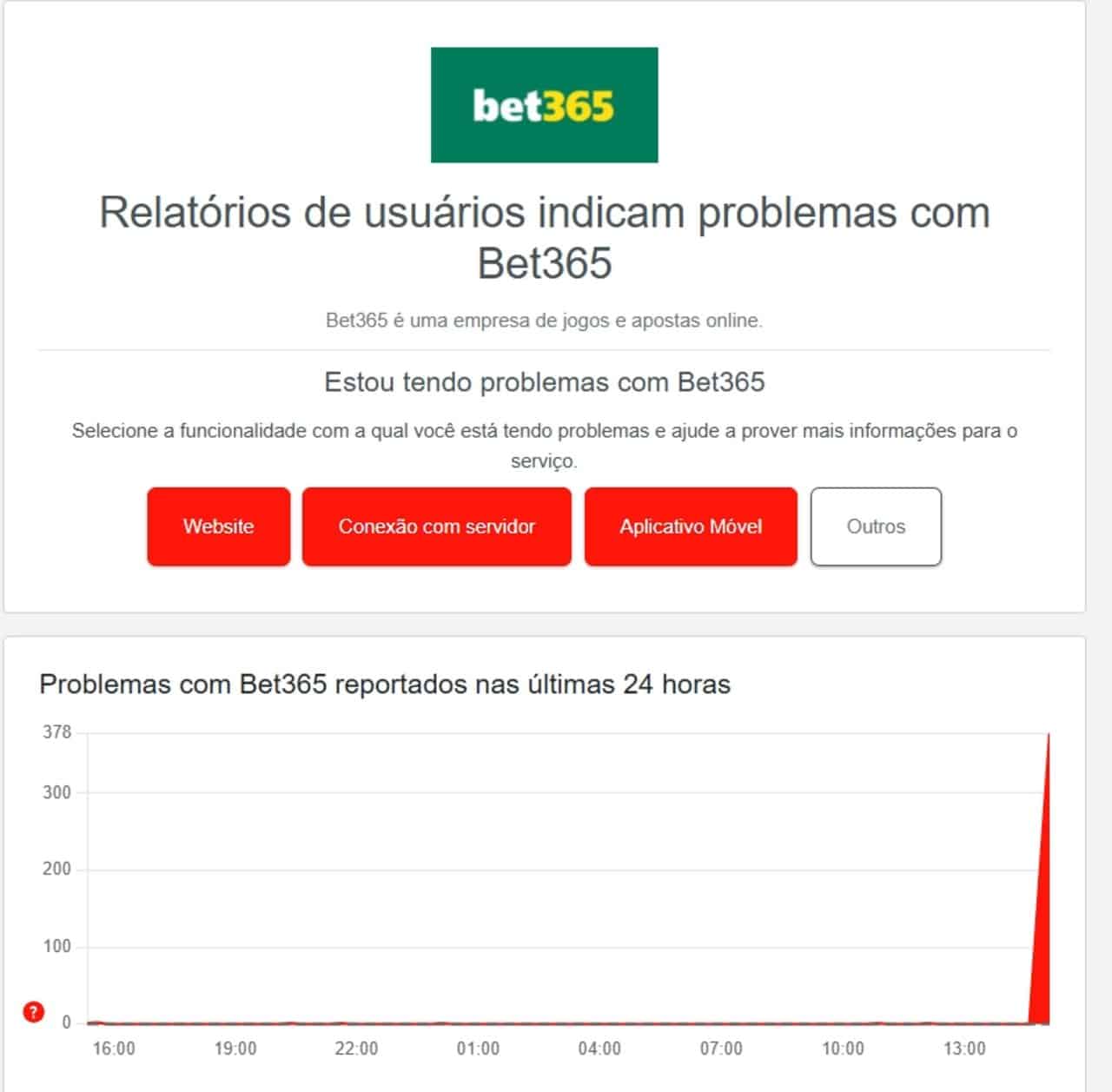
Thousands of bettors around the world face severe difficulties accessing their profiles and carrying out financial operations on the morning of this Friday, February 20, 2026. The bet365 system, recognized as one of the global leaders in the sports entertainment segment, presents connection errors that prevent the main page and mobile application from loading. The interruption of services occurs at a time of high traffic, generating a wave of complaints in several jurisdictions where the company operates.
Preliminary reports indicate that the instability is not restricted to a specific geographic location, affecting customers in Europa, América of Sul and Ásia simultaneously. The technical failure not only prevents the placing of new bets on sporting events scheduled for the day, but also blocks access to critical functionalities, such as withdrawing funds and closing open positions, known as cash out. The situation creates a scenario of uncertainty for users who have active balances on the platform.
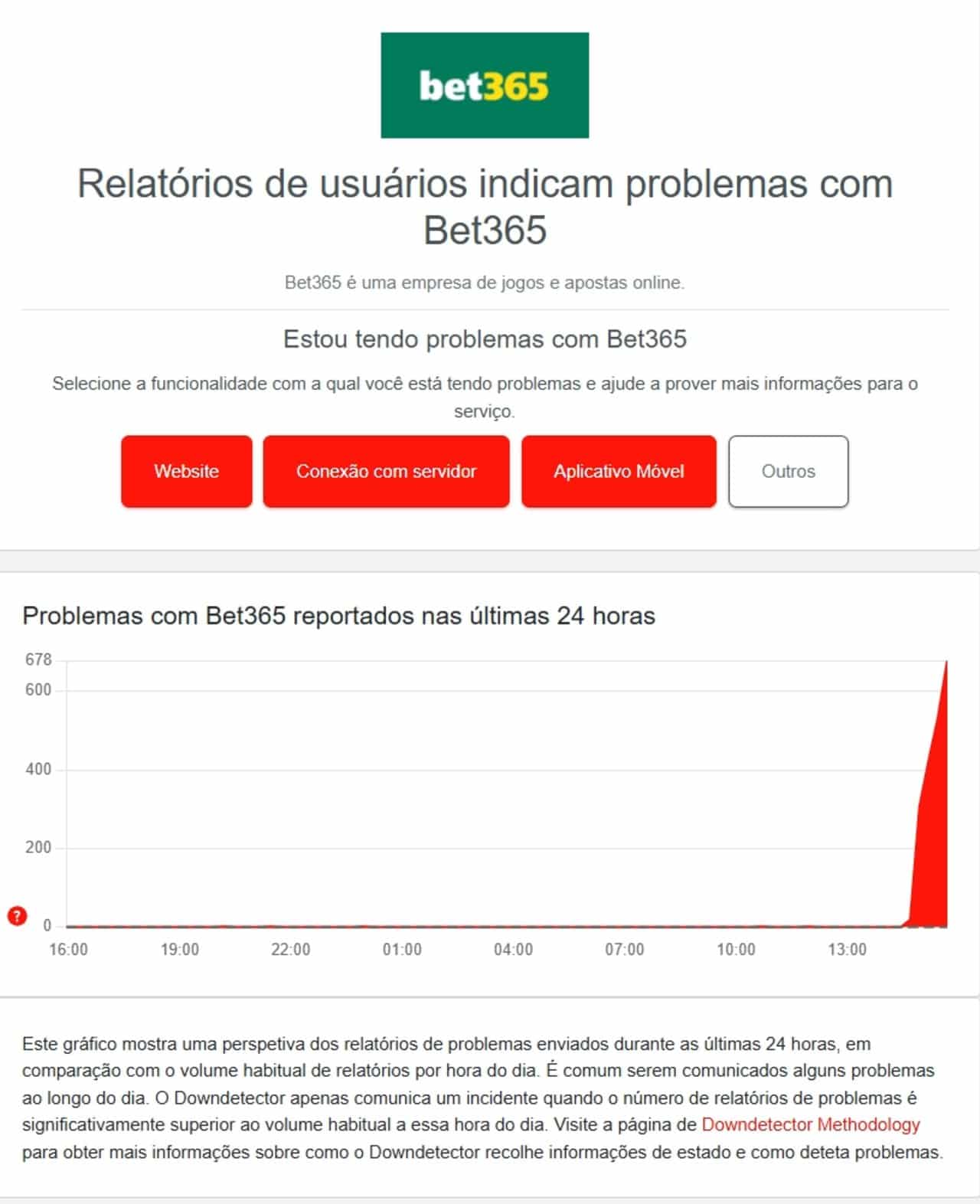
Independent digital service monitoring platforms, such as Downdetector, recorded a vertical increase in the number of notifications of problems related to the British operator. The complaints graph points to a sudden drop in servers, characteristic of serious systemic failures or network infrastructure problems. Até At the moment, official communication regarding expected returns remains scarce, which contributes to increased anxiety among the customer base.
The user community quickly took to social media to share screenshots of the errors displayed and seek information about the scope of the problem. Fóruns specialized in sports betting are full of reports describing the inability to log in and frustration with missed opportunities in live games. The dependence on technology for betting integrity makes any period of inactivity extremely detrimental to the end consumer experience.
Fault monitoring and user reaction
The problem was detected in the early hours of the day, when traffic volume tends to increase due to the proximity of weekend sporting events. Downdetector, an essential tool for measuring the health of the internet in real time, captured thousands of reports in a matter of minutes. Notifications range from “general website failure,” “mobile app issues,” and “server connection error,” indicating that the company’s core infrastructure has been compromised.
On social media, the topic quickly gained traction, becoming one of the most talked about topics of the day. Apostadores express concern about the security of their data and the fate of bets that were pending at the time of the crash. The lack of access to transaction history and current balance aggravates the feeling of insecurity, especially in a market where trust in the platform is the most valuable asset.
Discussion groups and betting communities are trying to map the extent of the digital blackout, comparing experiences between different internet providers and devices. The finding that the problem affects both mobile data connections and residential Wi-Fi networks eliminates the hypothesis of local provider failures, reinforcing the thesis of an internal problem in the company’s data centers.
The negative reaction is intensified by the volatile nature of live betting, where seconds can determine the profit or loss of a trade. The unavailability of the early bet closure tool during ongoing matches is cited as the main point of friction, generating potential losses that are unlikely to be compensated by the operator, except in cases of specific compensation policies.
Vulnerabilities in high-traffic infrastructures
Maintaining a global operation like bet365 requires a robust and redundant server architecture capable of processing millions of simultaneous transactions. Incidentes of this magnitude raise technical questions about the resilience of systems in the face of access spikes or hardware failures. Especialistas in information technology suggest that global outages are often linked to problems with failed software updates, failures in cloud providers, or misconfigurations in content delivery networks (CDNs).
Another possibility that always surrounds large digital corporations is the threat of cyber attacks, such as those of Negação of Serviço Distribuído (DDoS). Nesse scenario, malicious actors overload servers with fake traffic, making the service inaccessible to legitimate users. Embora there is no confirmation of an external attack in this specific case, cybersecurity remains a critical priority for companies that move large financial volumes daily.
The complexity of modern networks means that a failure in a critical component can generate a cascade effect, bringing down multiple interconnected services. Full restoration often requires accurate diagnosis that can take hours, during which the engineering team works on an emergency basis to isolate the problem and safely restart systems, ensuring that no financial data is corrupted in the process.
Economic consequences for the betting sector
The financial impact of a global shutdown is immediate and significant. Para the company, every minute offline represents a direct loss of revenue, considering the massive volume of bets that are no longer processed. Além of the direct financial loss, there is the reputational cost, which can be even more damaging in the long term in a highly competitive market saturated with options for consumers.
Competition in the sports betting industry is fierce, and prolonged technical glitches often result in users migrating to rival platforms. The bettor’s loyalty is intrinsically linked to the stability and reliability of the service offered. Quando a leading platform fails, a window of opportunity opens for competitors to capture this pent-up demand, offering bonuses and incentives to attract dissatisfied customers.
Investors and market analysts closely observe these events, as they test the governance capacity and technological infrastructure of companies in the sector. The frequency and duration of outages are important metrics for assessing the operational health of a technology company. The ability to recover quickly is essential to stop financial bleeding and demonstrate solidity to stakeholders.
Crisis protocols and corporate communication
Crisis management in times of technical failure is a litmus test for the communication departments of large companies. Transparency is the most effective tool for mitigating user frustration. Protocolos Industry standards recommend quickly issuing statements acknowledging the problem, even if the root cause has not yet been identified, to prevent the spread of rumors and misinformation.
The delay in providing an official position can be interpreted as a lack of respect for the consumer or an attempt to hide the seriousness of the situation. Official Canais on X (formerly Twitter) and other social networks become the main points of contact between the brand and the public. The effectiveness of this communication can determine whether users will return to the platform after normalization or whether they will look for permanent alternatives.
In addition to external communication, internal contingency protocols are activated to prioritize data integrity. Ensuring that balances and personal information are safe is the most important message to convey. In past industry events, companies that were transparent and offered compensation such as free bets or bonuses were able to regain public trust more quickly than those that remained silent.
The digital betting scenario in 2026
The betting market in 2026 operates at an unprecedented level of technological sophistication, integrating artificial intelligence, ultra-low latency transmissions and real-time micro-betting. Essa evolution increases the demand for stability, as users’ tolerance for faults is increasingly less. The infrastructure that supports this ecosystem needs to be foolproof, operating 24 hours a day, seven days a week.
Incidents like this Friday serve as a warning to the entire sector about the need for continued investment in redundancy and security. As betting becomes more integrated into the sports consumption experience, any disruption affects not just the betting platform, but the entire associated entertainment chain. Technological robustness is no longer a differentiator but has become a basic requirement for survival in the market.
Expectations now fall on the response time of the bet365 technical team and the explanations that will be provided after services are restored. The incident will be studied as a reference case on the fragility of large digital operations and the importance of effective disaster recovery plans in an economy increasingly connected and dependent on uninterrupted online services.



