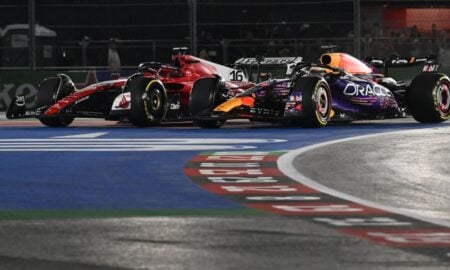
Domenicali refutes Max Verstappen’s retirement and praises the driver’s passion for Formula 1


The president and CEO of Fórmula 1, Stefano Domenicali, has publicly expressed his conviction that Max Verstappen will not abandon the category in the short term, despite the driver’s recent criticism of the new technical regulations. Durante the tests carried out this week, the Italian leader emphasized that the four-time world champion has a deep connection with the sport, minimizing rumors of an early retirement before the end of his contract with
Domenicali highlighted that he has had constructive conversations with the Dutchman and that feedback from competitors has evolved as teams optimize power settings and riding methods. Segundo the leader, Verstappen’s commitment to excellence and its central role in the evolution of the category remain unshakable, even in the face of conceptual divergences regarding hybrid engines. The organization’s focus now turns to the balance between the necessary technological innovation and the maintenance of human talent as the decisive factor for victory in the Grandes Prêmios.
After sitting out this morning, Max Verstappen is back behind the wheel for this final track session#F1 #F1Testing pic.twitter.com/e5VpsRF1c6
—Formula 1 (@F1)February 20, 2026
Relationship between category management and the four-time champion
The Italian leader highlighted the closeness he maintains with the Red Bull driver to justify his peace of mind regarding the competitor’s future on the Fórmula 1 grid. Para the CEO, the driver’s expressions of discontent are reflections of his quest for technical perfection and the desire to maintain the purity of open-wheel racing.
The management of Fórmula 1 is actively working to integrate the suggestions of veteran drivers in refining the rules that will come into force in the next competitive cycle. Domenicali explained that the meetings with the Federação Internacional of Automobilismo (FIA) and the teams serve precisely to align expectations and ensure that the sport remains attractive to the greatest talents in the world. The view that Verstappen would be willing to abandon the sport because he does not appreciate the new hybrid technology is seen by the organization’s top brass as a hasty interpretation of the athlete’s isolated statements.
- Constant meetings between the FIA, teams and drivers seek fine adjustments to the 2026 cars.
- Max Verstappen’s current contract with the Austrian team is valid until the end of the 2028 season.
- Other drivers on the grid, such as Lewis Hamilton and Lando Norris, had more positive impressions about the agility of the new models.
- The evolution of energy recovery systems requires a technical adaptation unprecedented in the modern history of motorsport.
Criticism of the new single-seaters and the purist vision of racing
Max Verstappen expressed significant concerns about the increased reliance on hybrid components in cars debuting next season, even comparing them negatively to other electric categories. The driver argues that the need to save electrical energy in qualifying laps distorts the fundamental concept of maximum speed and aggressiveness that defines the elite of world motorsport. Essas statements generated a wave of speculation about his motivation to continue competing after fulfilling his current contractual commitments with Red Bull.
Despite the criticism, the Dutch driver clarified that his dissatisfaction with certain rules does not negate his pleasure in working with his technical team and in developing the Red Bull Powertrains engine itself. Verstappen defines himself as a sport purist, preferring regulations that prioritize mechanics and traditional aerodynamics over the complex management of batteries and electronic systems. However, he reiterated that, as a professional, he will seek to extract the maximum possible performance from any set of rules imposed on him by the world championship organization.
Technological adaptation and the future of professional riding
Domenicali noted that initial resistance to new regulatory eras is a constant in the history of Fórmula 1, citing that pilots’ opinions often change drastically after the first few days of testing. The manager noted that the comments recorded on the third day of activities on the track were already considerably more optimistic than those collected immediately after the first contact with the machines. Essa change in perception is attributed to the speed with which engineers are able to find solutions to power delivery and aerodynamic stability problems in recently launched models.
The technology behind the cars of 2026 is designed to make vehicles smaller, lighter and significantly more agile on twisting stretches of international circuits. Pilotos like George Russell and Lando Norris mentioned that the reduced wheelbase and new weight distribution favor a more dynamic driving style compared to the heavy cars of the previous generation. Essa divergence of opinions between the sport’s protagonists is seen by F1 as a sign of competitive health, where different driver profiles seek varied adaptations to the new technical scenario.
Contract stability and the elite pilot market
The permanence of big names like Max Verstappen is considered vital for the commercial value and global audience of Fórmula 1 in the coming years. With the entry of new engine manufacturers and the expansion of the calendar to strategic markets, the presence of a four-time champion at the peak of his physical and technical form guarantees the sporting relevance of the event. Domenicali reinforced that open dialogue with the category’s stars is the best tool to avoid premature departures that could negatively impact the engagement of fans and global sponsors.
The top teams have already started their long-term planning, taking into account the possibility of sudden changes in the market if the new rules alter the order of forces established on the current grid. Red Bull Racing, in particular, focuses all its resources on developing its independent power unit, a factor that Verstappen cited as one of the most interesting points of its continuity on the team. The Dutchman’s contractual stability offers the category a solid basis for the regulatory transition that promises to be the most radical in recent decades.
Commitment to the competitive essence of motorsport
Stefano The director categorically stated that no one cares more about the well-being and future of the category than Max Verstappen, praising the passion that the driver shows in every technical intervention or debate about the direction of the sport. Para the organization, constructive criticism is essential so that the final product delivered on the tracks maintains the level of emotion required by the public.
The future of the category depends on this delicate balance between the technological sustainability required by the automotive industry and the sporting spectacle that attracts millions of spectators. The F1 president believes that, at the end of this year, the scenario will be one of total integration of drivers into the new cars, with the initial controversies being replaced by the incessant search for tenths of a second. Verstappen, as the central figure in this process, plays the role of a thermometer for the acceptance of the new guidelines, consolidating his position as the driver to beat in the new era.