
F1: FIA confirms legality of Ferrari’s rear wing after tests carried out in Bahrain

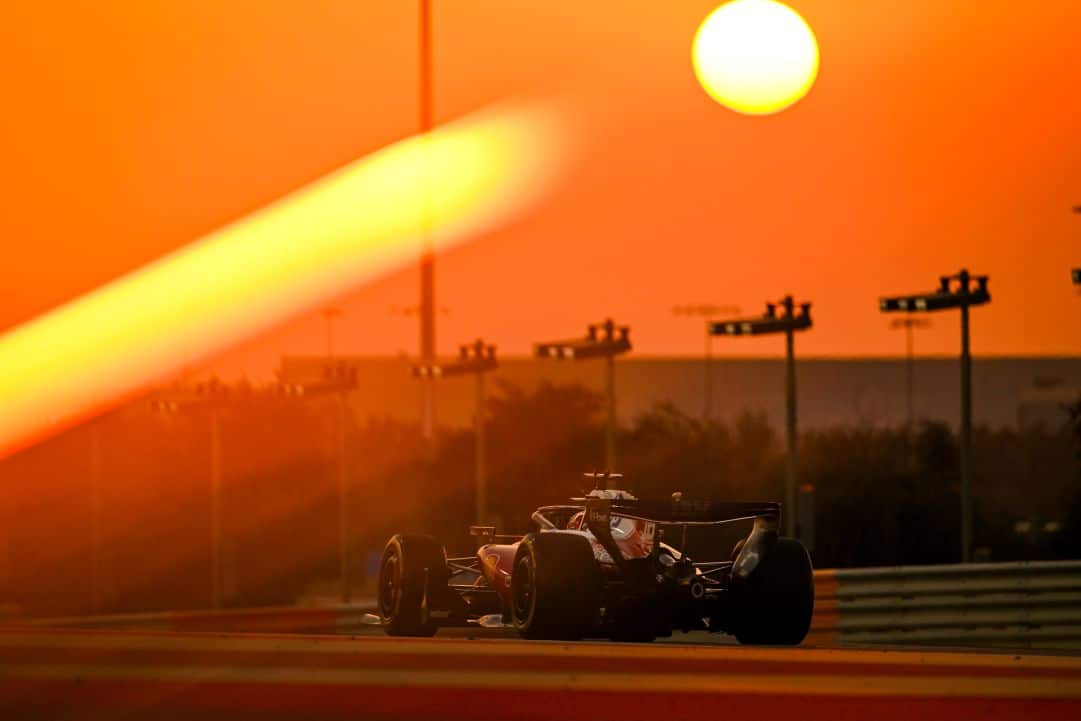
The Federação Internacional of Automobilismo officially confirmed this Friday that the controversial rear wing used by the Ferrari in pre-season tests is in full compliance with the technical regulations of the Sakhir, in Bahrein, were marked by intense technical debates between engineers from rival teams about the legality of the new component.
The FIA’s decision ends the speculation that arose at the beginning of the second week of collective training on the Bahraini circuit. Durante development work, technical observers noticed a different behavior in the air flow of the car driven by Lewis Hamilton and Charles Leclerc. Preliminary analysis indicates that the Ferrari design seeks a drastic reduction in aerodynamic drag on straight lines, optimizing the final speed of the SF-26 model without compromising stability in high-speed curves.
Just the perfect day to go for a drive 😌pic.twitter.com/iktgxCd4dz
—Scuderia Ferrari HP (@ScuderiaFerrari)February 20, 2026
Technical freedom in the new aerodynamic guidelines
The new set of rules implemented for this year aims precisely to offer greater room for maneuver for designers to find creative solutions in previously restricted areas. Segundo explanations provided by sporting authorities, the strict limitations that prevented larger openings in the rear wing until last year have been relaxed to allow for more energy-efficient competition. The main objective of this change is to facilitate overtaking and allow cars to follow each other with less loss of aerodynamic pressure.
Nikolas Tombazis highlighted that the federation closely monitors the development of each component from the computer simulation and wind tunnel phases. The part installed on the Ferrari car underwent static load tests and deflection checks before even hitting the asphalt on the Bahrein. Essa constant supervision ensures that, although teams have more freedom, no fundamental rules of safety or sporting equity are violated during the innovation process.
The Maranello team’s approach takes advantage of a gray area in the regulations that allows geometric variations depending on the vehicle’s speed. The project does not use prohibited mobile systems, but rather a structural conformity that reacts passively to wind pressure. Esse type of advanced engineering requires rigorous quality control in the manufacture of carbon fibers so that the behavior of the part is predictable in all climatic conditions recorded in Sakhir.
Detailed evaluation of the drag reduction system
- Variable opening depending on the air flow pressure on the rear structure.
- Significant reduction in turbulence generated for the pilot immediately behind.
- Optimization of battery energy consumption through lower forward resistance.
- Full compatibility with load measurement sensors installed by the FIA.
Ferrari performance in training in Sakhir
The Ferrari’s performance in race simulations has been consistent, with lap times that place the team among the favorites for the opening GP. The rear stability provided by the new wing allowed the pilots to attack the curbs with greater confidence, resulting in constant purple sectors in the afternoon training sessions. The data collected by telemetry shows that the advantage in maximum speed can be a decisive difference on tracks with long straights, such as the Bahrein itself and the Jedda, on the Arábia Saudita.
Lewis The British driver worked extensively on fine-tuning the device to ensure that the transition between the acceleration and braking phases was as smooth as possible. The technical team led by Frédéric Vasseur remains cautiously optimistic, focusing now on validating the durability of the new components to support this year’s extensive calendar.
Ferrari also took advantage of the night sessions to test different engine mapping configurations integrated into the wing’s operation. Quando the DRS is activated, the interaction between the upper flaps and the base of the wing creates a suction effect that enhances the speed gain. Esse complex system requires perfect coordination between the mechanical part and the car’s electronic control software. The FIA confirmed that no evidence was found of software that circumvented the limitations of automated opening.
Charles Leclerc completed more than a hundred laps in a single day, demonstrating that the reliability of the rear assembly is not a point of immediate concern for engineers. The Monegasque driver highlighted that the car’s handling in side wind conditions, common in the Bahrein desert, has improved considerably compared to the previous model. Essa evolution is the result of months of intensive work at the factory, where the wing was subjected to rigorous structural resistance tests before final approval.
Regulatory changes favor team creativity
The technical guidelines for 2026 were designed to end the technical hegemony based on a single dominant aerodynamic concept on the tracks. By allowing the rear wing to have controlled deformation properties, the FIA hopes the grid will become more diverse and competitive in terms of engineering. Ferrari was the first to present a working solution that uses this permission, but other teams are expected to bring similar updates for the next steps in Europa.
The federation reiterated that any team that feels the regulations have been misinterpreted can request additional clarification through technical directives. However, in the specific case of Ferrari, the understanding is that the project respects both the letter and the spirit of the sports law. Encouraging the development of technologies that reduce drag is in line with the category’s sustainability goals, which seeks more efficient cars that are less dependent exclusively on the engines’ gross power.
The FIA’s verification process involves using high-definition cameras fitted to the roll-hoops of rival cars to monitor the behavior of the wings at high speed. Através From this visual analysis combined with telemetry data, stewards can identify whether a part is flexing beyond the allowable limit. Ferrari has provided all engineering diagrams necessary to prove that its wing maintains the structural integrity required by Fórmula 1 safety protocols.
Technical perspective on airflow in sakhir
The air behavior on the Bahrein international circuit is particularly challenging due to the high temperatures and the presence of sand on the track. The rear wing of the Ferrari was designed to channel air so that engine cooling is not harmed by the partial closure of the aerodynamic ducts. Essa integration between aerodynamics and thermodynamics is one of the most praised points by experts who follow the pre-season closely.
The efficiency of the device is tested to the extreme on straights that end with heavy braking, where the aerodynamic load must instantly return to its maximum value. Qualquer delay in this pressure recovery could cause instability at the rear and result in wheel or spin lock. Tests carried out so far show that the Ferrari’s passive mechanism is extremely responsive and safe for drivers in racing conditions.
The Italian team’s engineers continue to monitor the wear of the wing support parts after each practice session. The constant vibration caused by the asphalt undulations of Sakhir serves as a natural stress test for the new composite materials used. Até At the moment, no microcracks or material fatigue were detected that could put the team’s participation in the season’s inaugural grand prix at risk.
Constant evolution in aerodynamic development
Development of the rear wing does not stop at the initial FIA homologation and is expected to continue throughout the entire world championship. The team plans to introduce variations of this model for tracks that require maximum pressure, such as the Mônaco circuit, and other versions for ultra-high speed circuits, such as Monza. Essa design flexibility is one of the Ferrari’s greatest assets in trying to get back on the path to world titles for constructors and drivers.
Direct opponents, such as Red Bull and Mercedes, have already signaled that they are analyzing detailed photographs of the Italian component to understand how to apply similar concepts to their cars. Legalized industrial espionage, carried out by specialized photographers, is a common practice in the Fórmula 1 paddock to follow market trends. The legality confirmed by the FIA accelerates the process of copying or adapting these innovations by other teams interested in recovering ground.
Ferrari remains secretive about the exact costs involved in developing this specific technology, but it is estimated that a considerable portion of the annual research budget has been allocated to this area. The spending cap imposed by the category forces teams to be extremely careful when choosing where to invest their financial resources. The initial success of the rear wing indicates that the technical management’s bet on Maranello was correct and could yield important results in the general classification.
Impact of the fia’s decision on the competitive scenario
Confirmation of legality brings the necessary stability for the team to focus solely on mechanical adjustments in the few hours remaining in the pre-season. Sem the threat of having to redesign a fundamental part on the eve of the race, mechanics can focus on pit stop simulations and starting procedures. Ferrari arrives at Bahrein with a feeling of accomplishment in relation to the interpretation of the new technical rules proposed for 2026.
The other teams now need to decide whether to formally challenge the decision or follow the path of their own technical innovation. Historicamente, when the FIA issues an opinion as direct as that of Nikolas Tombazis, formal protests tend to decrease, as the chances of reversal are minimal. The paddock’s focus now turns to other areas of the car, such as the floor and diffusers, which have also undergone significant changes in the new regulations.
The 2026 season promises to be one of the most technically rich in the recent history of Fórmula 1, with different interpretations of the same set of rules. The Ferrari has taken the first important step in achieving validation of a system that could become the new standard of aerodynamic excellence. The final judgment, however, will only occur when the lights go out on the starting grid and the cars show their true potential at real racing pace.





