Guardiola defends Vini Jr and says that school education is the only way against racism

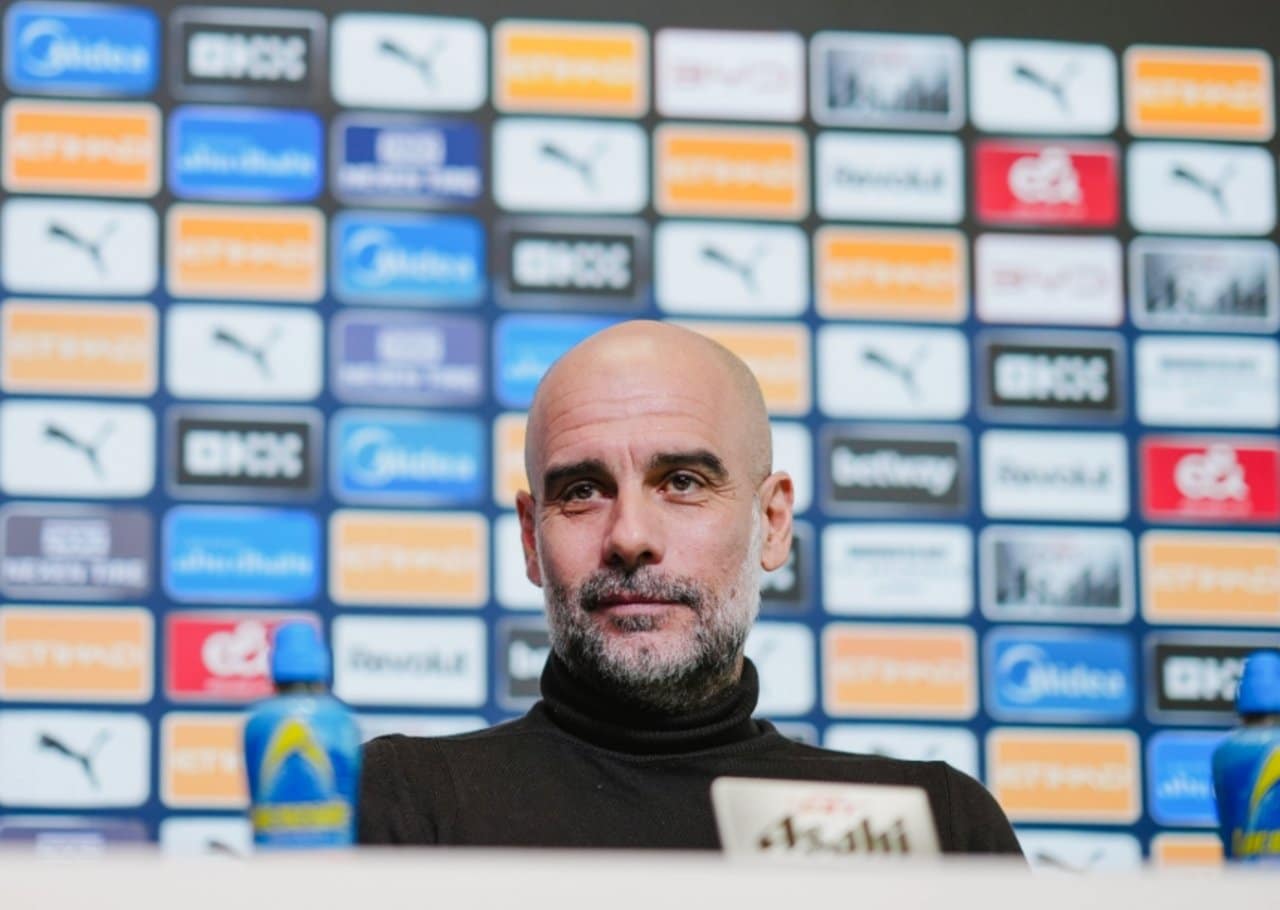
The coach of Manchester City, Pep Guardiola, used his press conference this Friday, in Manchester, to express public support for the Brazilian striker Vinicius Junior. The Real Madrid player was the target of racist insults during the confrontation against Benfica, held at Estádio of Luz, in Lisboa, valid for the Champions League playoffs. Guardiola emphasized that prejudice is not a problem restricted to the sporting environment, but a scourge rooted in several sectors of global human coexistence.
The Catalan coach’s demonstration comes at a time of strong international mobilization after the Brazilian denounced the attacks suffered shortly after scoring the Spanish winning goal. Segundo Guardiola, the focus of combating this type of behavior must be moved from stadiums to classrooms, where the basis of civic conduct is formed. Ele argued that valuing teaching professionals is the most effective tool to promote deep and lasting generational change.
- The incident occurred last Tuesday during Real Madrid’s 1-0 victory.
- Vinicius Junior was punished with a yellow card by referee François Letexier after the celebration.
- Several elite European coaches, such as Kompany and Liam Rosenior, also showed solidarity.
- Benfica began the process of identifying the fans involved in the discriminatory acts.
Pep 💬 It’s important the players are revitalized, we’ve had a few days off. I don’t have to run one meter, so for me it’s not a problem. The players are really good…pic.twitter.com/KaoIJcBDA3
—Manchester City (@ManCity)February 20, 2026
Valuing teachers and doctors as a social priority
During his speech, Guardiola was emphatic in declaring that the hierarchy of importance in modern society is distorted in relation to the role of each professional. The technician argued that figures such as teachers and doctors should receive greater recognition and remuneration, since they are the pillars of the population’s health and ethical training. Para him, football is just a reflection of behaviors that are tolerated or neglected in everyday environments outside the four lines.
The coach questioned the logic that financial success or geographic origin can determine the superiority of one individual over another. Ele reiterated that racism is a matter of learned behavior and that school is the ideal environment to deconstruct prejudices. By suggesting that the government and institutions pay teachers better, Guardiola positions education as the central public policy to eradicate racial discrimination in the long term.
Details of the incident that occurred at Estádio of Luz
The episode that motivated Guardiola’s declaration happened in the second half of the match between Benfica and Real Madrid, when Vini Jr. scored the net in an individual play. When celebrating the goal close to the corner flag, where part of the Portuguese team’s organized fans were located, the attacker was the target of racial abuse. The match referee even activated the UEFA protocol for discriminatory incidents, but the game continued after a brief interruption and much confusion on the pitch.
The reaction of the Benfica players at the time of the celebration also generated controversy, as many understood the Brazilian’s celebration as a provocation. Esse scenario resulted in the attacker being given a yellow card, a decision that was harshly criticized by international observers. Coach José Mourinho, who leads the Portuguese team, avoided delving deeper into the topic in his recent statements, only mentioning the emotional exhaustion involved in managing such high-voltage competitive situations.
Repercussion among coaches from the main European leagues
The support network for Vinicius Junior extended across different Europa clubs, highlighting an unusual union between high-level competitors against racism. Vincent Kompany, current coach of Bayern of Munique, was one of the most vocal in criticizing the passive stance of some institutions and sports figures in the face of the recurrence of these attacks. Ele highlighted that the protection of athletes must be a priority and that exemplary punishments must be applied to clubs whose fans do not respect basic human rights.
In English football, Liam Rosenior, coach of Chelsea, also joined his voice to that of Guardiola to reinforce that football can no longer be used as a shield for criminal acts. The positioning of these professionals puts pressure on UEFA and national leagues to ensure that security and discipline protocols are reviewed and applied more rigorously. The expectation is that the case of Lisboa will serve as a new milestone for the implementation of technological measures of facial identification and permanent banning of offenders from European stadiums.
The role of institutions and ongoing research
Sport Lisboa and Benfica confirmed that they are collaborating with local authorities to identify those responsible for the insults made against the Brazilian athlete. Através of images from the internal surveillance system and videos shared on social networks, the club seeks to isolate individuals in order to apply the sanctions provided for in the association’s statute and in Portugal sports legislation. The board of directors of the red club highlighted that it does not condone discriminatory behavior and that it values hospitality in its sports venue.
Recent statistics indicate that cases of racial insults in European football have increased in the last two years, despite advertising campaigns to raise awareness. The Spanish government and Itamaraty are closely monitoring the development of the investigations, providing legal and institutional support to the player. Vinicius Junior has become the main symbol of this fight, using its global platform to demand structural changes in the way sport deals with diversity and mutual respect.
Educational perspective on combating systemic prejudice
Guardiola’s speech about “paying teachers more” resonates in a context where public education faces funding challenges in different parts of the world. The coach suggests that, without a massive investment in quality education, sporting punishments will only be palliative and will not solve the root of the problem. Ele believes that awareness starting in childhood is capable of creating more empathetic citizens and less susceptible to reproducing hate speech based on skin color or ethnicity.
Experts in the sociology of sport agree that the visibility of renowned coaches like Manchester City helps to take the debate beyond the sports bubble. Quando a leader of this caliber states that his position is less important than that of a doctor or teacher, he proposes a reevaluation of values for the entire society. Essa postura é vista como um passo necessário para que o futebol deixe de ser um palco de hostilidade e retome sua função de integrador social e entretenimento saudável para todas as idades.
History of fights and the future of international football
Vinicius Junior is not the first elite athlete to face this type of adversity, but his resilience has forced football’s highest authorities to act more quickly. The player’s history of complaints in the Spanish league has already resulted in unprecedented criminal convictions of fans, which sets an important precedent for the current case in Portugal. The union of voices like that of Guardiola strengthens the narrative that silence is no longer an acceptable option for those in leadership positions in world sport.
The debate started this week should influence the next FIFA and UEFA meetings on fan behavior in continental competitions. Medidas such as the loss of points for repeat offender teams and the total closure of stadium sectors are on the agenda as ways to curb racism. Enquanto investigations continue in Lisboa, the world of football awaits actions that transform Guardiola’s outburst into practical measures of human valorization and social justice.