
James Webb captures unprecedented three-dimensional map of the auroras on Uranus and details tilted magnetic field

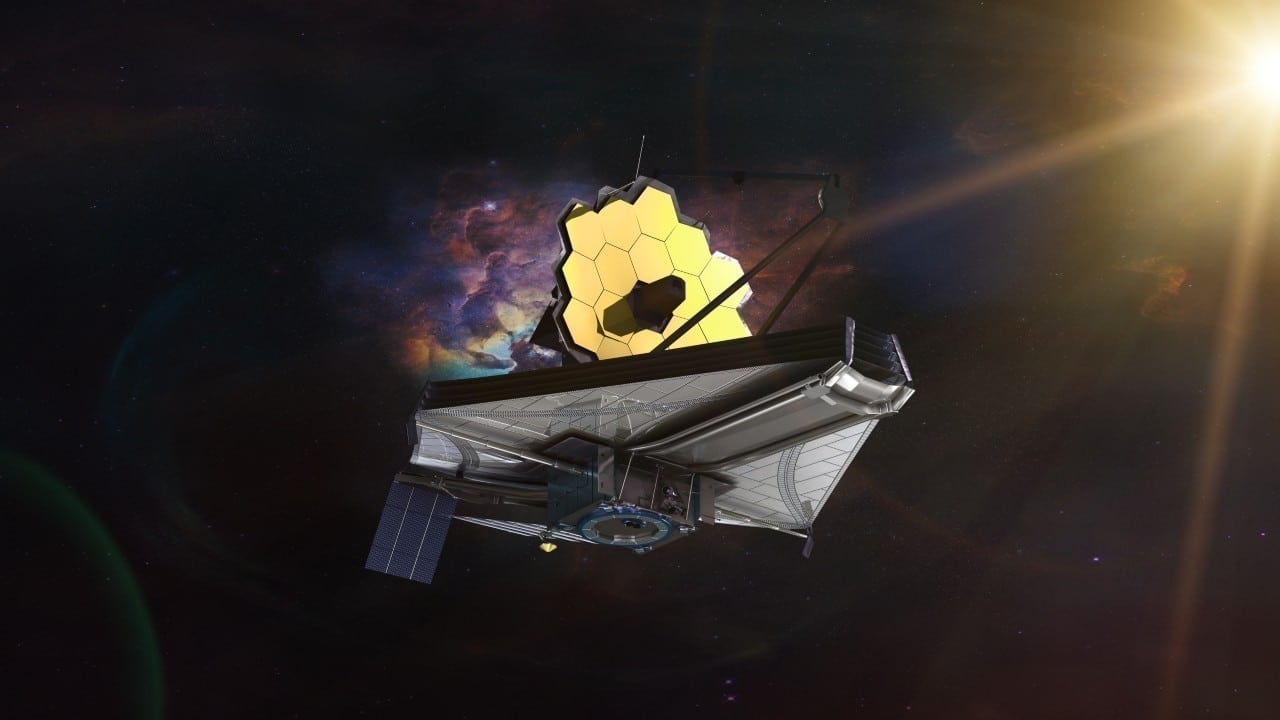
Telescópio Espacial James Webb carried out observations that allowed the vertical structure of Urano’s upper atmosphere to be mapped in three dimensions for the first time. Astrônomos detected the faint glow of ionized molecules in the planet’s ionosphere during nearly one complete rotation. Esses data reveals how auroras form and how the planet’s tilted and shifting magnetic field influences complex patterns of energy in the atmosphere.
The observations captured variations in temperature and density of charged particles at altitudes of up to 5,000 kilometers above the clouds. The telescope’s NIRSpec instrument recorded specific emissions that indicate peaks in temperature and ion density in distinct regions. Essas information provides the most detailed picture yet of the energy distribution in icy giants like Urano.

Vertical structure of the ionosphere revealed
The data shows two bright bands of auroras near the magnetic poles of Urano. Entre these bands there is a reduction in emission and ionic density in certain areas. Essa configuration is linked to transitions in magnetic field lines that direct energetic particles.
The auroras at Urano exhibit irregular patterns due to the peculiar alignment of the magnetic field. The magnetic axis is tilted relative to the axis of rotation and offset from the center of the planet. Como result the auroras sweep across the surface in complex trajectories.
Continuous observations for almost one rotation
The team observed Urano for approximately 17 consecutive hours thanks to the telescope’s orbital position at L2. Mais of 1,200 data slices were combined to create a timelapse of the planet’s rotation. Esse video highlights regions where temperatures and charged particle densities reach maximum peaks.
Continuous recording made it possible to track atmospheric variations in real time during the entire rotation. Astrônomos identified clear auroral structures shaped by the unusual magnetic field. Essas observations improve understanding of the interaction between the magnetic field and the ionized atmosphere.
Details about auroras and magnetic field
Auroras appear when energetic particles interact with the ionized upper atmosphere. Em Urano the process is influenced by the asymmetric magnetic field that causes irregular energy distributions. The Webb data confirm localized emissions associated with these phenomena.
Scientists have noticed that the atmosphere of Urano has continued to cool over the past three decades. Previous Medições indicated similar trends and the new observations reinforce this gradual thermal evolution in the ionosphere. Vertical mapping helps understand how energy propagates in high layers.
Advances in understanding ice giants
Uranus has unique characteristics among the planets of Sistema Solar including its extreme axial tilt and offset magnetic field. Esses factors directly affect the formation and movement of auroras. Recent observations provide crucial data for models of ice giant atmospheres.
The use of the NIRSpec instrument made it possible to detect weak emissions of ions such as H3+ that signal auroral activity. The detected variations in density and temperature offer insights into energetic processes at high altitudes. Pesquisas future ones could expand these findings to other similar planets.
Importance of ionized emissions
The ionized molecules emit infrared light captured by the telescope with high sensitivity. Essas emissions reveal the exact location where auroras intensify. The observed peaks correspond to regions of influx of solar wind particles interacting with the magnetic field.
The results highlight differences between Urano and other gas giants with more symmetrical auroras. The asymmetric configuration in Urano creates dynamic patterns that defy previous explanations based on limited observations. 3D mapping represents a milestone in the remote exploration of these distant worlds.
Perspectives for future studies
The data obtained opens avenues for further investigations into the thermal evolution of Urano. Comparações with past observations show consistency in atmospheric cooling. Equipes international plans plan additional observations to refine ionosphere models.
The telescope continues to provide valuable information about cold, distant planets. Essas discoveries contribute to general knowledge about the formation and dynamics of atmospheres on ice giants. The success of the observations reinforces the instrument’s ability to detect subtle phenomena in deep space.




